 Bug FAQ
Buff Footman
Eilema depressa · Order: Lepidoptera · Family: Erebidae
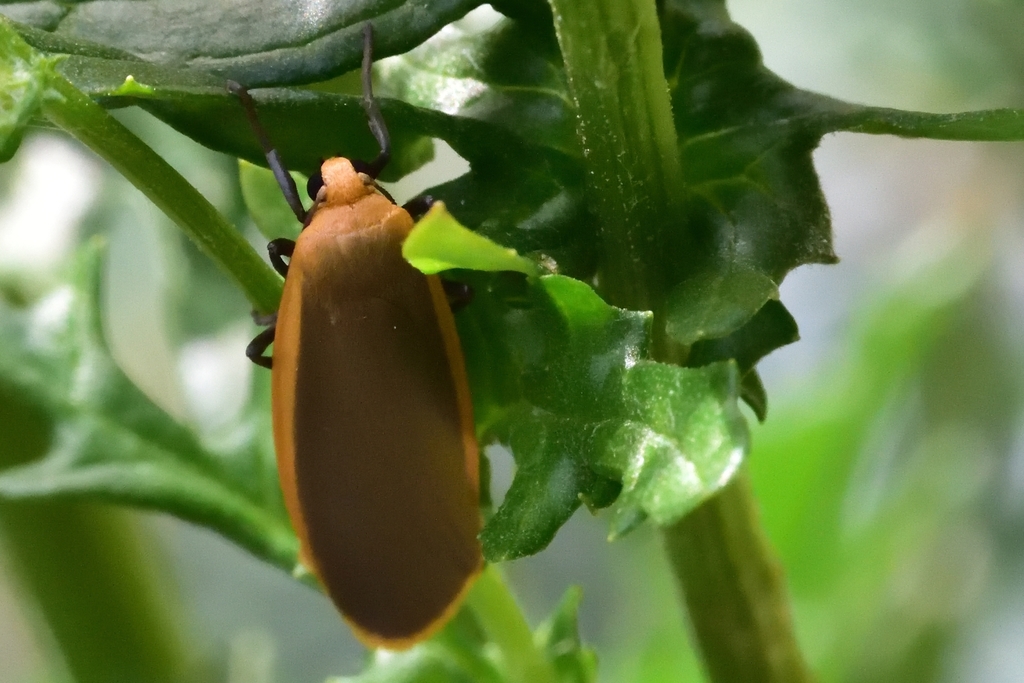
The buff footman is a small moth with forewings 15 to 17 mm long and dark brown-grey wings edged in bright yellow, especially in females. It rests on trees and bushes by day and can be collected by beating young conifers; adults fly from June to September. Its larvae eat lichens and algae on conifers, oak and heather, and pupae are glossy red-brown.
Source: Wikipedia
How to recognize it
Both wings are dark brown-grey, with the forewing edge and fringe bright yellow, more pronounced in females. The ground colour may be lightened with ochre, clay-like, whitish, or an intermediate shade.
Source: Wikipedia
Size
Forewing length ranges from 15 to 17 mm.
Source: Wikipedia
Where it lives
Adults rest on trees and bushes during the day and are also found by beating young conifers.
Source: Wikipedia
Life cycle
The pupa is glossy red-brown.
Source: Wikipedia
When you see it
Adults are seen singly but are not rare from June through September.
Source: Wikipedia
Where it comes from
It occurs from western Europe across the Palearctic to Korea and Japan, including parts of Asia Minor, Crimea, Siberia and China.
Source: Wikipedia
More photos

Same family (Erebidae)
 Spongy MothLymantria disparDamages trees, gardens or crops
 Fall Webworm MothHyphantria cuneaDamages trees, gardens or crops
 Brown-tail MothEuproctis chrysorrhoeaCan irritate skin
 Isabella Tiger MothPyrrharctia isabella
 Virginian Tiger MothSpilosoma virginicaCan irritate skin
 Salt Marsh MothEstigmene acrea
Sources
- Wikipedia: https://en.wikipedia.org/wiki/Katha_depressa
Look it up elsewhere: GBIF · iNaturalist · BugGuide · Wikipedia
Text written 2026-10-22 from the sources above and checked sentence by sentence against them. Data fetched 2026-10-22.