 Bug FAQ
Bride Underwing
Catocala neogama · Order: Lepidoptera · Family: Erebidae
Source: Wikipedia
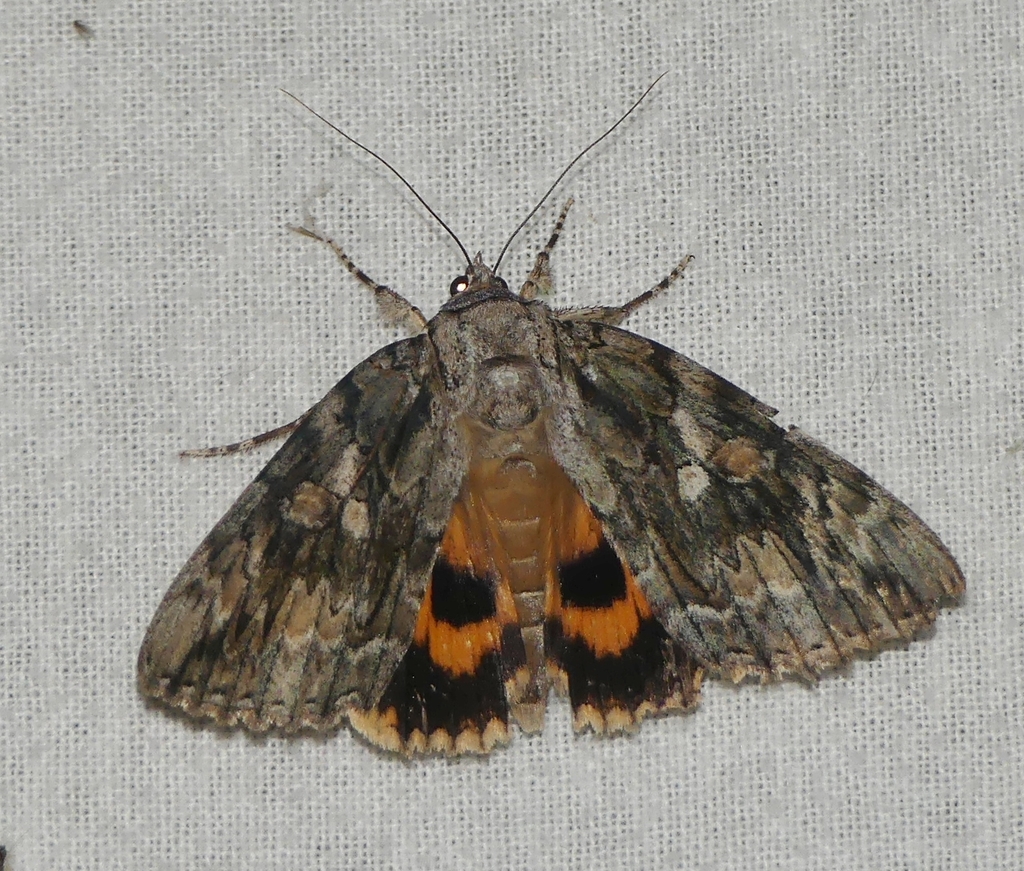
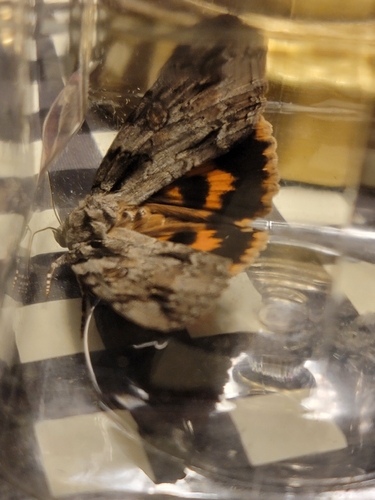
The Bride Underwing has a wingspan of about 70 to 85 mm, with the western subspecies reaching around 90 mm. Its forewings are brownish-gray and its hindwings are bright orange with concentric black markings. It lives east of the Rockies across much of the United States and southern Canada, extending west to the Colorado Plateau.
Source: Wikipedia
How to recognize it
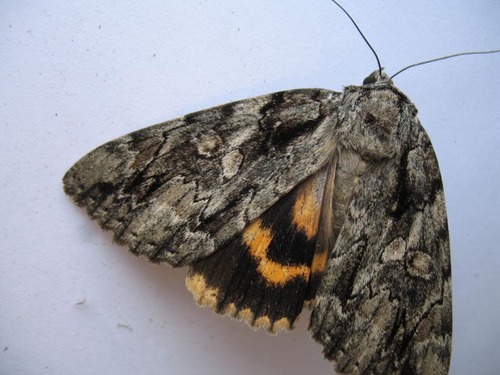
The front wings are a uniform brown-gray, sometimes darker in the middle, and vary from paler in dry areas to darker gray with brown in eastern populations. The back wings are vivid orange with roughly concentric black spots.
Source: Wikipedia
Size
Adults have a wingspan between 70 and 85 mm, while the western subspecies can be about 90 mm wide.
Source: Wikipedia
Where it lives
The westernmost population lives in the semiarid Colorado Plateau and looks a bit different.
Source: Wikipedia
What it eats
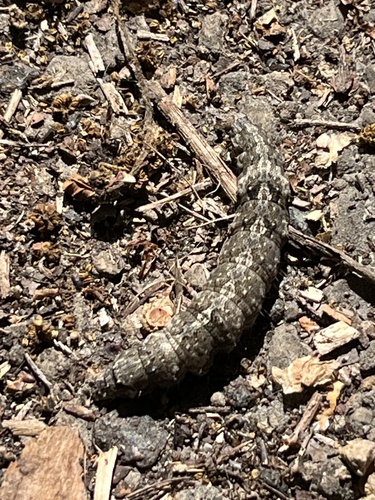
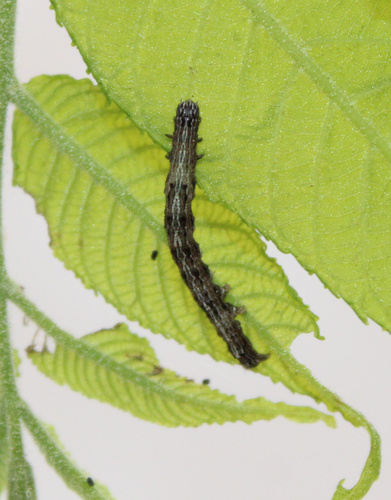
Caterpillars eat walnut trees (Juglans) such as butternut and also hickories (Carya). In the western range they mainly feed on Arizona black walnut and possibly Texas black walnut and their hybrids.
Source: Wikipedia
Life cycle
Adults of the main subspecies appear from June through October, while the western subspecies flies from July to August.
Source: Wikipedia
When you see it
The main form is on the wing June to October; the western form is seen July to August.
Source: Wikipedia
Lookalikes
The Old Wife Underwing is smaller, has a fuzzy black patch on the hindwing base, and a less scalloped orange-black border.
Source: Wikipedia
Where it is found in the US
Recorded in 44 of 51 states and DC. Most records: Ohio, Pennsylvania, Michigan, Illinois, Missouri, Indiana, New York, Connecticut.
Darker = more records. Counts are museum and citizen-science records, not population size.
Source: GBIF
Status: native in North America; native in Canada. Source: iNaturalist
Months it is reported in the US
Source: GBIF
More photos
Questions people ask
What do Bride Underwing caterpillars eat?
They feed on walnut trees and hickories, and in the western range mainly on black walnut species.
Source: Wikipedia
When can I see adult Bride Underwings?
The main subspecies flies from June to October, while the western subspecies is active from July to August.
Source: Wikipedia
How can I tell a Bride Underwing from an Old Wife Underwing?
The Old Wife Underwing is smaller, has a fuzzy black patch on the hindwing base and a less scalloped orange-black edge.
Source: Wikipedia
Same family (Erebidae)
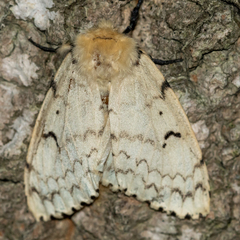 Spongy MothLymantria disparDamages trees, gardens or crops
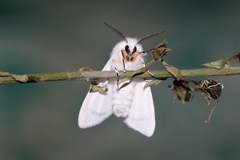 Fall Webworm MothHyphantria cuneaDamages trees, gardens or crops
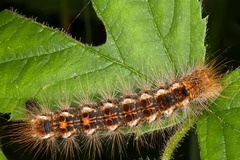 Brown-tail MothEuproctis chrysorrhoeaCan irritate skin
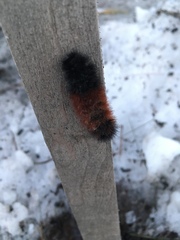 Isabella Tiger MothPyrrharctia isabella
 Virginian Tiger MothSpilosoma virginicaCan irritate skin
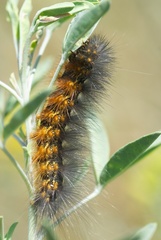 Salt Marsh MothEstigmene acrea
Sources
- Wikipedia: https://en.wikipedia.org/wiki/Catocala_neogama
Look it up elsewhere: GBIF · iNaturalist · BugGuide · ITIS · Wikipedia
Text written 2026-10-23 from the sources above and checked sentence by sentence against them. Data fetched 2026-10-23.