 Bug FAQ
Black Witch
Ascalapha odorata · Order: Lepidoptera · Family: Erebidae
Also called: Black Witch Moth, Duppy Bat, Glassy Cutworm, Money Moth
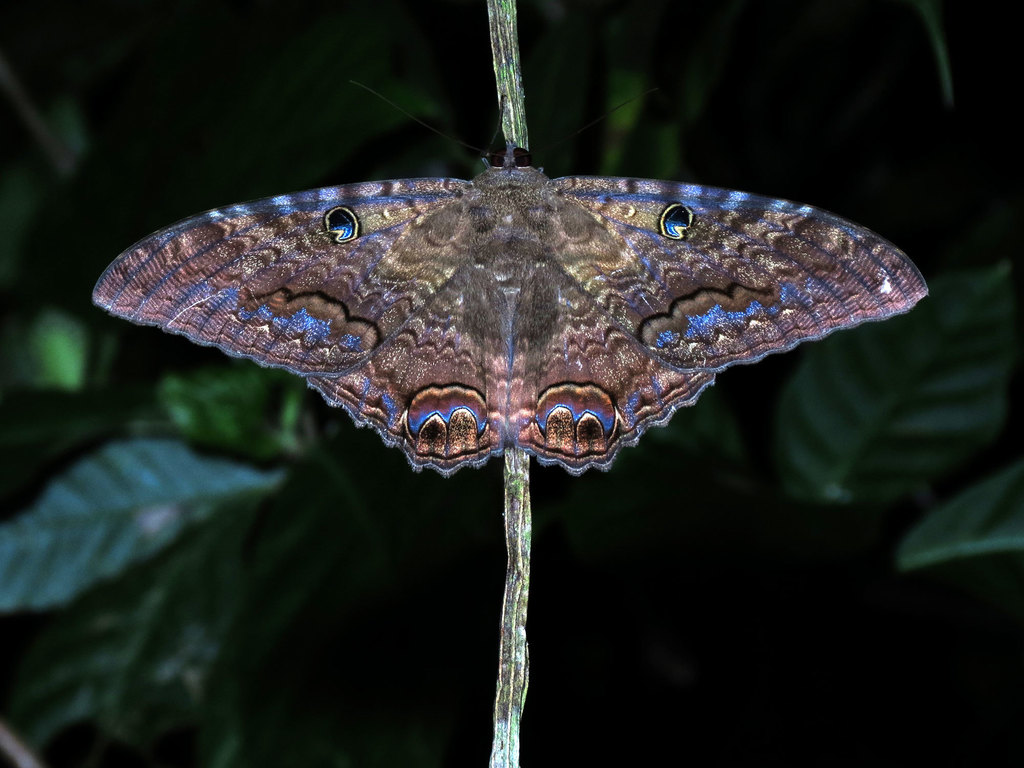
The Black Witch is a very large noctuid moth, with females reaching a 24 cm wingspan and males about half that size. It lives from the southern United States through Central and South America, has been introduced to Hawaii, and flies north in late spring and summer.
Source: Wikipedia
How to recognize it
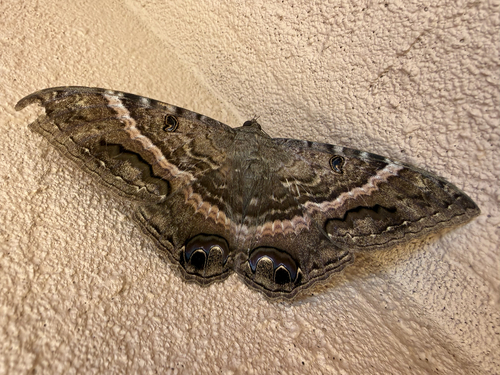
The wings are mottled brown with iridescent purple and pink, and females have a white bar across them. A distinctive spot on the wings is often green with orange highlights.
Source: Wikipedia
Size
Female Black Witch moths can have a wingspan up to 24 cm. Males are smaller, reaching about 12 cm across.
Source: Wikipedia
Where it lives
It is the largest noctuoid found in the continental United States. The species moves northward during late spring and summer.
Source: Wikipedia
What it eats
Adult moths feed on overripe rainforest fruit, especially bananas. Larvae eat leaves of various plants, most of which are legumes.
Source: Wikipedia
Life cycle
The caterpillar can grow up to 7 cm long and shows intricate black and greenish-brown spots and stripes.
Source: Wikipedia
When you see it
The moth flies north during late spring and summer. One individual was captured at Whitefish Point lighthouse on Lake Superior in July 2020.
Source: Wikipedia
Where it comes from
Its range extends from the southern United States through Mexico, Central America, Brazil, and Argentina. The moth has also been introduced to Hawaii.
Source: Wikipedia
Lookalikes
It can be confused with the White Witch moth, Thysania agrippina. It also resembles the Owl Moth, Thysania zenobia.
Source: Wikipedia
Where it is found in the US
Recorded in 51 of 51 states and DC. Most records: Texas, Hawaii, Florida, Arizona, California, Colorado, New Mexico, Louisiana.
Darker = more records. Counts are museum and citizen-science records, not population size.
Source: GBIF
Status: native in North America; native in United States. Source: iNaturalist
Months it is reported in the US
Source: GBIF
More photos
Same family (Erebidae)
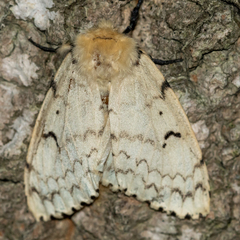 Spongy MothLymantria disparDamages trees, gardens or crops
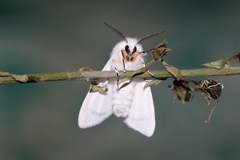 Fall Webworm MothHyphantria cuneaDamages trees, gardens or crops
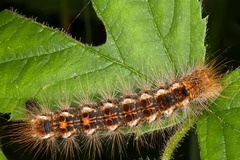 Brown-tail MothEuproctis chrysorrhoeaCan irritate skin
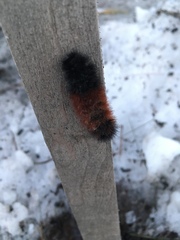 Isabella Tiger MothPyrrharctia isabella
 Virginian Tiger MothSpilosoma virginicaCan irritate skin
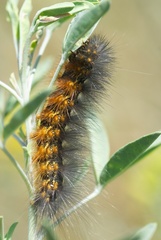 Salt Marsh MothEstigmene acrea
Sources
- Wikipedia: https://en.wikipedia.org/wiki/Ascalapha_odorata
Look it up elsewhere: GBIF · iNaturalist · BugGuide · ITIS · Wikipedia
Text written 2026-10-22 from the sources above and checked sentence by sentence against them. Data fetched 2026-10-22.