 Bug FAQ
Asian Magpie Moth
Nyctemera baulus · Order: Lepidoptera · Family: Erebidae
Also called: Magpie Moth
Source: Wikipedia

The Asian Magpie Moth has a wingspan of about 45 to 48 mm. It is a day-flying moth that lives from India across to Samoa, including Queensland, Indonesia and New Guinea. Caterpillars eat several garden plants, so they can become pests in vegetable or ornamental beds.
Source: Wikipedia
How to recognize it
Nyctemera baulus belongs to the moth family Erebidae.
Source: Wikipedia
Size
Adults have a wingspan of 45 to 48 mm.
Source: Wikipedia
Where it lives
It is active during the day rather than at night.
Source: Wikipedia
What it eats
Larvae have been recorded feeding on Brassica, Emilia, Senecio scandens and Crassocephalum.
Source: Wikipedia
Where it comes from
It occurs from India eastward to Samoa, with records in Queensland, Indonesia and New Guinea.
Source: Wikipedia
More photos


Questions people ask
What plants can the Asian Magpie Moth larvae damage?
The caterpillars eat Brassica, Emilia, Senecio scandens and Crassocephalum, which are common garden and vegetable plants.
Source: Wikipedia
When are Asian Magpie Moths active?
They are day-flying moths, so you will see them during daylight hours.
Source: Wikipedia
Same family (Erebidae)
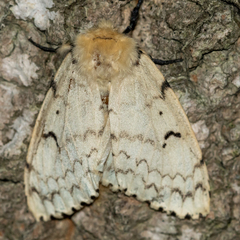 Spongy MothLymantria disparDamages trees, gardens or crops
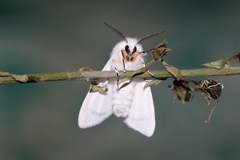 Fall Webworm MothHyphantria cuneaDamages trees, gardens or crops
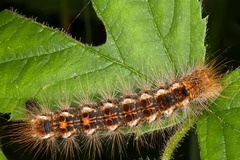 Brown-tail MothEuproctis chrysorrhoeaCan irritate skin
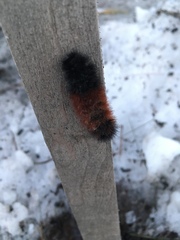 Isabella Tiger MothPyrrharctia isabella
 Virginian Tiger MothSpilosoma virginicaCan irritate skin
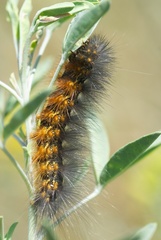 Salt Marsh MothEstigmene acrea
Sources
- Wikipedia: https://en.wikipedia.org/wiki/Nyctemera_baulus
Look it up elsewhere: GBIF · iNaturalist · BugGuide · Wikipedia
Text written 2026-10-23 from the sources above and checked sentence by sentence against them. Data fetched 2026-10-22.