 Bug FAQ
American Idia Moth
Idia americalis · Order: Lepidoptera · Family: Erebidae
Also called: American Idia

The American idia moth has a wingspan of about 20 to 30 mm and gray-to-beige forewings with darker edges and scalloped lines. It lives in moist North American forests from southern Canada to Florida and Texas, is active at night, and is attracted to sugar baits and lights.
Source: Wikipedia
How to recognize it
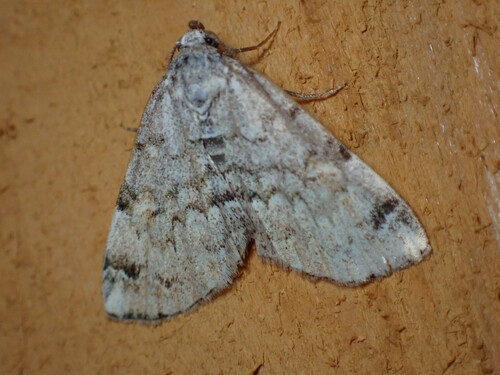
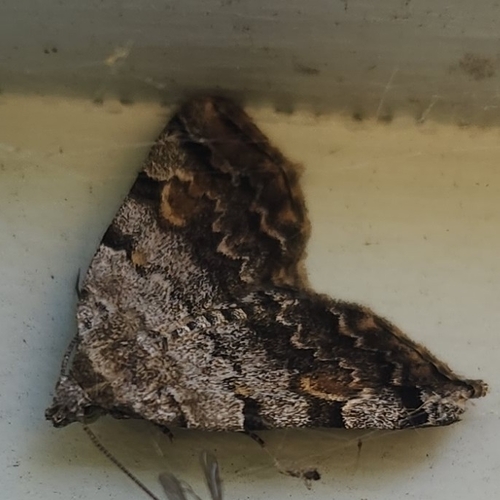
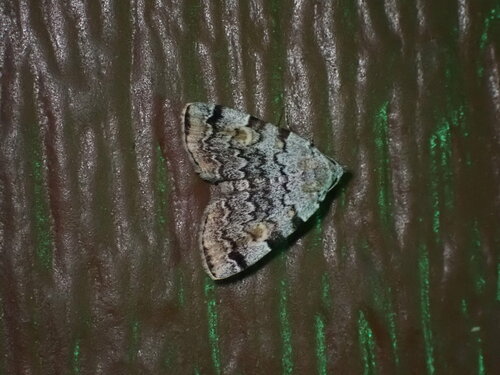
Forewings range from gray to beige or light brown, getting darker toward the outer margin with dark scalloped lines across them. A dark line runs at the base of the wing fringe and a small bronze or brown spot sits near the forewing edge. It can be told apart from similar species by a row of dark marks on the front part of the forewing.
Source: Wikipedia
Size
The wingspan is typically between 20 and 30 mm.
Source: Wikipedia
Where it lives
Found in moist forests across North America, from southern Canada down to Florida and Texas. It is nocturnal and is attracted to sugar baits and light traps.
Source: Wikipedia
What it eats
Larvae feed on lichen and detritus such as dead leaves. Adults often eat lichens that grow on tree trunks.
Source: Wikipedia
Life cycle
Adults are active from May through October. The species can produce two or more generations each year.
Source: Wikipedia
Where it comes from
Its range covers moist forests in North America, from southern Canada to Florida and Texas.
Source: Wikipedia
Lookalikes
A row of dark marks on the anterior forewing distinguishes it from the common idia.
Source: Wikipedia
Where it is found in the US
Recorded in 48 of 51 states and DC. Most records: Alabama, Texas, Massachusetts, Maryland, Pennsylvania, New York, Connecticut, North Carolina.
Darker = more records. Counts are museum and citizen-science records, not population size.
Source: GBIF
Status: native in North America; native in United States; native in Canada. Source: iNaturalist
Months it is reported in the US
Source: GBIF
More photos
Same family (Erebidae)
 Spongy MothLymantria disparDamages trees, gardens or crops
 Fall Webworm MothHyphantria cuneaDamages trees, gardens or crops
 Brown-tail MothEuproctis chrysorrhoeaCan irritate skin
 Isabella Tiger MothPyrrharctia isabella
 Virginian Tiger MothSpilosoma virginicaCan irritate skin
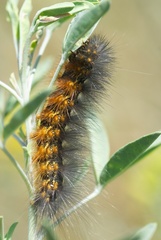 Salt Marsh MothEstigmene acrea
Sources
- Wikipedia: https://en.wikipedia.org/wiki/Idia_americalis
Look it up elsewhere: GBIF · iNaturalist · BugGuide · ITIS · Wikipedia
Text written 2026-10-22 from the sources above and checked sentence by sentence against them. Data fetched 2026-10-22.