 Bug FAQ
Agreeable Tiger Moth
Spilosoma congrua · Order: Lepidoptera · Family: Erebidae
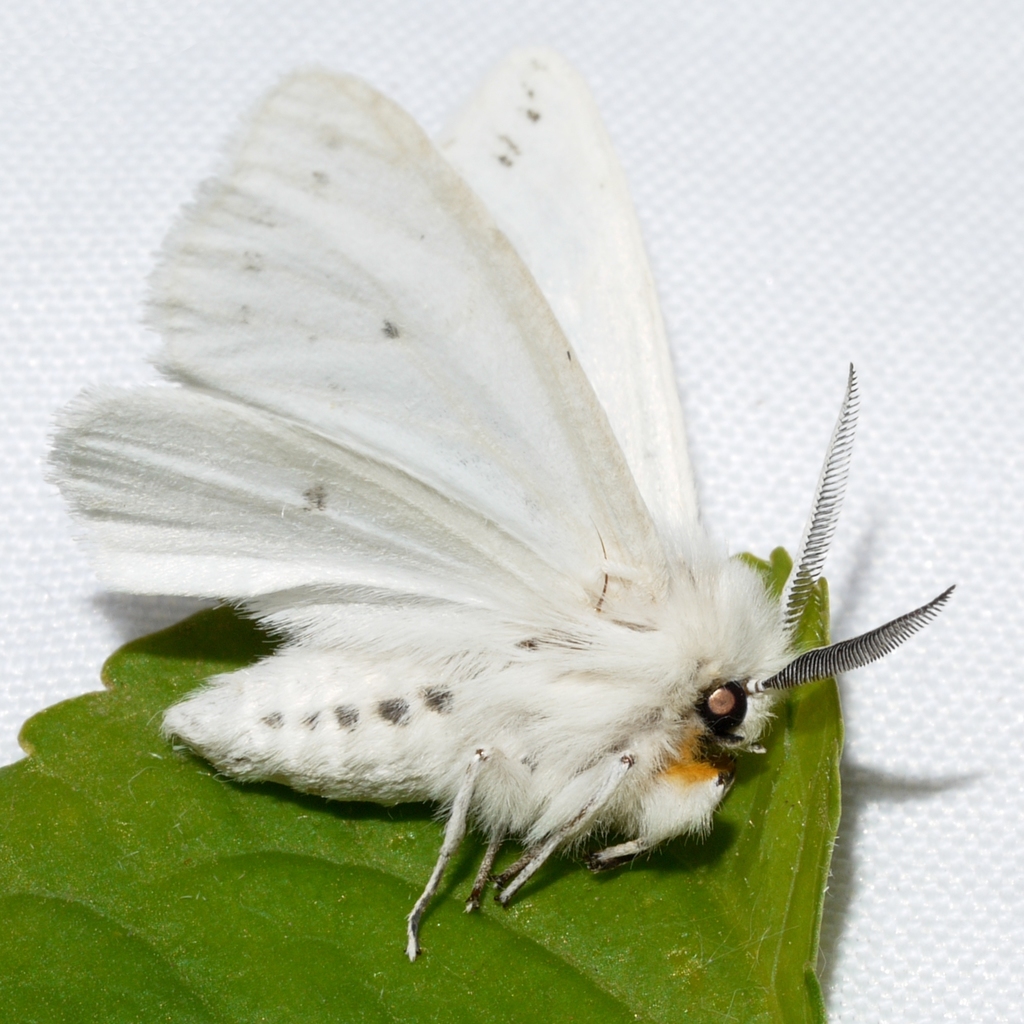
The agreeable tiger moth is a medium-sized moth with a 28 to 42 mm wingspan; females are usually a bit larger than males. It lives in many open habitats across most of the contiguous United States and southern Canada, and it feeds on a wide range of common weeds and garden vegetables as a larva.
Source: Wikipedia
How to recognize it
Each forewing may show a small black spot on the disc, though it can be faint or missing.
Source: Wikipedia
Size
The wingspan ranges from about 28 mm to 42 mm, with females usually a little larger than males.
Source: Wikipedia
Is it a pest in the house?
In most years and locations it is a benign part of the local herbivore community.
Source: Wikipedia
How to get rid of it
No specific control measures are needed for this species.
Source: Wikipedia
Where it lives
It is common in old fields, meadows, roadsides, railway verges, forest edges, clearings, suburban gardens, parks, abandoned farmland, and the edges of wetlands and marshes. It tolerates moderate disturbance and can benefit from weedy host plants in human-modified areas.
Source: Wikipedia
What it eats
Caterpillars eat many herbaceous plants, including common weeds and garden vegetables. Adult moths are nocturnal and are attracted to lights.
Source: Wikipedia
Life cycle
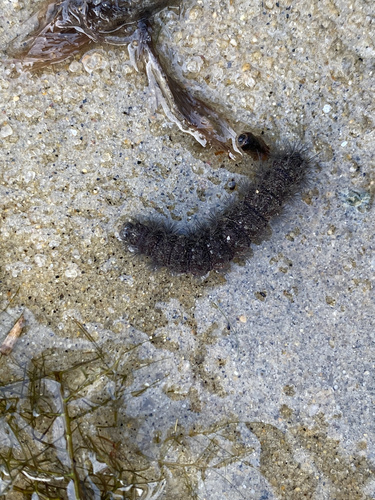
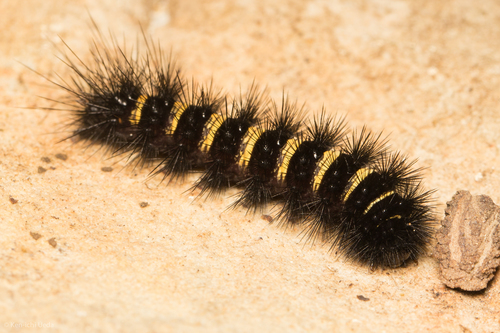
Depending on latitude and climate, the species produces one to three generations each year. Larvae are covered in dense dark hairs that serve as a chemical defense.
Source: Wikipedia
When you see it
Adults are active at night and are drawn to artificial lights. The number of generations per year varies with latitude and climate.
Source: Wikipedia
Where it comes from
It occurs across most of the contiguous United States and southern Canada. There are also some disjunct populations reported in India.
Source: Wikipedia
Lookalikes
These markings separate it from the Virginia tiger moth and the dubious tiger moth. It is one of three white Spilosoma species commonly seen in eastern North America.
Source: Wikipedia
Where it is found in the US
Recorded in 44 of 51 states and DC. Most records: Virginia, Tennessee, North Carolina, Maryland, Alabama, Georgia, Connecticut, Kentucky.
Darker = more records. Counts are museum and citizen-science records, not population size.
Source: GBIF
Status: native in North America; native in Canada; native in United States. Source: iNaturalist
Months it is reported in the US
Source: GBIF
More photos

Questions people ask
Do the caterpillars damage garden plants?
The larvae feed on many common weeds and garden vegetables, but they are not noted as serious crop pests.
Source: Wikipedia
How can I identify an agreeable tiger moth?
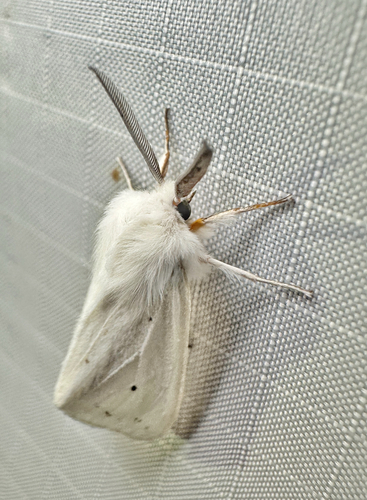
Look for bright white wings, black eyes, a white abdomen with black spots, and an orange or yellow “bib” on the thorax; a small black spot may appear on each forewing.
Source: Wikipedia
Where might I find these moths?
They are common in open habitats such as fields, meadows, roadsides, forest edges, suburban gardens, and wetland edges across most of the United States and southern Canada.
Source: Wikipedia
Same family (Erebidae)
 Spongy MothLymantria disparDamages trees, gardens or crops
 Fall Webworm MothHyphantria cuneaDamages trees, gardens or crops
 Brown-tail MothEuproctis chrysorrhoeaCan irritate skin
 Isabella Tiger MothPyrrharctia isabella
 Virginian Tiger MothSpilosoma virginicaCan irritate skin
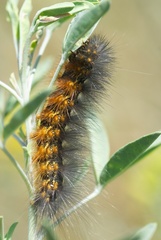 Salt Marsh MothEstigmene acrea
Sources
- Wikipedia: https://en.wikipedia.org/wiki/Agreeable_tiger_moth
Look it up elsewhere: GBIF · iNaturalist · BugGuide · ITIS · Wikipedia
Text written 2026-10-23 from the sources above and checked sentence by sentence against them. Data fetched 2026-10-23.