 Bug FAQ
Woolly Elm Aphid
Eriosoma americanum · Order: Hemiptera · Family: Aphididae
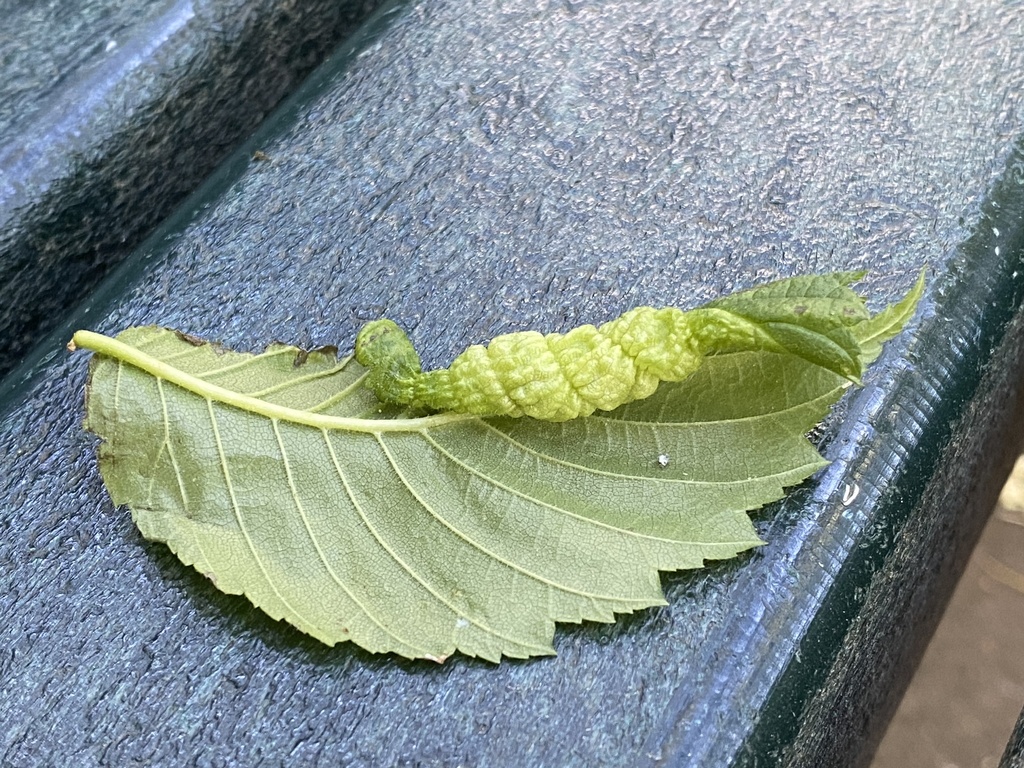
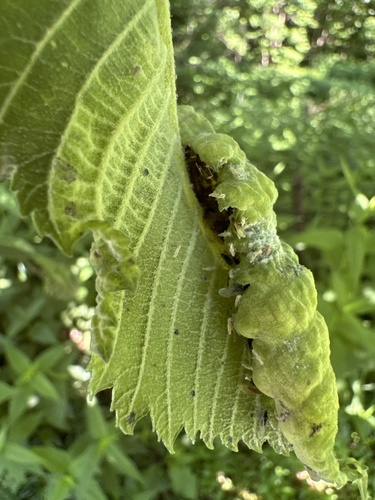
The woolly elm aphid is native to North America and lives on American elm and Saskatoon trees. Infested elm leaves become curled, develop dark spots and are covered with cotton-like masses, and honeydew may appear.
Source: Wikipedia
How to recognize it
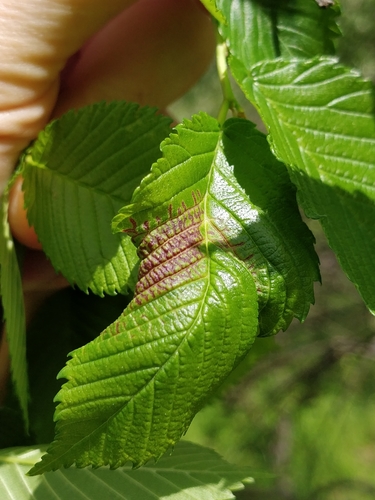
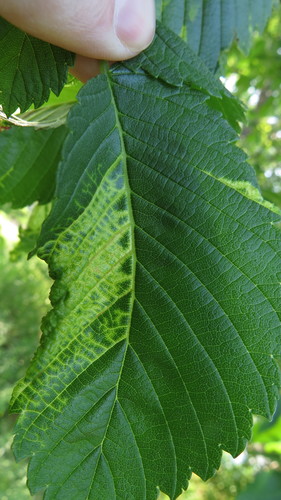
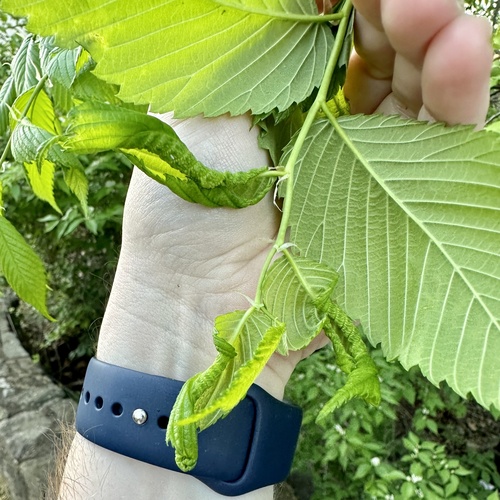
Infested elm leaves curl, show dark patches and become covered with cottony growths. Aphids excrete honeydew on the leaves after feeding.
Source: Wikipedia
Where it lives
It is found wherever American elm or Saskatoon trees are established.
Source: Wikipedia
What it eats
It feeds on Saskatoon leaves from late spring through fall and on American elm in early spring and late fall.
Source: Wikipedia
Where it comes from
The woolly elm aphid is native to North America.
Source: Wikipedia
Where it is found in the US
Recorded in 37 of 51 states and DC. Most records: Maryland, Virginia, Minnesota, Pennsylvania, Ohio, California, New York, Massachusetts.
Darker = more records. Counts are museum and citizen-science records, not population size.
Source: GBIF
Status: native in North America; native in Canada. Source: iNaturalist
Months it is reported in the US
Source: GBIF
More photos
Questions people ask
How can I tell if my elm tree has woolly elm aphids?
Look for curled leaves with dark spots and fluffy, cotton-like growths, plus sticky honeydew on the foliage.
Source: Wikipedia
What trees do woolly elm aphids feed on?
They feed on Saskatoon (Amelanchier alnifolia) in late spring to fall and on American elm (Ulmus americana) in early spring and late fall.
Source: Wikipedia
Same family (Aphididae)
 Melon AphidAphis gossypiiDamages trees, gardens or crops
 Oleander AphidAphis neriiDamages trees, gardens or crops
 Witch-hazel Cone Gall AphidHormaphis hamamelidis
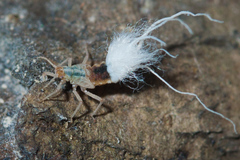 Beech Blight AphidGrylloprociphilus imbricatorDamages trees, gardens or crops
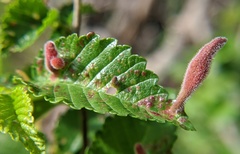 Rice Root AphidTetraneura nigriabdominalis
 Rose AphidMacrosiphum rosaeDamages trees, gardens or crops
Sources
- Wikipedia: https://en.wikipedia.org/wiki/Eriosoma_americanum
Look it up elsewhere: GBIF · iNaturalist · BugGuide · Wikipedia
Text written 2026-10-26 from the sources above and checked sentence by sentence against them. Data fetched 2026-10-26.