 Bug FAQ
Witch-hazel Cone Gall Aphid
Hormaphis hamamelidis · Order: Hemiptera · Family: Aphididae
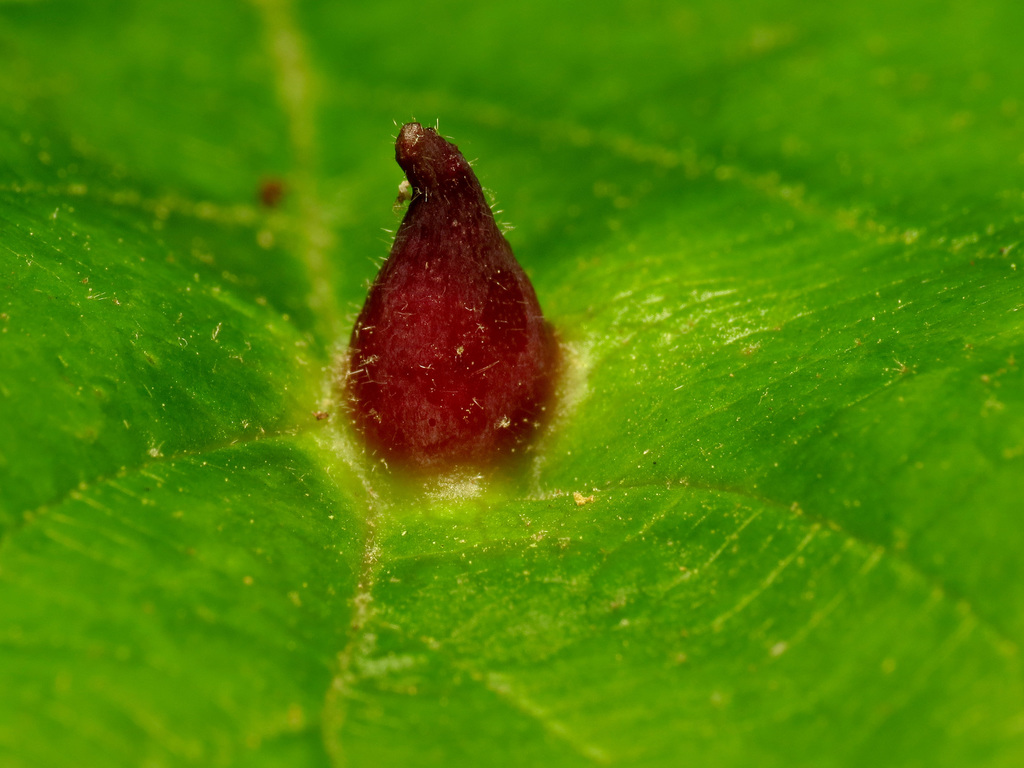
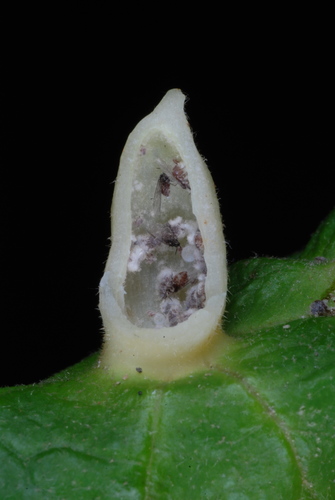
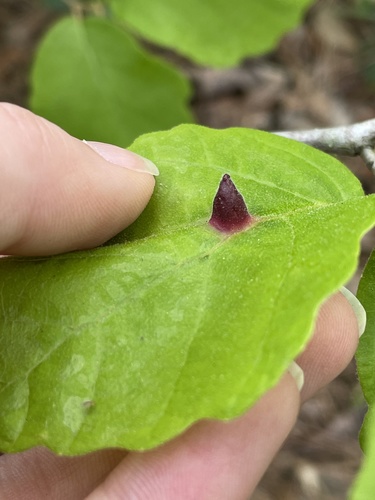
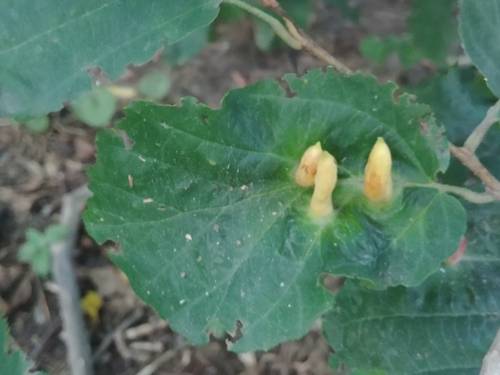
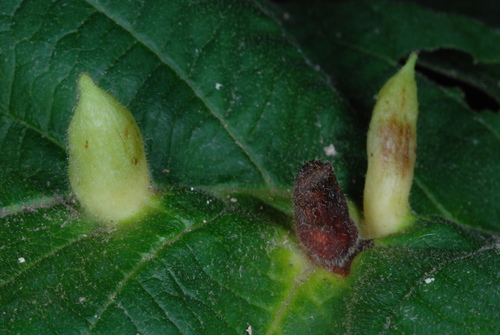
The witch-hazel cone gall aphid is a tiny aphid that makes a green-then-red cone gall about 7 to 14 mm tall on the upper side of witch-hazel leaves. It lives on witch-hazel, especially at higher elevations in the eastern United States, and its life cycle includes three generations per year with a sexual third generation that lays eggs on bark. The gall supplies food and shelter for the female, which reproduces about 45 daughters asexually.
Source: Wikipedia
How to recognize it
The gall starts green and later turns bright red. It appears as a cone 7 to 14 mm tall on the upper leaf surface.
Source: Wikipedia
Size
The insect is minuscule, typical of aphids.
Source: Wikipedia
Where it lives
You can spot it by the conical gall on witch-hazel leaves. It is more common at higher elevations, while its close relative H. cornu prefers lower elevations.
Source: Wikipedia
What it eats
The gall is nutrient-rich and feeds the female aphid. She produces about 45 female offspring without mating.
Source: Wikipedia
Life cycle
There are three generations each year, each playing a different role. The first generation consists of wingless females that hatch from eggs laid on bark over winter.
Source: Wikipedia
When you see it
In early spring the females crawl to witch-hazel leaf buds. Late summer the third generation mates and lays eggs on the bark.
Source: Wikipedia
Where it comes from
Both H. hamamelidis and H. cornu live in the eastern United States and are often confused.
Source: Wikipedia
Lookalikes
It is often mistaken for Hormaphis cornu, and the two can interbreed but hybrids are likely inviable.
Source: Wikipedia
Where it is found in the US
Recorded in 34 of 51 states and DC. Most records: Massachusetts, New York, Virginia, Pennsylvania, North Carolina, New Jersey, Maryland, Connecticut.
Darker = more records. Counts are museum and citizen-science records, not population size.
Source: GBIF
Status: native in North America; native in Canada. Source: iNaturalist
Months it is reported in the US
Source: GBIF
More photos
Same family (Aphididae)
 Melon AphidAphis gossypiiDamages trees, gardens or crops
 Oleander AphidAphis neriiDamages trees, gardens or crops
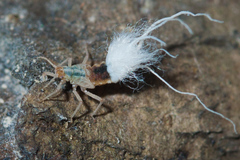 Beech Blight AphidGrylloprociphilus imbricatorDamages trees, gardens or crops
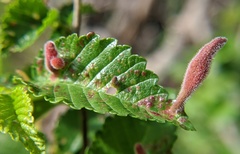 Rice Root AphidTetraneura akinire
 Manzanita Leafgall AphidTamalia coweni
 Giant Willow AphidTuberolachnus salignusDamages trees, gardens or crops
Sources
- Wikipedia: https://en.wikipedia.org/wiki/Witch-hazel_cone_gall_aphid
Look it up elsewhere: GBIF · iNaturalist · BugGuide · Wikipedia
Text written 2026-10-22 from the sources above and checked sentence by sentence against them. Data fetched 2026-10-22.