 Bug FAQ
Beech Blight Aphid
Grylloprociphilus imbricator · Order: Hemiptera · Family: Aphididae
Also called: Boogie Woogie Aphid
Source: Wikipedia
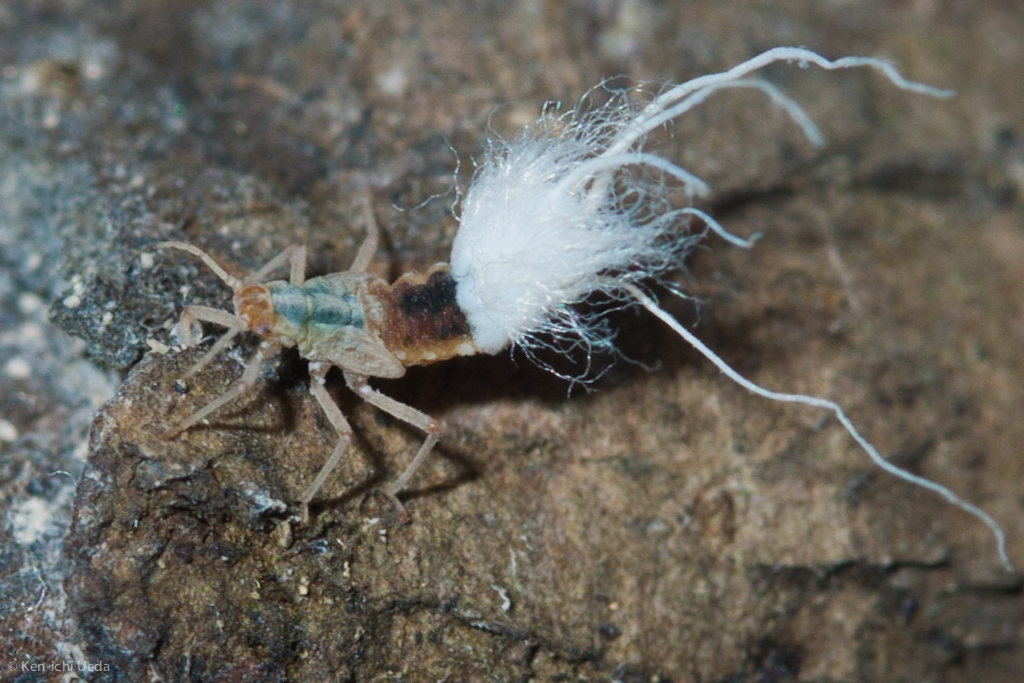
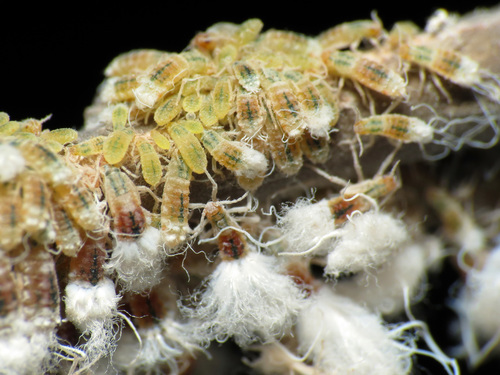
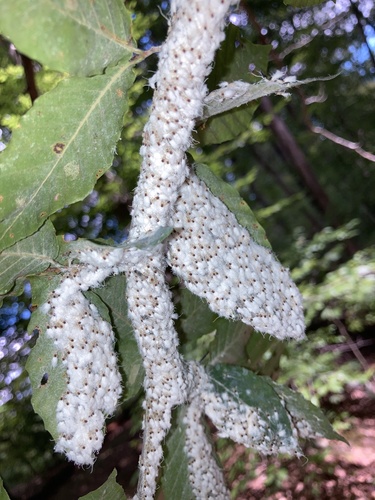
These tiny aphids are light bluish and covered in long white waxy filaments that give them a woolly look. They form dense colonies on small branches and leaf undersides of American beech and sometimes on bald cypress roots, becoming noticeable in July. You can knock them off with a strong spray of water or treat them with aphid-labeled insecticides, horticultural oil, or insecticidal soap.
Source: Wikipedia
How to recognize it
When disturbed, they raise their rear end and sway side to side.
Source: Wikipedia
Size
They are small insects with a light bluish body covered in long white waxy filaments.
Source: Wikipedia
How to get rid of it
A strong jet of water can blast them off the foliage. Insecticides labeled for aphids, horticultural oil sprays, and insecticidal soap are effective controls.
Source: Wikipedia
Where it lives
A secondary host is the roots of bald cypress, where some stay year-round.
Source: Wikipedia
What it eats
They feed on tree sap and can cause occasional branch dieback when numbers are very high.
Source: Wikipedia
Life cycle
Parasites attack this aphid and may help keep its numbers down over time.
Source: Wikipedia
When you see it
Aphid colonies become noticeable starting in July and grow throughout the summer.
Source: Wikipedia
Where it comes from
The beech blight aphid feeds mainly on the sap of American beech trees.
Source: Wikipedia
Where it is found in the US
Recorded in 33 of 51 states and DC. Most records: Pennsylvania, Ohio, Virginia, Maryland, North Carolina, Michigan, New Jersey, New York.
Darker = more records. Counts are museum and citizen-science records, not population size.
Source: GBIF
Status: native in North America; native in Canada. Source: iNaturalist
Months it is reported in the US
Source: GBIF
More photos
Questions people ask
How can I get rid of them?
Use a strong spray of water, aphid-specific insecticides, horticultural oil, or insecticidal soap to reduce the colonies.
Source: Wikipedia
Will they kill my beech tree?
They usually cause only minor damage, though heavy infestations can lead to branch dieback.
Source: Wikipedia
Same family (Aphididae)
 Melon AphidAphis gossypiiDamages trees, gardens or crops
 Oleander AphidAphis neriiDamages trees, gardens or crops
 Witch-hazel Cone Gall AphidHormaphis hamamelidis
 Rice Root AphidTetraneura akinire
 Manzanita Leafgall AphidTamalia coweni
 Giant Willow AphidTuberolachnus salignusDamages trees, gardens or crops
Sources
- Wikipedia: https://en.wikipedia.org/wiki/Beech_blight_aphid
Look it up elsewhere: GBIF · iNaturalist · BugGuide · Wikipedia
Text written 2026-10-22 from the sources above and checked sentence by sentence against them. Data fetched 2026-10-22.