 Bug FAQ
Melon Aphid
Aphis gossypii · Order: Hemiptera · Family: Aphididae
Also called: Cotton aphid, Hypericum aphid
Source: Wikipedia

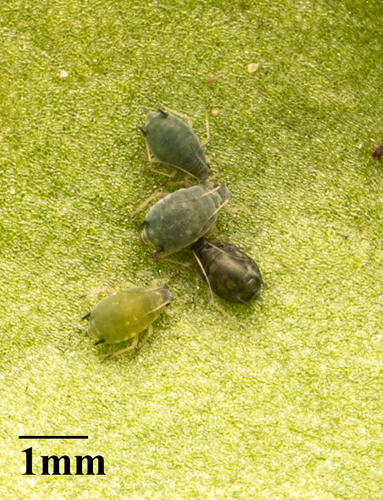
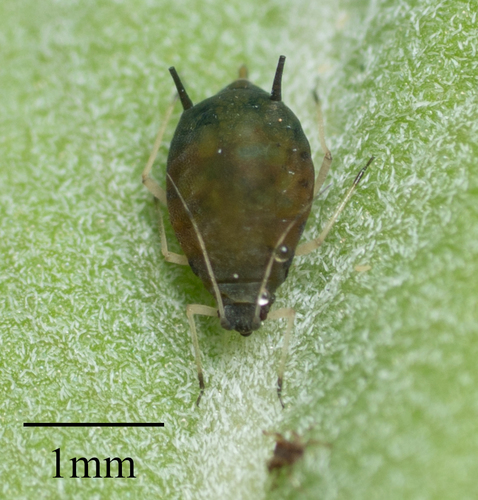
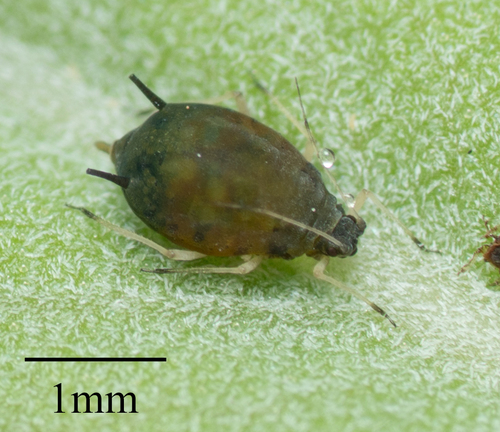
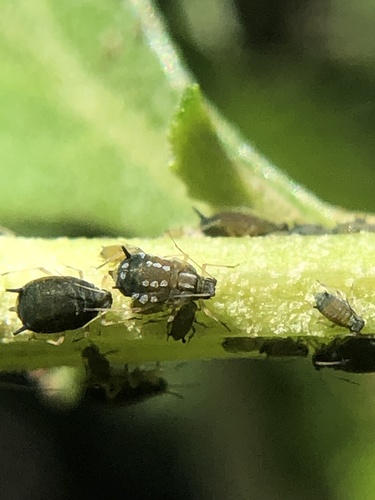
The melon aphid is a tiny, greenish insect about two millimetres long with yellow legs and antennae and black tips on its legs and siphunculi. It feeds by sucking sap from the undersides of leaves and growing tips of many crops, and can spread several plant viruses. In warm regions it reproduces asexually many times a year, creating large populations that can quickly become a serious pest.
Source: Wikipedia
How to recognize it
They have yellow legs and antennae, with black tips on the femur, tibia, and tarsi, and a black, cylindrical siphunculus about one-fifth of their body length.
Source: Wikipedia
Size
Wingless females are about two millimetres long and oval-shaped.
Source: Wikipedia
Is it a pest in the house?
They are a widespread pest of many crops in the cucumber, citrus, and cotton families. They can transmit plant viruses such as crinkle, mosaic, rosette, and CTV.
Source: Wikipedia
How to get rid of it
Carbamates and organophosphates are commonly applied to control them worldwide. Certain parasitic wasps in the Aphidiinae and Aphelinidae families naturally attack these aphids.
Source: Wikipedia
Where it lives
They are found worldwide, thriving outdoors in southern Europe and surviving under glass in northern Europe.
Source: Wikipedia
What it eats
They are true bugs that suck plant sap, feeding on leaf undersides and shoot tips.
Source: Wikipedia
Life cycle
Females can give birth without mating as long as conditions are favorable. In Europe they reproduce only asexually and can produce up to fifty generations per year when conditions allow.
Source: Wikipedia
When you see it
In the southern United States sexual reproduction is not important, and winged forms return to primary hosts in autumn.
Source: Wikipedia
Where it comes from
Their original native range is unknown.
Source: Wikipedia
Where it is found in the US
Recorded in 39 of 51 states and DC. Most records: California, Illinois, Hawaii, Michigan, Missouri, Indiana, New York, Minnesota.
Darker = more records. Counts are museum and citizen-science records, not population size.
Source: GBIF
Months it is reported in the US
Source: GBIF
More photos
Questions people ask
How does the melon aphid damage crops?
It sucks sap from leaves and shoots, weakening plants and spreading viral diseases.
Source: Wikipedia
What crops are affected by the melon aphid?
Cucurbit, citrus, and cotton family plants are commonly attacked.
Source: Wikipedia
How can I control a melon aphid infestation?
Insecticides like carbamates or organophosphates are used, and natural parasitoid wasps can help reduce numbers.
Source: Wikipedia
Same family (Aphididae)
 Oleander AphidAphis neriiDamages trees, gardens or crops
 Witch-hazel Cone Gall AphidHormaphis hamamelidis
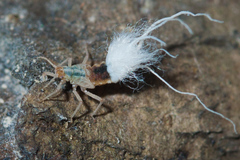 Beech Blight AphidGrylloprociphilus imbricatorDamages trees, gardens or crops
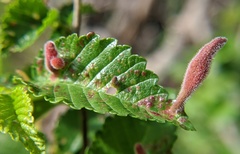 Rice Root AphidTetraneura akinire
 Manzanita Leafgall AphidTamalia coweni
 Giant Willow AphidTuberolachnus salignusDamages trees, gardens or crops
Sources
- Wikipedia: https://en.wikipedia.org/wiki/Aphis_gossypii
Look it up elsewhere: GBIF · iNaturalist · BugGuide · ITIS · Wikipedia
Text written 2026-10-23 from the sources above and checked sentence by sentence against them. Data fetched 2026-10-22.