 Bug FAQ
Woolly Apple Aphid
Eriosoma lanigerum · Order: Hemiptera · Family: Aphididae
Also called: Wooly apple aphid
Source: Wikipedia
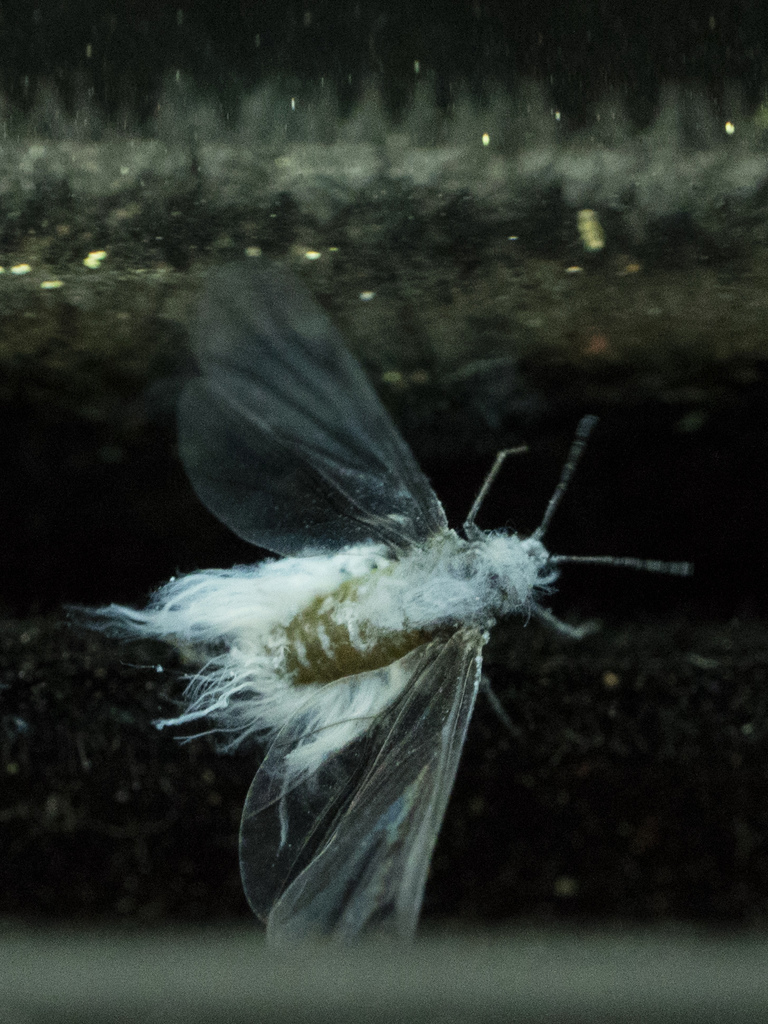
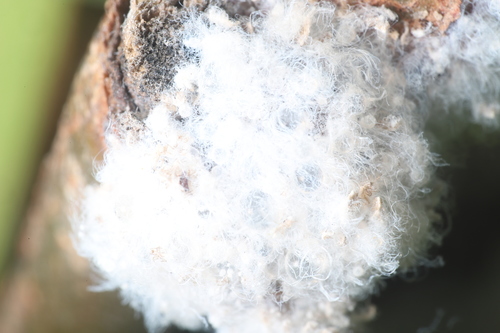
Adults are up to 2 mm long, reddish-brown to purple, but are covered in a white, cotton-like wool that hides their colour. They feed on plant sap, excreting sugary honeydew, and are a common pest of apple trees, especially on varieties with an open calyx. Biological control agents such as the aphelinid wasp Aphelinus mali and the parasitoid Areopraon lepelleyi are used to keep populations in check.
Source: Wikipedia
How to recognize it
Adults appear reddish-brown to purple, but a white woolly secretion from the abdomen hides this colour. Nymphs are salmon-pink with dark eyes and have slightly raised circular cornicles. The woolly coating distinguishes this aphid from any other aphid on apple trees.
Source: Wikipedia
Size
Adults are small to medium aphids, up to about 2 mm long and elliptical in shape.
Source: Wikipedia
How to get rid of it
- The aphelinid wasp Aphelinus mali has been introduced in many regions to biologically control woolly apple aphids.
- The parasitoid wasp Areopraon lepelleyi also attacks this aphid.
Source: Wikipedia
Where it lives
It is a true bug that lives on plants and extracts their sap.
Source: Wikipedia
What it eats
It feeds by piercing plant tissue and sucking sap, releasing honeydew that is rich in sugars.
Source: Wikipedia
Life cycle
In cooler areas it overwinters as a nymph on the roots or in sheltered bark of its host plant. Nymphs undergo four molts before becoming winged adults.
Source: Wikipedia
When you see it
In spring, colonies start producing new young that infest the host tree.
Source: Wikipedia
Where it comes from
The woolly apple aphid is native to North America. In its native range, winged adults migrate to elm trees to overwinter at the end of summer.
Source: Wikipedia
Lookalikes
The presence of the woolly secretion sets it apart from other aphids that may be found on apple trees.
Source: Wikipedia
Where it is found in the US
Recorded in 31 of 51 states and DC. Most records: California, Illinois, Pennsylvania, Massachusetts, Virginia, Minnesota, Oregon, Colorado.
Darker = more records. Counts are museum and citizen-science records, not population size.
Source: GBIF
Months it is reported in the US
Source: GBIF
More photos
Questions people ask
How can I get rid of woolly apple aphids?
Introduce or encourage the biological control wasps Aphelinus mali and Areopraon lepelleyi, which parasitise the aphids.
Source: Wikipedia
What does the woolly apple aphid look like?
Adults are up to 2 mm long, reddish-brown to purple, but covered in a white cotton-like wool; nymphs are salmon-pink with dark eyes.
Source: Wikipedia
When are woolly apple aphids most active?
They begin producing new generations in spring, and winged adults migrate to elms to overwinter at the end of summer in their native range.
Source: Wikipedia
Same family (Aphididae)
 Melon AphidAphis gossypiiDamages trees, gardens or crops
 Oleander AphidAphis neriiDamages trees, gardens or crops
 Witch-hazel Cone Gall AphidHormaphis hamamelidis
 Beech Blight AphidGrylloprociphilus imbricatorDamages trees, gardens or crops
 Rice Root AphidTetraneura nigriabdominalis
 Rose AphidMacrosiphum rosaeDamages trees, gardens or crops
Sources
- Wikipedia: https://en.wikipedia.org/wiki/Eriosoma_lanigerum
Look it up elsewhere: GBIF · iNaturalist · BugGuide · ITIS · Wikipedia
Text written 2026-10-29 from the sources above and checked sentence by sentence against them. Data fetched 2026-10-29.