 Bug FAQ
Giant Willow Aphid
Tuberolachnus salignus · Order: Hemiptera · Family: Aphididae
Also called: Large Willow Aphid
Source: Wikipedia
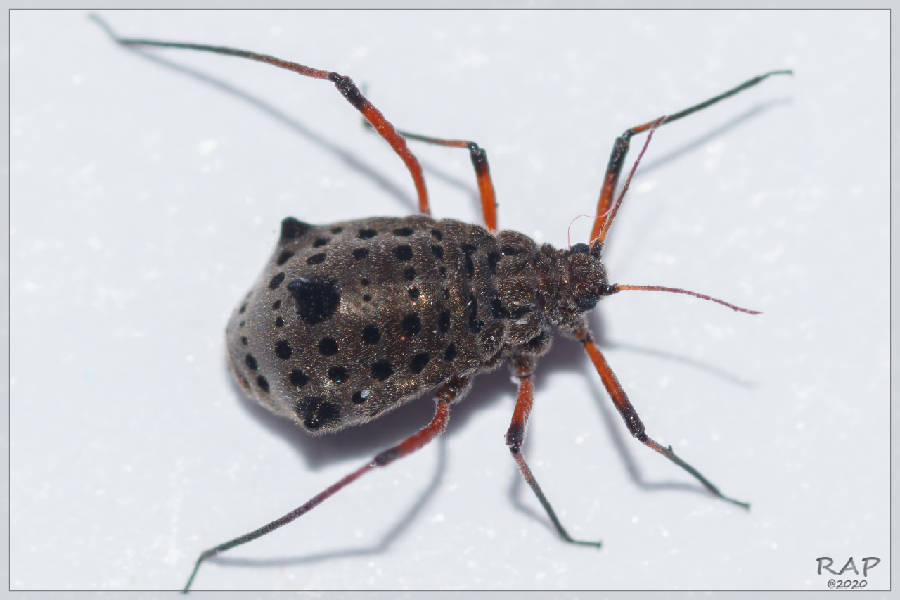
The giant willow aphid is the largest aphid, up to about 6 mm long, with a pear-shaped dark brown-gray body marked by rows of black dots. It lives on willow bark, feeds on willow sap and occasionally on quince, apple and poplar, and reproduces asexually so all individuals are females. Populations peak in late summer and early autumn, then retreat into bark or the ground, and they have become a noticeable pest in New Zealand where a parasitoid was released for control.
Source: Wikipedia
How to recognize it
Adults have a pear-shaped body that is dark brown to grayish and show distinct black dots in rows along the sides.
Source: Wikipedia
Size
They can reach a body length of up to about 5.8 mm, making them the largest known aphids.
Source: Wikipedia
Is it a pest in the house?
They have recently become noticeable in New Zealand, where growing populations cause visible damage to willow trees.
Source: Wikipedia
How to get rid of it
In New Zealand a parasitoid wasp, Pauesia nigrovaria, was released in 2020 to control them. In North America and parts of Europe they are preyed on by parasitic wasps, lady beetles, hover-fly maggots and lacewings.
Source: Wikipedia
Where it lives
They are almost entirely dependent on willow trees and live on the bark where they feed on sap.
Source: Wikipedia
What it eats
Their primary food is the sap of willow species such as white willow, common sallow and Indian willow. They have also been recorded feeding on quince, apple and poplar.
Source: Wikipedia
Life cycle
They reproduce by parthenogenesis, so the population consists entirely of females.
Source: Wikipedia
When you see it
They are most active in warm months, with numbers peaking in late summer and early autumn. When conditions become harsh, they retreat behind bark or into the ground.
Source: Wikipedia
Where it comes from
The species originated in parts of Asia, likely somewhere in Japan or Korea.
Source: Wikipedia
Where it is found in the US
Recorded in 32 of 51 states and DC. Most records: California, Indiana, Oregon, Colorado, Idaho, Nevada, New York, Washington.
Darker = more records. Counts are museum and citizen-science records, not population size.
Source: GBIF
Months it is reported in the US
Source: GBIF
More photos

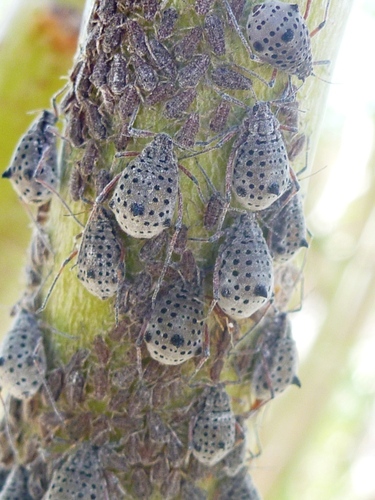
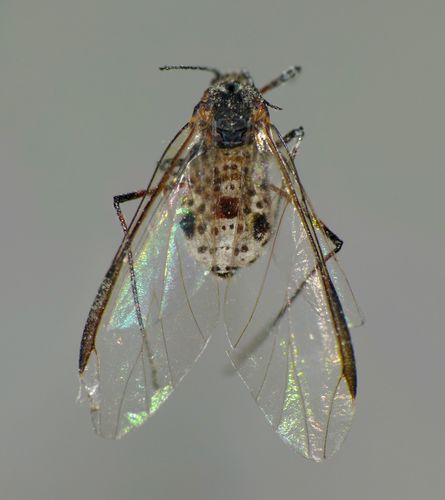
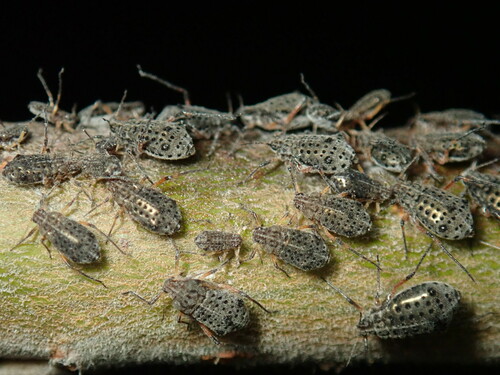
Questions people ask
How can I identify a giant willow aphid?
Look for a pear-shaped dark brown-gray aphid about 5 to 6 mm long with rows of tiny black dots along its body.
Source: Wikipedia
What trees does the giant willow aphid affect?
It mainly attacks willow species but can also be found on quince, apple and poplar.
Source: Wikipedia
When are giant willow aphids most active?
Their numbers peak in late summer and early autumn, after which they hide in bark or the ground.
Source: Wikipedia
How is the giant willow aphid controlled?
In New Zealand a parasitoid wasp was introduced, and elsewhere natural predators like lady beetles and lacewings help keep them in check.
Source: Wikipedia
Same family (Aphididae)
 Melon AphidAphis gossypiiDamages trees, gardens or crops
 Oleander AphidAphis neriiDamages trees, gardens or crops
 Witch-hazel Cone Gall AphidHormaphis hamamelidis
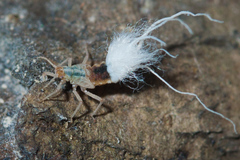 Beech Blight AphidGrylloprociphilus imbricatorDamages trees, gardens or crops
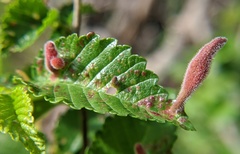 Rice Root AphidTetraneura akinire
 Manzanita Leafgall AphidTamalia coweni
Sources
- Wikipedia: https://en.wikipedia.org/wiki/Tuberolachnus_salignus
Look it up elsewhere: GBIF · iNaturalist · BugGuide · ITIS · Wikipedia
Text written 2026-10-22 from the sources above and checked sentence by sentence against them. Data fetched 2026-10-22.