 Bug FAQ
Wild Crucifer Aphid
Lipaphis erysimi · Order: Hemiptera · Family: Aphididae
Also called: Turnip Aphid
Source: Wikipedia

The wild crucifer aphid is a tiny green insect about 1.4 to 2.4 mm long. It feeds on many brassica vegetables such as cabbage, broccoli, kale and turnip, as well as related weeds. Females reproduce rapidly, producing up to a hundred offspring in a few weeks, and in warm regions up to thirty-five generations may occur each year.
Source: Wikipedia
How to recognize it
Their antennae are dark, legs are pale with dark joints, and cornicles are pale with dark tips.
Source: Wikipedia
Size
Adults measure between 1.4 and 2.4 mm in length. Winged females are about the same size as wingless ones.
Source: Wikipedia
Where it lives
It occurs in most temperate and tropical regions worldwide.
Source: Wikipedia
Life cycle
The species is almost entirely female and each wingless female can produce around one hundred young over a few weeks. In warm locations like Texas, up to thirty-five generations have been recorded in a single year.
Source: Wikipedia
When you see it
Wingless females can give birth to up to six nymphs per day for twenty to forty days, totaling eighty to one hundred offspring. Winged females can fly to new plants but lay fewer eggs.
Source: Wikipedia
Where it comes from
It originated in Europe. Today it is found across many temperate and tropical areas.
Source: Wikipedia
Where it is found in the US
Recorded in 10 of 51 states and DC. Most records: Illinois, North Carolina, Colorado, Florida, Alaska, Indiana, Maryland, Virginia.
Darker = more records. Counts are museum and citizen-science records, not population size.
Source: GBIF
Months it is reported in the US
Source: GBIF
Questions people ask
What crops does the wild crucifer aphid attack?
It feeds on many brassicas such as cabbage, broccoli, kale and turnip, as well as related weeds.
Source: Wikipedia
How quickly does it reproduce?
A wingless female can produce up to a hundred offspring in a few weeks, and in warm areas many generations can occur each year.
Source: Wikipedia
Does it spread plant diseases?
Yes, it can vector several plant viruses, including cabbage black ringspot and cauliflower mosaic viruses.
Source: Wikipedia
Same family (Aphididae)
 Melon AphidAphis gossypiiDamages trees, gardens or crops
 Oleander AphidAphis neriiDamages trees, gardens or crops
 Witch-hazel Cone Gall AphidHormaphis hamamelidis
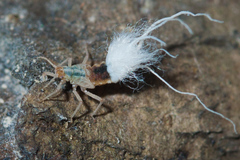 Beech Blight AphidGrylloprociphilus imbricatorDamages trees, gardens or crops
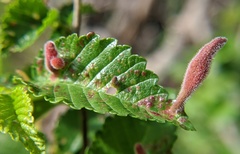 Rice Root AphidTetraneura nigriabdominalis
 Rose AphidMacrosiphum rosaeDamages trees, gardens or crops
Sources
- Wikipedia: https://en.wikipedia.org/wiki/Lipaphis_erysimi
Look it up elsewhere: GBIF · iNaturalist · BugGuide · ITIS · Wikipedia
Text written 2026-10-28 from the sources above and checked sentence by sentence against them. Data fetched 2026-10-28.