 Bug FAQ
Western Leafcutter Bee
Megachile perihirta · Order: Hymenoptera · Family: Megachilidae
Also called: Furry Leaf-cutter Bee, Western Leafcutter
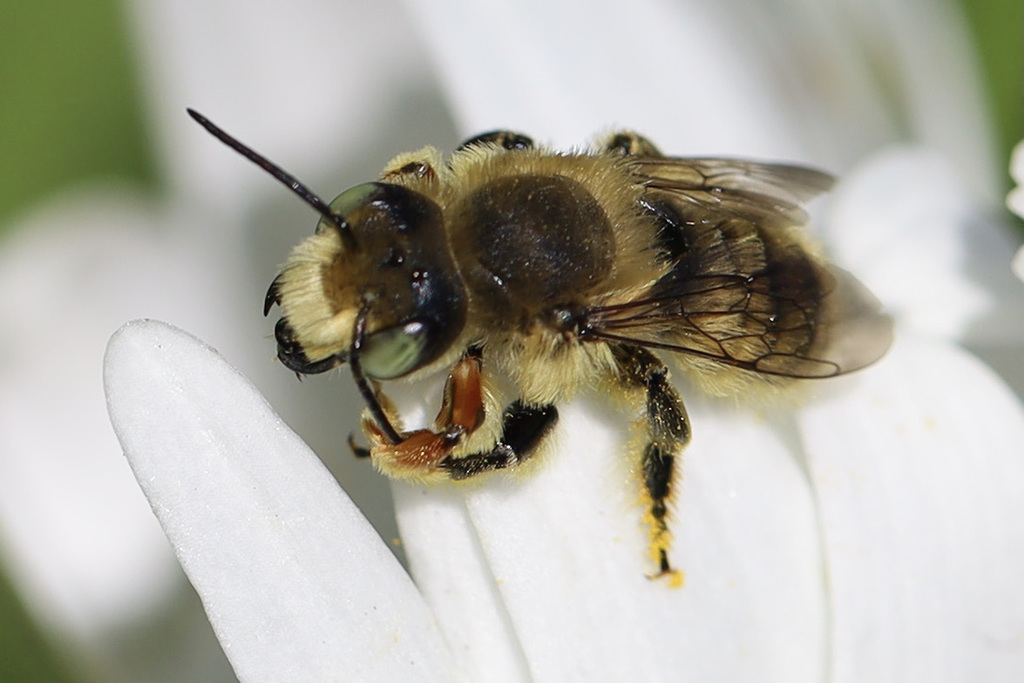
How to recognize it
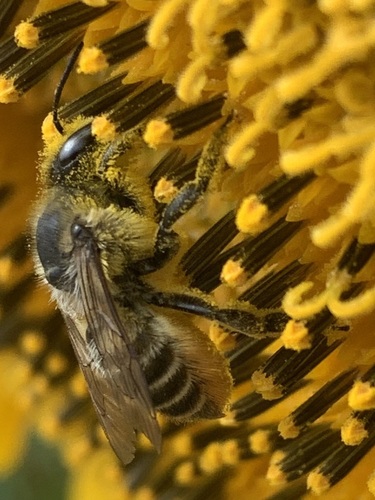
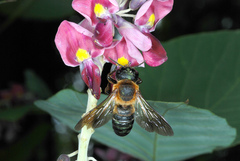
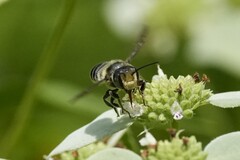
The bee’s body is black with long whitish-yellow hair, especially below the thorax and abdomen. Its abdomen is mostly bare, each segment bearing a few scattered whitish hairs. The wings are clear and the veins are black. A bright red pollen basket is visible beneath the abdomen.
Source: Wikipedia
Where it lives
It lives in meadows and orchards across its western North American range.
Source: Wikipedia
What it eats
Adults drink nectar, while larvae consume both nectar and pollen.
Source: Wikipedia
Life cycle
Small groups dig burrows in sand, gravel, soil, or rotting wood and plant material. Each burrow contains cells lined with leaf fragments, filled with pollen and nectar, where a single egg is laid.
Source: Wikipedia
When you see it
Adults are typically seen from July through August.
Source: Wikipedia
Where it is found in the US
Recorded in 22 of 51 states and DC. Most records: Washington, California, Utah, Oregon, Colorado, Nevada, Idaho, Montana.
Darker = more records. Counts are museum and citizen-science records, not population size.
Source: GBIF
Status: native in North America; native in United States; native in Canada. Source: iNaturalist
Months it is reported in the US
Source: GBIF
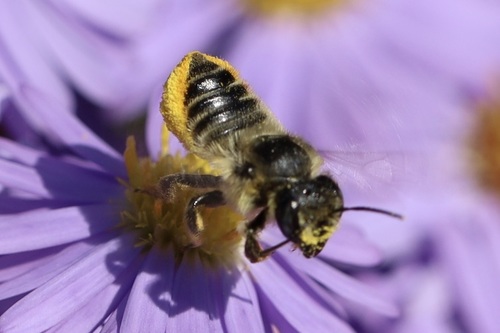
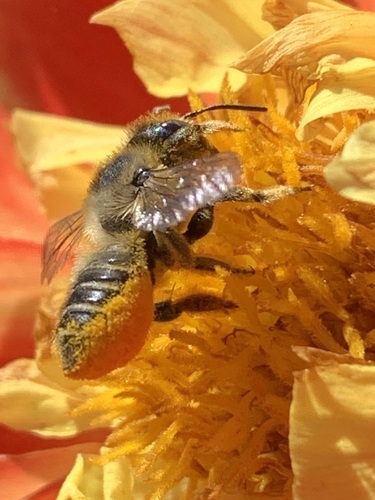
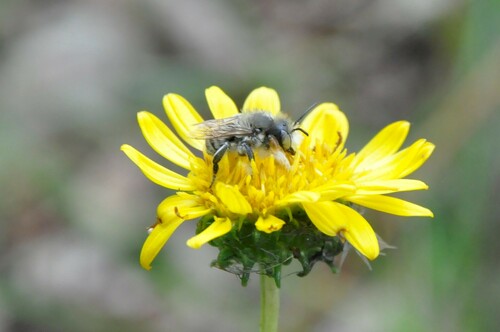
More photos
Questions people ask
When are Western Leafcutter Bees active?
Adults are usually observed from July to August.
Source: Wikipedia
What do Western Leafcutter Bees eat?
Adults sip nectar, and the larvae are fed both nectar and pollen.
Source: Wikipedia
Same family (Megachilidae)

Sources
- Wikipedia: https://en.wikipedia.org/wiki/Megachile_perihirta
Look it up elsewhere: GBIF · iNaturalist · BugGuide · ITIS · Wikipedia
Text written 2026-10-23 from the sources above and checked sentence by sentence against them. Data fetched 2026-10-23.