 Bug FAQ
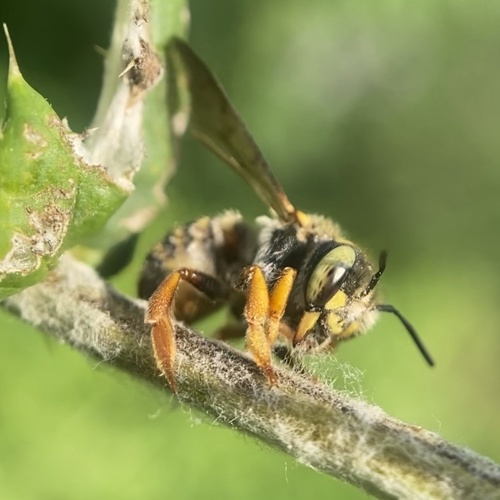
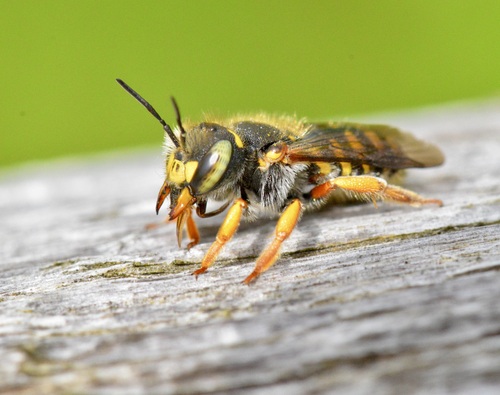
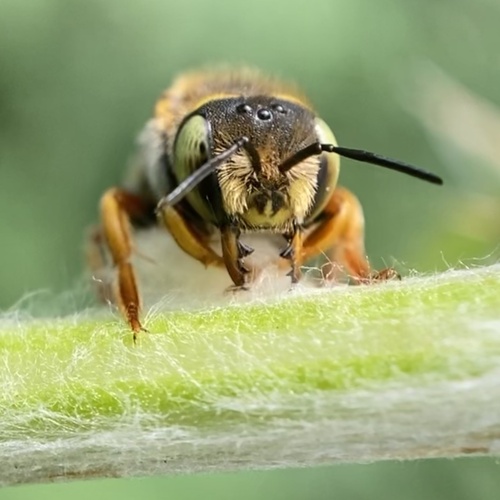
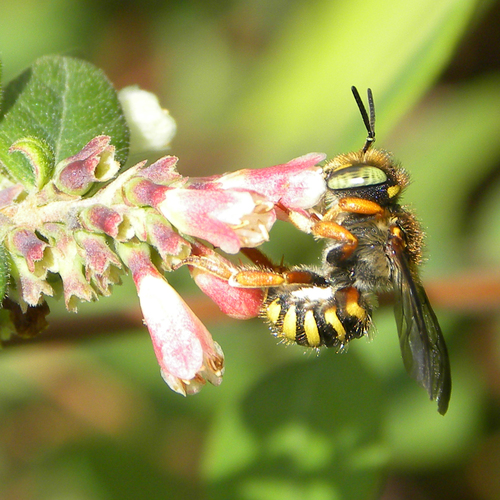
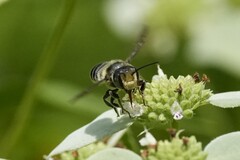
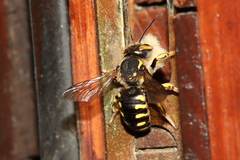
Oblong Woolcarder Bee
Anthidium oblongatum · Order: Hymenoptera · Family: Megachilidae
Also called: Oblong Wool Carder Bee, Oblong Woolcarder

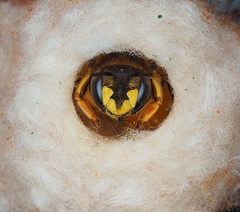
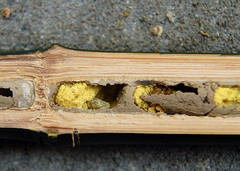
The Oblong Woolcarder Bee builds nests in cavities and lines them with a rust-colored secretion. Adults feed mainly on pollen from Fabaceae, Crassulaceae and Resedaceae plants such as Lotus corniculatus, Onobrychis viciifolia and Sedum reflexum, and they fly from mid-June to early August.
Source: Wikipedia
How to recognize it
The bee coats the outside of its nest with a rust-colored glandular secretion.
Source: Wikipedia
Where it lives
It prefers warm, dry habitats such as flowering grasslands, hedges, dry stone walls, and also occupies ruderal sites like road and railway embankments, flood dams, and garden fallow areas.
Source: Wikipedia
What it eats
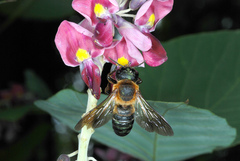
Adults collect pollen almost exclusively from Fabaceae (especially Lotus and Onobrychis), Crassulaceae (especially Sempervivum and Sedum) and Resedaceae. Preferred plants include Lotus corniculatus, Onobrychis viciifolia and Sedum reflexum.
Source: Wikipedia
Life cycle
The species has one generation per year, flying from mid-June to early August.
Source: Wikipedia
When you see it
Flight period runs from mid-June to early August.
Source: Wikipedia
Lookalikes
It is often found in gardens that provide suitable food plants and nesting material. It nests in cavities.
Source: Wikipedia
Where it is found in the US
Recorded in 34 of 51 states and DC. Most records: Pennsylvania, Maryland, New York, Ohio, Washington, Massachusetts, Vermont, Colorado.
Darker = more records. Counts are museum and citizen-science records, not population size.
Source: GBIF
Status: introduced in North America; introduced in United States; introduced in Canada. Source: iNaturalist
Months it is reported in the US
Source: GBIF
More photos
Questions people ask
Same family (Megachilidae)
Sources
- Wikipedia: https://en.wikipedia.org/wiki/Anthidium_oblongatum
Look it up elsewhere: GBIF · iNaturalist · BugGuide · ITIS · Wikipedia
Text written 2026-10-22 from the sources above and checked sentence by sentence against them. Data fetched 2026-10-22.