 Bug FAQ
Sculptured Resin Bee
Megachile sculpturalis · Order: Hymenoptera · Family: Megachilidae
Also called: Giant resin bee
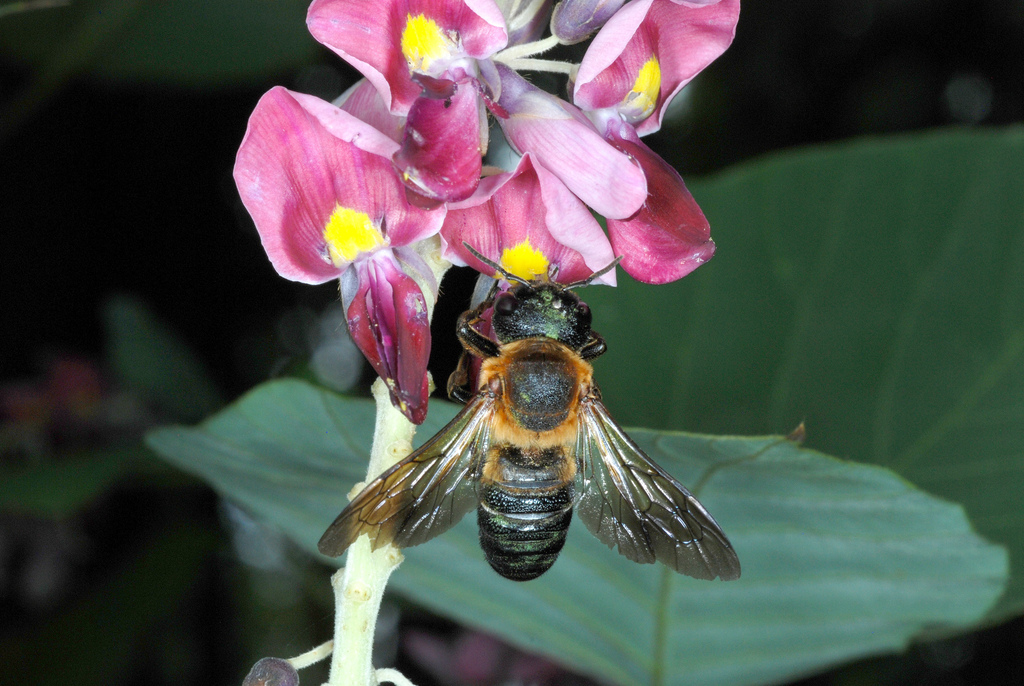
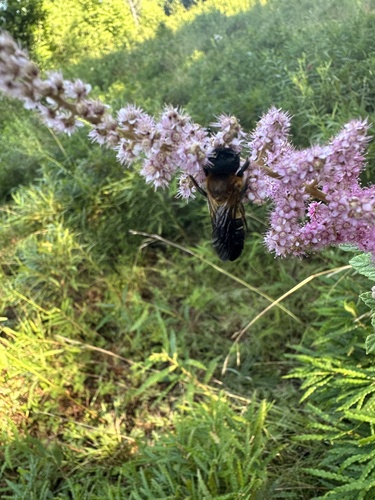
The sculptured resin bee is a medium-sized bee with a cylindrical, mostly black body and a yellow-brown fuzzy thorax. It nests in wood structures, often using old carpenter-bee nests, and is active from early summer through early fall.
Source: Wikipedia
How to recognize it
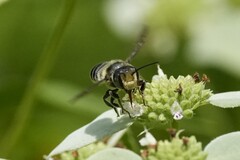
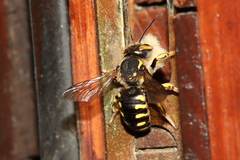
Its body is cylindrical, dark brown on the wings, black on the head and abdomen, and the thorax is covered in dense yellow-brown hairs.
Source: Wikipedia
Size
Males are about 19 to 22 mm long, while females are larger at 21 to 25 mm.
Source: Wikipedia
Where it lives
In the U.S. it lives in nests of large carpenter bees, usually around wooden doors, decks, and porches.
Source: Wikipedia
What it eats
Adults visit a variety of flowering plants, especially members of the pea, mint, loosestrife, goldenrain, and butterfly-bush families.
Source: Wikipedia
Life cycle
Females build brood cells from wood particles and mud, line them with resin, add pollen, lay a single egg, and the larvae overwinter before emerging as adults in early summer.
Source: Wikipedia
When you see it
Adults are typically seen from June through September.
Source: Wikipedia
Where it is found in the US
Recorded in 37 of 51 states and DC. Most records: New York, Pennsylvania, North Carolina, Georgia, Virginia, Maryland, Massachusetts, Ohio.
Darker = more records. Counts are museum and citizen-science records, not population size.
Source: GBIF
Status: introduced in United States; introduced in Canada. Source: iNaturalist
Months it is reported in the US
Source: GBIF
More photos
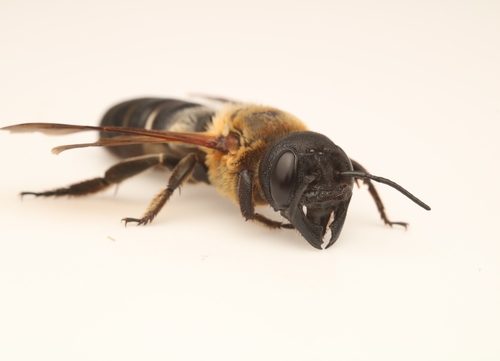
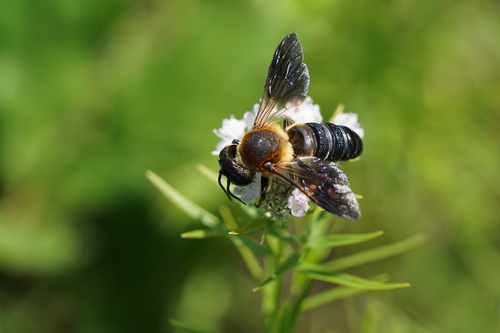
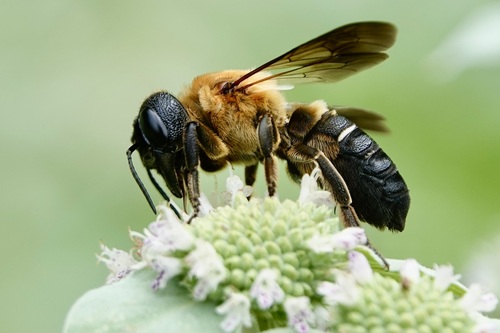
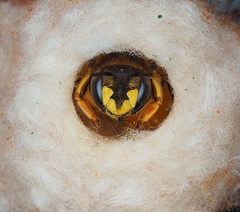
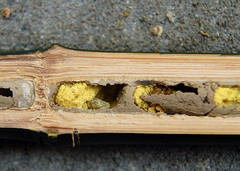
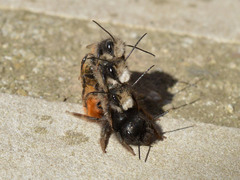
Same family (Megachilidae)

Sources
- Wikipedia: https://en.wikipedia.org/wiki/Megachile_sculpturalis
Look it up elsewhere: GBIF · iNaturalist · BugGuide · ITIS · Wikipedia
Text written 2026-10-22 from the sources above and checked sentence by sentence against them. Data fetched 2026-10-22.