 Bug FAQ
Red Mason Bee
Osmia bicornis · Order: Hymenoptera · Family: Megachilidae
Source: Wikipedia
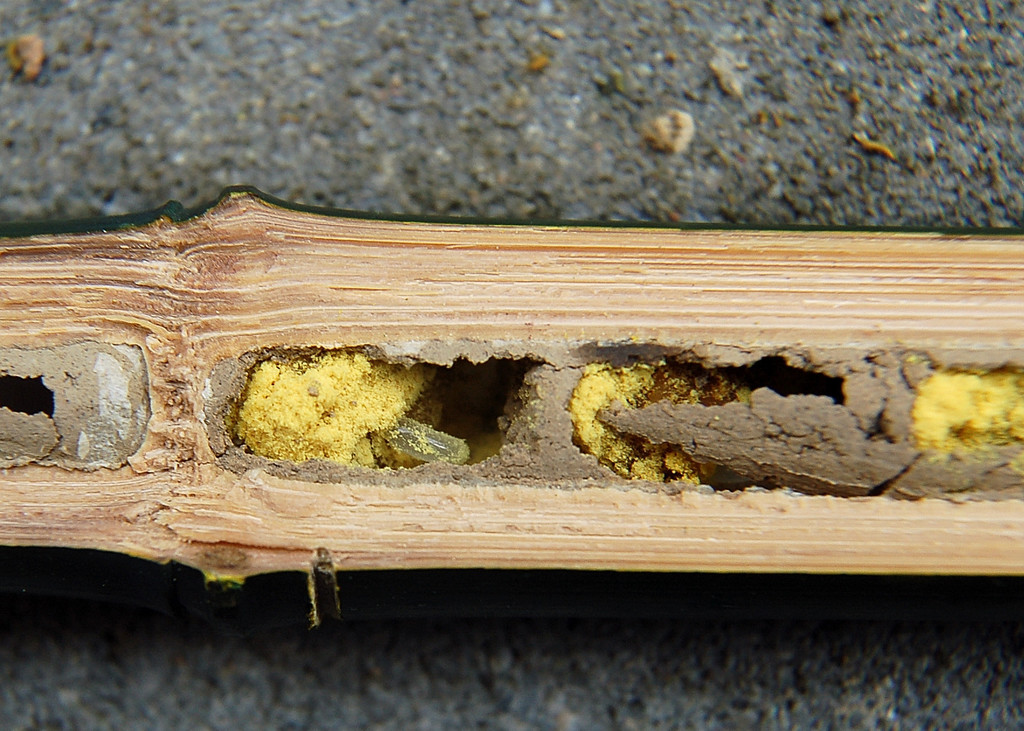
Red mason bees are about the size of honeybees, with females larger than males because they receive more pollen as larvae. They nest in existing holes such as keyholes, snail shells, plant stems, or beetle hollows, and are found across much of Europe, the British Isles, parts of North Africa and western Asia. Females mate once shortly after emerging in spring, often choosing males of intermediate size, and the bees prefer pollen from maple and oak trees.
Source: Wikipedia
How to recognize it
Males have one extra segment on their antennae compared to females.
Source: Wikipedia
Size
Red mason bees are roughly the same size as honeybees. Females are larger than males because they are fed more pollen as larvae.
Source: Wikipedia
Does it bite or sting?
They are not aggressive and will only sting if handled very roughly; the sting is milder than that of honeybees or wasps.
Source: Wikipedia
Where it lives
They use a variety of pre-existing cavities for nesting, including keyholes, empty snail shells, plant stems and beetle hollows.
Source: Wikipedia
What it eats
Red mason bees gather pollen, especially from maple and oak trees, and they nest in existing hollows rather than excavating their own.
Source: Wikipedia
Life cycle
Females mate only once, usually with a closely related male, and often select males of intermediate body size.
Source: Wikipedia
When you see it
Males do not fight each other but may inspect one another, while females mate within a few days after spring emergence.
Source: Wikipedia
Where it comes from
Their range includes England, Scotland, Wales, Ireland, mainland Europe, Scandinavia, North Africa, Georgia, Turkey and Iran.
Source: Wikipedia
Where it is found in the US
Recorded in 1 of 51 states and DC. Most records: New York.
Darker = more records. Counts are museum and citizen-science records, not population size.
Source: GBIF
Status: introduced in Canada. Source: iNaturalist
More photos

Questions people ask
Do red mason bees bite?
Females can sting, but only if handled very roughly, and the sting is much milder than a honeybee's or a wasp's.
Source: Wikipedia
Where do red mason bees nest?
They use existing holes such as keyholes, empty snail shells, plant stems, or beetle hollows for nesting.
Source: Wikipedia
What plants do they pollinate?
They preferentially collect pollen from maple and oak trees.
Source: Wikipedia
Same family (Megachilidae)

Sources
- Wikipedia: https://en.wikipedia.org/wiki/Osmia_bicornis
Look it up elsewhere: GBIF · iNaturalist · BugGuide · ITIS · Wikipedia
Text written 2026-10-22 from the sources above and checked sentence by sentence against them. Data fetched 2026-10-22.