 Bug FAQ
European Woolcarder Bee
Anthidium manicatum · Order: Hymenoptera · Family: Megachilidae
Also called: European Wool Carder Bee, Wool Carder Bee
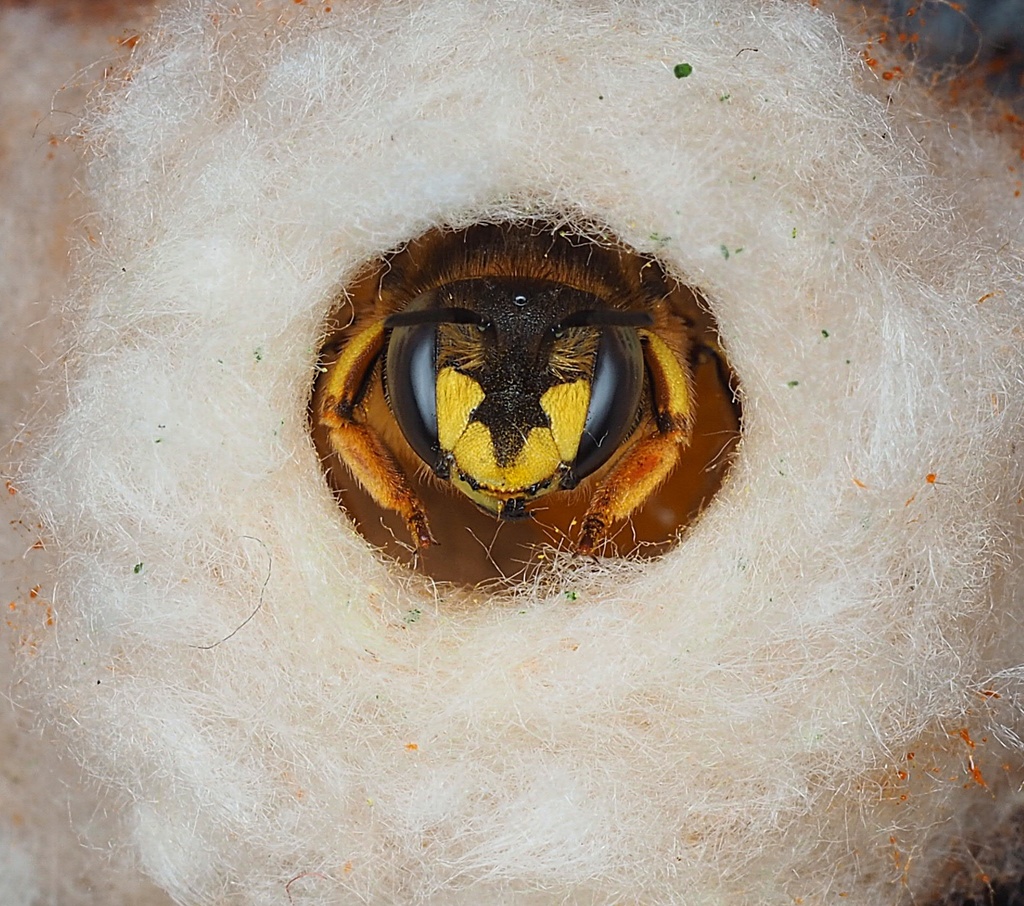
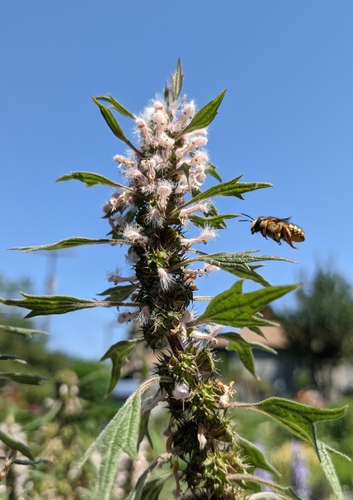
The European Woolcarder Bee is a medium-sized bee with males larger than females and distinctive black and yellow-grey markings. It lives in gardens, fields and meadows across Europe and has spread to many other regions, including North America and South America. Both sexes feed on pollen from many flower families and are active from May to September.
Source: Wikipedia
How to recognize it
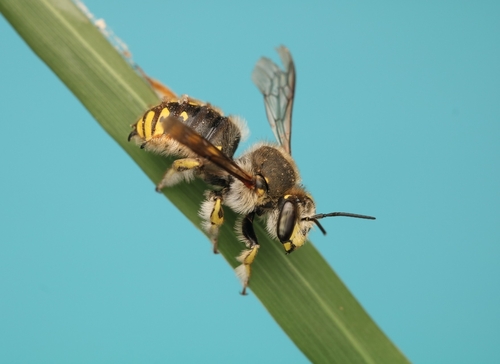
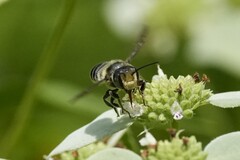
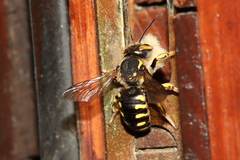
These bees are black with yellow-grey hairs and have yellow spots on the face and abdomen; males have additional yellow markings on the cheeks, clypeus and mandibles.
Source: Wikipedia
Size
Females are about 11 to 13 mm long, while males are larger at 14 to 17 mm, with a wingspan near 20 mm.
Source: Wikipedia
Is it a pest in the house?
They readily use ready-made nesting sites such as movable objects, which helps them spread to new locations.
Source: Wikipedia
How to get rid of it
Females tend to build nests high up, possibly to avoid parasites and predators.
Source: Wikipedia
Where it lives
In Europe they are found in gardens, fields and meadows, especially in southern Wales and England, and are seen from May to September. They were introduced to the United States before 1963 and have since spread across the continent to California.
Source: Wikipedia
What it eats
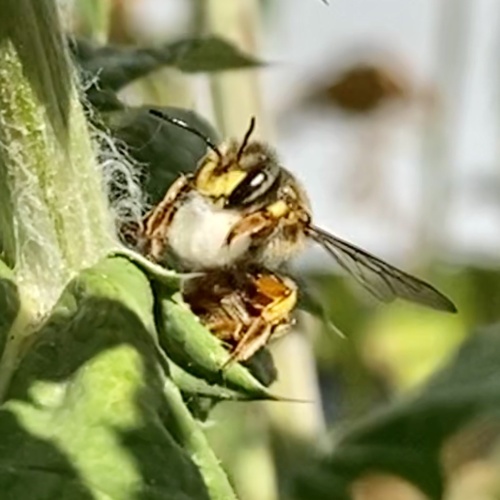
They collect pollen from a wide range of flower families, making them generalist foragers.
Source: Wikipedia
Life cycle
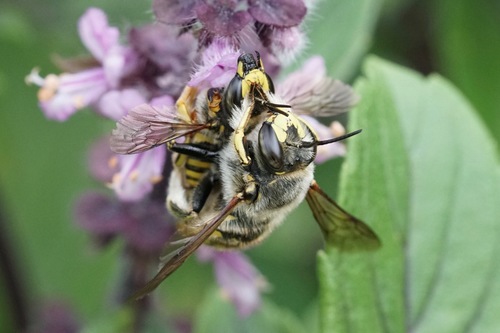
Females mate with multiple males throughout their lives, and both sexes copulate repeatedly.
Source: Wikipedia
When you see it
Adults are active from May through September.
Source: Wikipedia
Where it comes from
Native to Europe, Asia and North Africa, they now also occur in North and South America, the Canary Islands and New Zealand.
Source: Wikipedia
Lookalikes
Male Woolcarder Bees look similar to A. maculosum, sharing spiniform pygidia and rounded sixth sterna.
Source: Wikipedia
Where it is found in the US
Recorded in 43 of 51 states and DC. Most records: California, New York, Oregon, Ohio, Massachusetts, Pennsylvania, Illinois, Washington.
Darker = more records. Counts are museum and citizen-science records, not population size.
Source: GBIF
Status: introduced in North America; introduced in Canada; introduced in United States. Source: iNaturalist
Months it is reported in the US
Source: GBIF
More photos
Questions people ask
Are they a pest in the house?
They can occupy movable nesting sites, which may let them spread into new areas, but no specific home damage is reported.
Source: Wikipedia
Where are they from?
They are native to Europe, Asia and North Africa, and have spread to many other regions worldwide.
Source: Wikipedia
Same family (Megachilidae)

Sources
- Wikipedia: https://en.wikipedia.org/wiki/Anthidium_manicatum
Look it up elsewhere: GBIF · iNaturalist · BugGuide · ITIS · Wikipedia
Text written 2026-10-22 from the sources above and checked sentence by sentence against them. Data fetched 2026-10-22.