 Bug FAQ
Western Cicada-killer Wasp
Sphecius grandis · Order: Hymenoptera · Family: Crabronidae
Also called: Western Cicada Killer
Source: Wikipedia
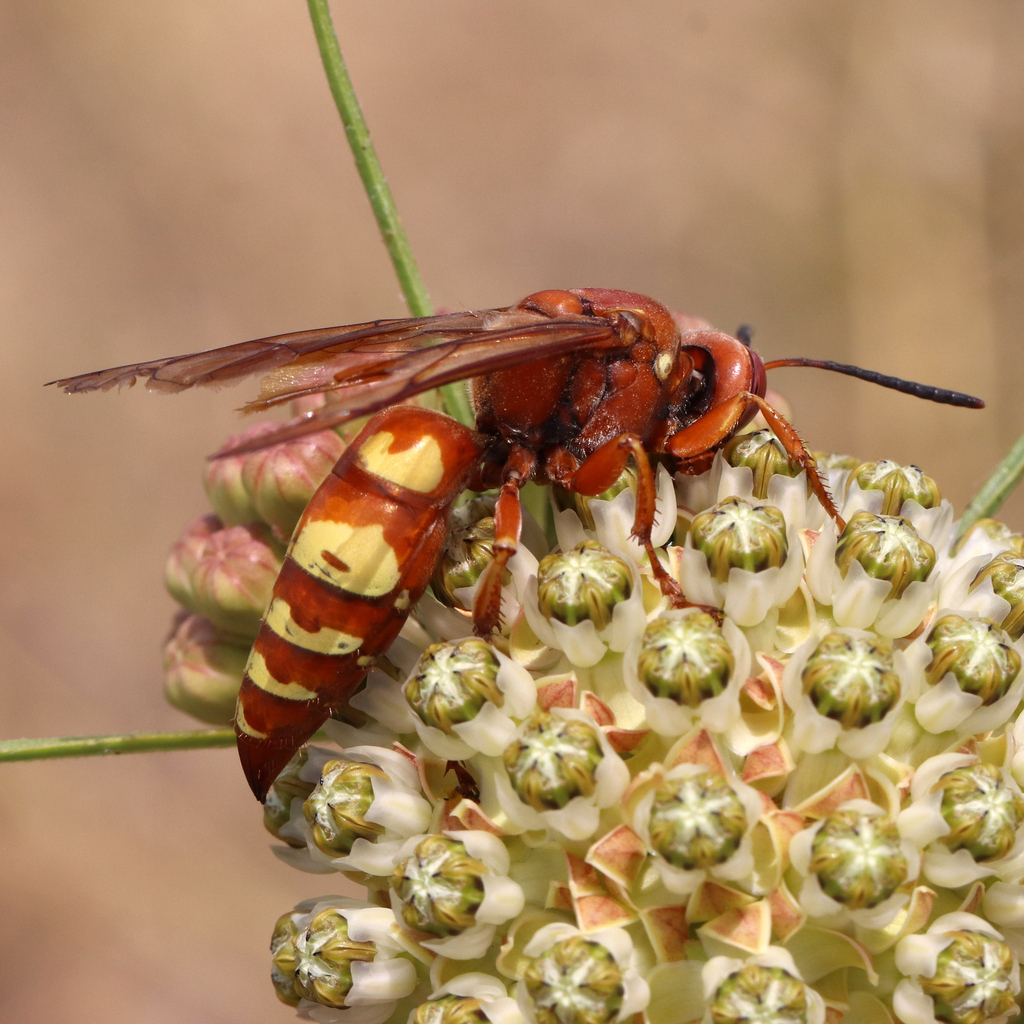
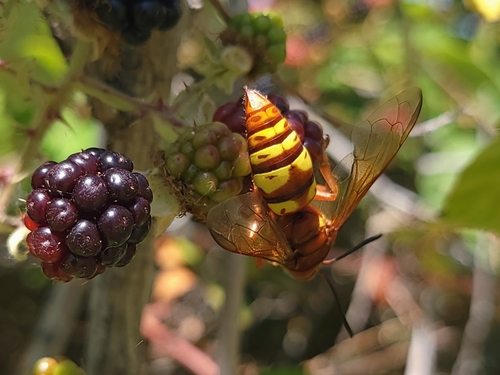
The western cicada-killer wasp is 3 to 5 cm long, amber-yellow with yellow rings on the abdomen, and females have forewings 2.5 to 3 cm long. It nests in bare, well-drained sandy soil, often under sidewalks, in full sun, forming large ground aggregations where each female provisions a single brood cell with several cicadas. Males emerge a few days before females, live only a couple of days, and both sexes may sting if handled, though the sting is usually only mildly painful.
Source: Wikipedia
How to recognize it
It has rufous spots on the first to second tergites and yellow markings from the first to fifth tergites, though patterns can vary.
Source: Wikipedia
Size
Adults measure 3 to 5 cm (1 to 2 in) in length and are amber-yellow with yellow abdominal rings. Female forewings are typically 2.5 to 3 cm (0.98 to 1.18 in) long.
Source: Wikipedia
Is it a pest in the house?
They often appear in backyards, gardens, and sidewalks, leading to frequent human encounters. Pest control is generally unnecessary because they nest in sparsely vegetated areas, ignore people, and females only sting when grabbed or stepped on.
Source: Wikipedia
Does it bite or sting?
Their sting is reported as ranging from merely numbing to a moderate sharp pain.
Source: Wikipedia
How to get rid of it
Pest control is usually unnecessary because they prefer bare soil and are not aggressive toward people. Males are smaller, more aggressive, and less tolerant of disturbance.
Source: Wikipedia
Where it lives
They dig tunnels in well-drained, bare sandy soil, often under sidewalks, and prefer full sunlight. All cicada killers are ground-nesting and can form aggregations with hundreds of nests, each built by a single provisioning female.
Source: Wikipedia
What it eats
Females capture four or more cicadas, place them in brood cells, and lay an egg on each cell to feed the developing larva. Cicadas are the primary food provided for their offspring.
Source: Wikipedia
Life cycle
They mate and brood once a year, typically in July and early August. About 90 % of their life is spent underground as larvae.
Source: Wikipedia
When you see it
Males emerge earlier than females and usually die after only a few days.
Source: Wikipedia
Lookalikes
Distinguishing it from the other four New World Sphecius species is difficult.
Source: Wikipedia
Where it is found in the US
Recorded in 11 of 51 states and DC. Most records: California, Texas, Arizona, Idaho, New Mexico, Oregon, Washington, Nevada.
Darker = more records. Counts are museum and citizen-science records, not population size.
Source: GBIF
Status: native in North America; native in United States. Source: iNaturalist
Months it is reported in the US
Source: GBIF
More photos
Questions people ask
Do they sting?
Their sting is mild, feeling like a slight numbness or a moderate sharp pain if they are grabbed or stepped on.
Source: Wikipedia
How can I get rid of them?
Pest control is generally not needed; they nest in bare, sandy areas and usually ignore people.
Source: Wikipedia
Same family (Crabronidae)

Sources
- Wikipedia: https://en.wikipedia.org/wiki/Sphecius_grandis
Look it up elsewhere: GBIF · iNaturalist · BugGuide · ITIS · Wikipedia
Text written 2026-10-24 from the sources above and checked sentence by sentence against them. Data fetched 2026-10-24.