 Bug FAQ
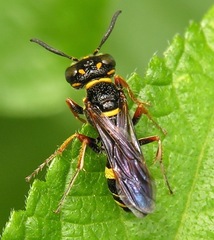
Ornate-tailed Digger Wasp
Cerceris rybyensis · Order: Hymenoptera · Family: Crabronidae
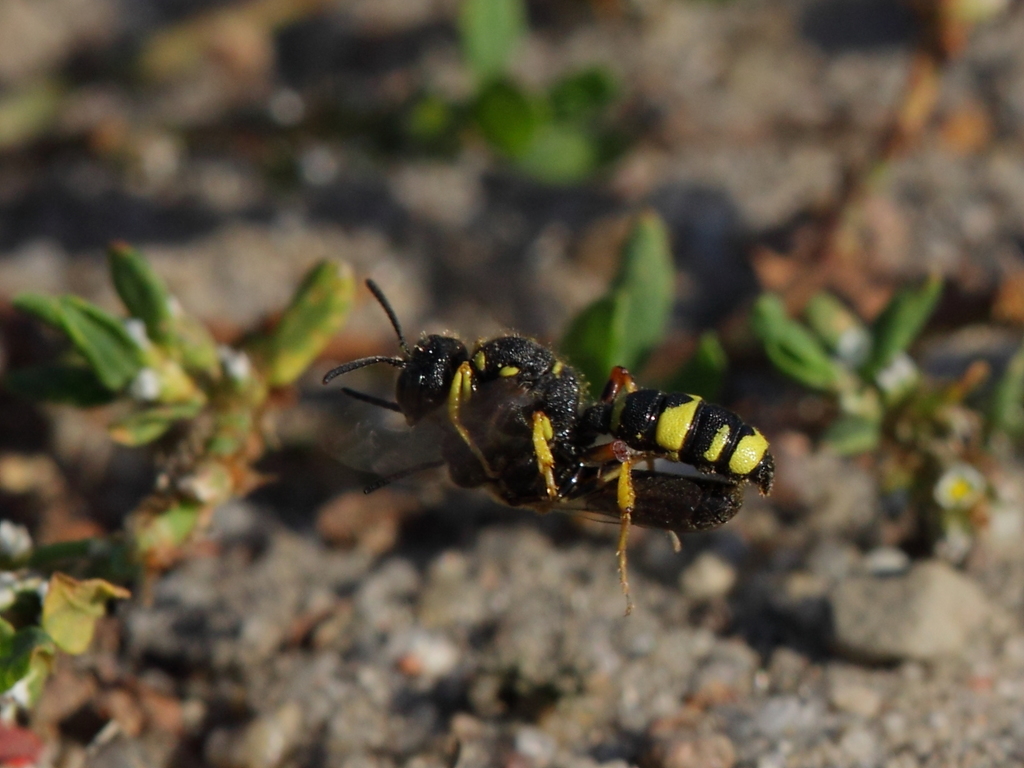
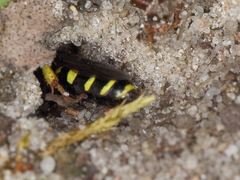
The ornate-tailed digger wasp is a small solitary wasp that lives in sandy or chalky soils and hunts other bees for its larvae. Adults fly from early summer through early autumn and the species produces one generation each year.
Source: Wikipedia
Size
Females are 8 to 12 mm long and males are 6 to 10 mm long.
Source: Wikipedia
Where it lives
It prefers sandy soils, both coastal and inland, but can also be found on heavier soils, chalk grassland, and even in suburban gardens.
Source: Wikipedia
What it eats
Females capture small to medium bees, sting them to paralyse, and stock each nest cell with five to eight prey items.
Source: Wikipedia
When you see it
Adults are on the wing from June through September.
Source: Wikipedia
Where it comes from
Its Palearctic range stretches from southern England and the Iberian Peninsula across most of Europe to Scandinavia and eastward to Japan.
Source: Wikipedia
Lookalikes
It often nests alongside other burrowing wasps and bees, such as the sand-tailed digger wasp (Cerceris arenaria).
Source: Wikipedia
Questions people ask
What do ornate-tailed digger wasps eat?
The females hunt and paralyse small to medium bees, placing several of them in each nest cell for their larvae.
Source: Wikipedia
When are they active?
Adults fly from June to September, producing one generation each year.
Source: Wikipedia
Where might I find them?
They live in sandy or chalky soils, coastal or inland, and have even been recorded in suburban gardens.
Source: Wikipedia
Same family (Crabronidae)

Sources
- Wikipedia: https://en.wikipedia.org/wiki/Cerceris_rybyensis
Look it up elsewhere: GBIF · iNaturalist · BugGuide · ITIS · Wikipedia
Text written 2026-10-22 from the sources above and checked sentence by sentence against them. Data fetched 2026-10-22.