 Bug FAQ
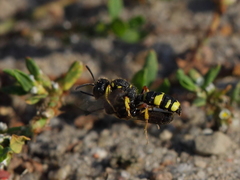
European beewolf
Philanthus triangulum · Order: Hymenoptera · Family: Crabronidae
Also called: Bee Wolf
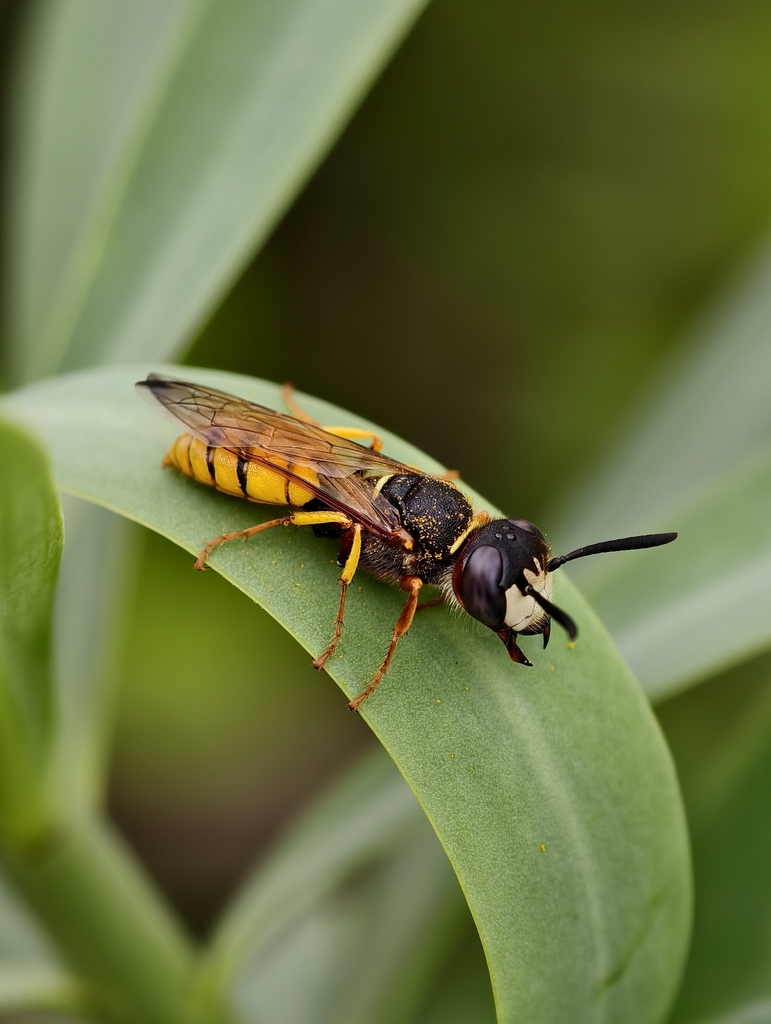
Adults feed on nectar from various flowers, while fertilised females hunt and paralyse honey bees to provision their nests. In cooler regions they have one brood per year with flight from mid-July to September, and the larvae overwinter.
Source: Wikipedia
Does it bite or sting?
Adults have been observed feeding on nectar from plants such as bramble, sea-holly, and thistle.
Source: Wikipedia
Where it lives
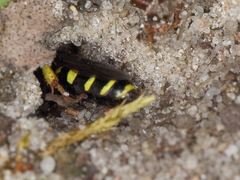
Found mainly on open sandy ground such as lowland heath and coastal dunes, but also in clay, coal dust, ash, and mining spoil heaps.
Source: Wikipedia
What it eats
Adults drink nectar and pollen; fertilised females hunt western honey bees, paralyse them with a sting, and carry them back to the nest.
Source: Wikipedia
Life cycle
In northern areas they produce one brood a year, flying from mid-July to September; in warmer areas they may have two broods in summer. Larvae overwinter in cooler regions and emerge as adults the following summer.
Source: Wikipedia
When you see it
Flight period in the north is mid-July through September.
Source: Wikipedia
Where it comes from
Lives in the Western Palearctic and Afrotropical regions.
Source: Wikipedia
More photos

Questions people ask
What do adult European beewolves eat?
Adults feed on nectar and pollen from a variety of flowers.
Source: Wikipedia
Where are European beewolves usually found?
They prefer open sandy habitats like heathland and dunes, but can also be found in clay, coal dust, ash, and mining spoil heaps.
Source: Wikipedia
How many generations do they have each year?
In cooler northern areas they have one generation per year, while in warmer parts they may have two broods in summer.
Source: Wikipedia
Same family (Crabronidae)

Sources
- Wikipedia: https://en.wikipedia.org/wiki/European_beewolf
Look it up elsewhere: GBIF · iNaturalist · BugGuide · ITIS · Wikipedia
Text written 2026-10-22 from the sources above and checked sentence by sentence against them. Data fetched 2026-10-22.