 Bug FAQ
Weeping Green Lacewing
Chrysoperla plorabunda · Order: Neuroptera · Family: Chrysopidae
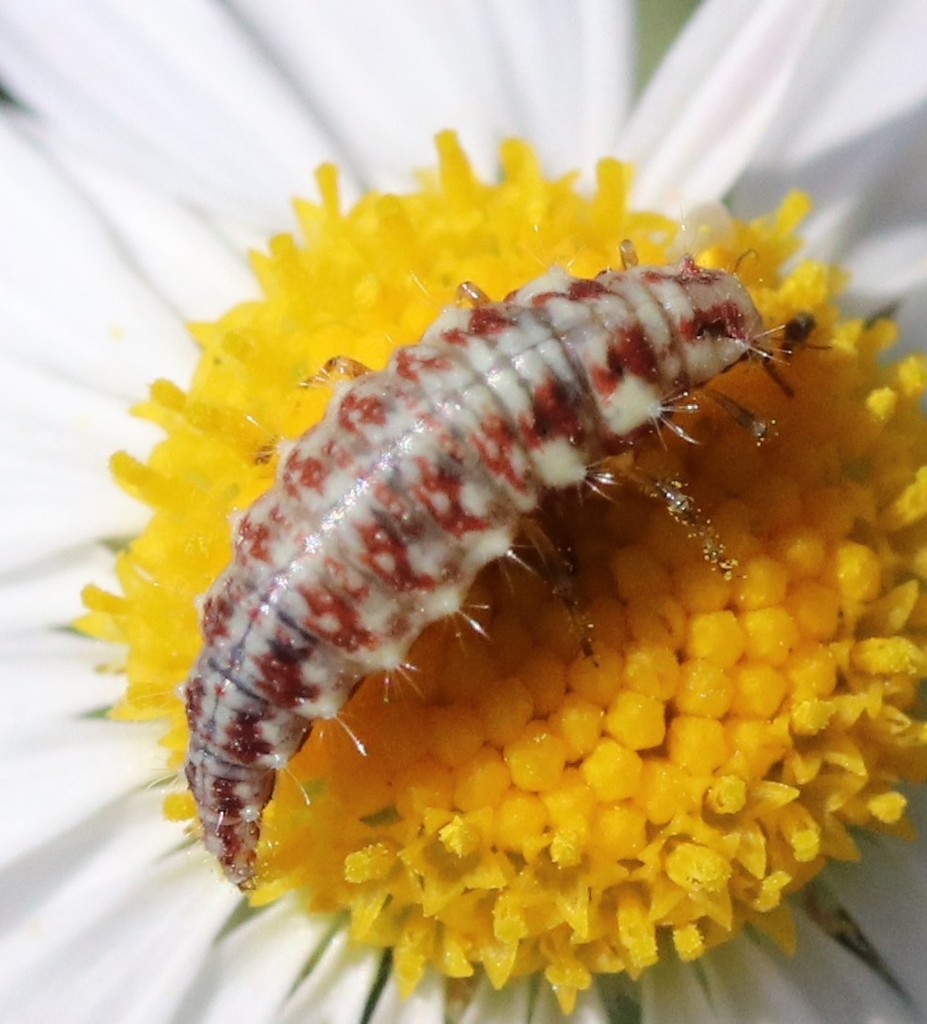
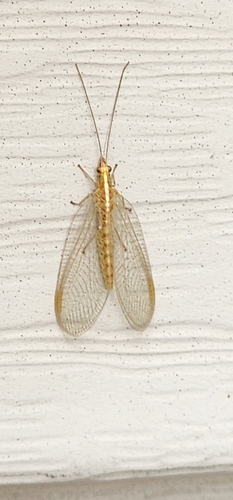
Adults are 12-20 mm long with a yellow stripe down the middle of the body and a dark brown stripe on the head. Adults feed on nectar and honeydew, while the larvae prey on soft-bodied arthropods.
Source: Wikipedia
How to recognize it
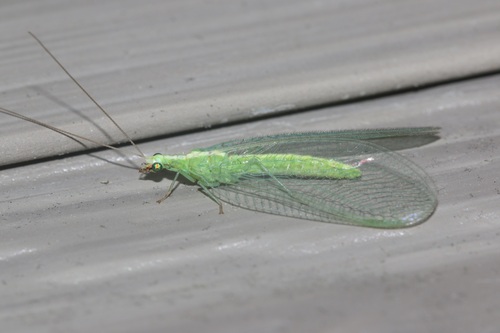
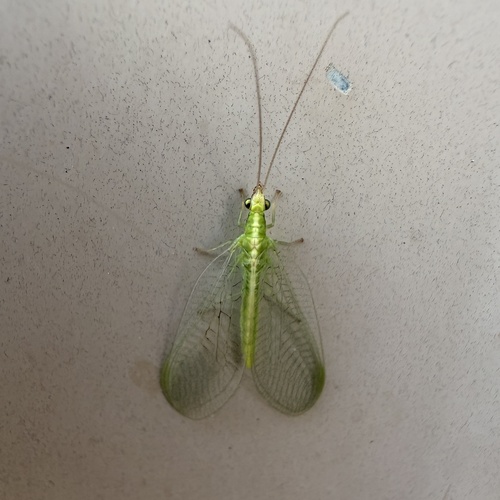
A yellow stripe runs down the centre of the body and a dark brown stripe marks the head.
Source: Wikipedia
Size
Adults measure 12-20 mm, with forewings 9-14 mm long.
Source: Wikipedia
Where it lives
They are found in open areas like grasslands and cultivated fields, and on the edges of both deciduous and coniferous forests.
Source: Wikipedia
What it eats
Adults mainly consume nectar and honeydew; larvae eat other soft-bodied arthropods.
Source: Wikipedia
When you see it
During long-day conditions females lay several hundred eggs that hatch in 3 to 6 days, and adults enter reproductive diapause when days shorten.
Source: Wikipedia
Where it comes from
Their range spans North America from coast to coast, from northern Canada down to Mexico.
Source: Wikipedia
Lookalikes
Other species in the Chrysoperla complex look almost identical and can only be distinguished by their substrate-borne vibrational songs.
Source: Wikipedia
Where it is found in the US
Recorded in 29 of 51 states and DC. Most records: California, Colorado, Pennsylvania, Texas, Illinois, Utah, South Dakota, Kentucky.
Darker = more records. Counts are museum and citizen-science records, not population size.
Source: GBIF
Status: native in North America; native in Canada. Source: iNaturalist
Months it is reported in the US
Source: GBIF
More photos
Questions people ask
What do these lacewings look like?
They have a yellow stripe down the middle of the body, a dark brown stripe on the head, and are bright green or other colors.
Source: Wikipedia
Where are they found?
They live in open habitats such as grasslands, cultivated fields, and forest edges across North America from Canada to Mexico.
Source: Wikipedia
What do they eat?
Adults feed on nectar and honeydew, while the larvae prey on soft-bodied arthropods.
Source: Wikipedia
How can I tell them apart from similar lacewings?
They are nearly identical to other Chrysoperla species and can only be separated by their substrate-borne vibrational songs.
Source: Wikipedia
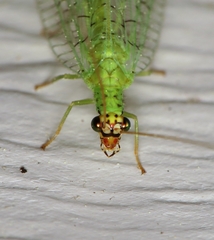
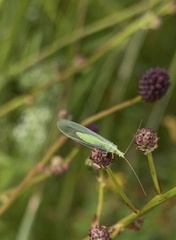
Same family (Chrysopidae)



Sources
- Wikipedia: https://en.wikipedia.org/wiki/Chrysoperla_plorabunda
Look it up elsewhere: GBIF · iNaturalist · BugGuide · ITIS · Wikipedia
Text written 2026-10-24 from the sources above and checked sentence by sentence against them. Data fetched 2026-10-24.