 Bug FAQ
Red-lipped Green Lacewing
Chrysoperla rufilabris · Order: Neuroptera · Family: Chrysopidae
Also called: Red-lipped Lacewing

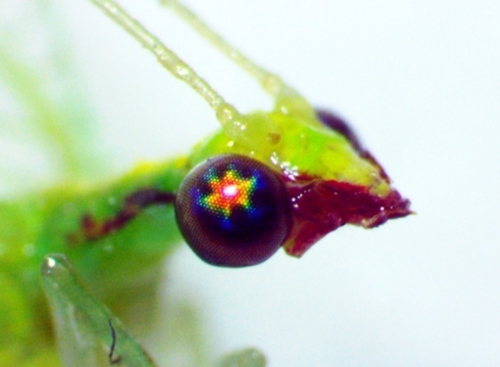
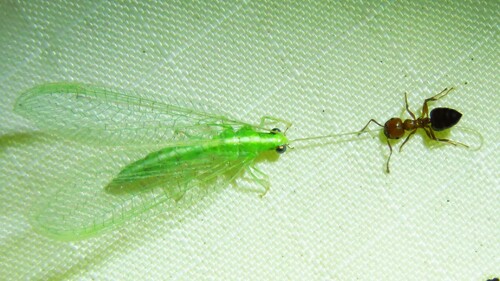
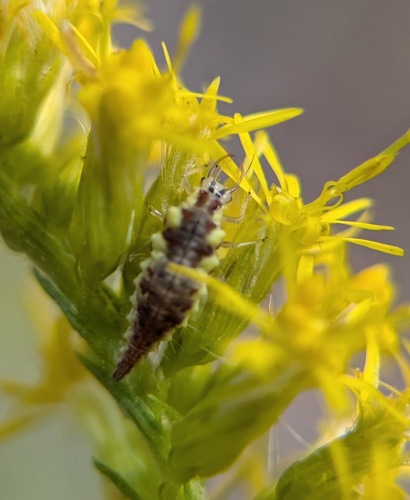
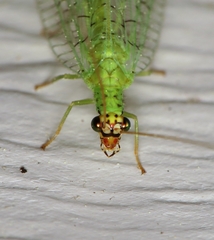
Red-lipped green lacewing adults have broad red cheeks, a pointed tip on the front wing, and black crossveins, while males have distinctive spinellae on their genitalia. The larvae feed on soft-bodied insects such as aphids, thrips, and whiteflies.
Source: Wikipedia
How to recognize it
Adults are set apart by broadly red genae, a pointed fore-wing apex, black gradate crossveins, and spinellae on male genitalia.
Source: Wikipedia
Where it lives
This species lives in the eastern part of North America.
Source: Wikipedia
What it eats
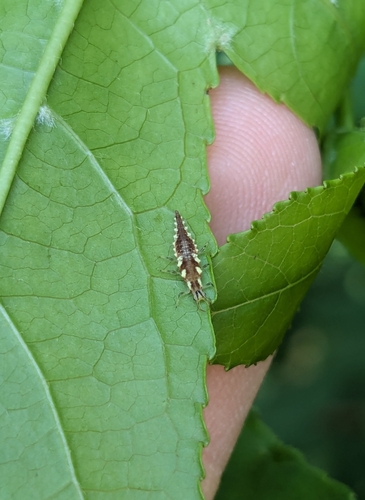
Larvae prey on soft-bodied insects like aphids, thrips, and whiteflies.
Source: Wikipedia
Lookalikes
It can be told apart from other North American Chrysoperla species by its red genae, wing shape, black crossveins, and male genitalia features.
Source: Wikipedia
Where it is found in the US
Recorded in 40 of 51 states and DC. Most records: Texas, California, Pennsylvania, Florida, Virginia, South Carolina, Georgia, North Carolina.
Darker = more records. Counts are museum and citizen-science records, not population size.
Source: GBIF
Status: native in North America; native in Canada. Source: iNaturalist
Months it is reported in the US
Source: GBIF
More photos
Same family (Chrysopidae)


Sources
- Wikipedia: https://en.wikipedia.org/wiki/Chrysoperla_rufilabris
Look it up elsewhere: GBIF · iNaturalist · BugGuide · ITIS · Wikipedia
Text written 2026-10-22 from the sources above and checked sentence by sentence against them. Data fetched 2026-10-22.