 Bug FAQ
Virginia Creeper Treehopper
Telamona ampelopsidis · Order: Hemiptera · Family: Membracidae
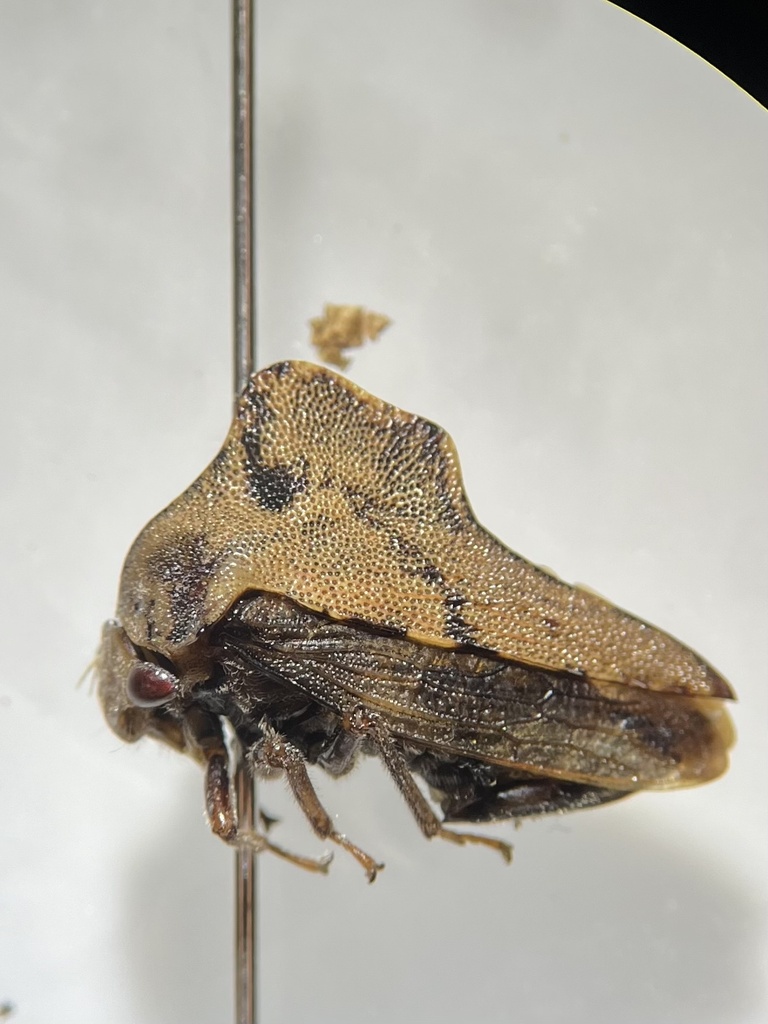
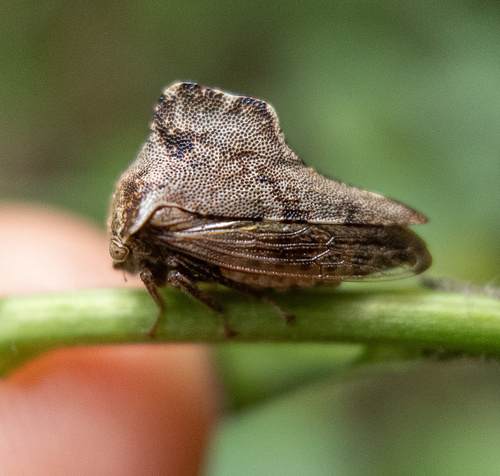
Virginia creeper treehoppers are about 8-10 mm long, with males slightly smaller than females. They live in the eastern United States and eastern Canada and feed exclusively on the sap of Virginia creeper vines. The species includes two subspecies, one named Telamona ampelopsidis ampelopsidis.
Source: Wikipedia
How to recognize it
The pronotum bears a brown pattern that can vary from nearly black to light brown.
Source: Wikipedia
Size
Males are typically 8-9 mm long, while females are about 10 mm.
Source: Wikipedia
Where it lives
It is found in the eastern United States and eastern Canada.
Source: Wikipedia
What it eats
It feeds on plant sap taken from under leaves, and it does so only on Virginia creeper (Parthenocissus quinquefolia).
Source: Wikipedia
Life cycle
The species comprises two subspecies, including Telamona ampelopsidis ampelopsidis described by Harris in 1841.
Source: Wikipedia
Where it comes from
Its native range is the eastern US and eastern Canada.
Source: Wikipedia
Where it is found in the US
Recorded in 32 of 51 states and DC. Most records: Illinois, Louisiana, Ohio, Maryland, Texas, New York, Wisconsin, Pennsylvania.
Darker = more records. Counts are museum and citizen-science records, not population size.
Source: GBIF
Status: native in North America; native in Canada. Source: iNaturalist
Months it is reported in the US
Source: GBIF
More photos
Questions people ask
What plant does the Virginia creeper treehopper eat?
It feeds exclusively on the sap of Virginia creeper vines.
Source: Wikipedia
Where can I find Virginia creeper treehoppers?
They occur in the eastern United States and eastern Canada.
Source: Wikipedia
Same family (Membracidae)

Sources
- Wikipedia: https://en.wikipedia.org/wiki/Telamona_ampelopsidis
Look it up elsewhere: GBIF · iNaturalist · BugGuide · Wikipedia
Text written 2026-10-26 from the sources above and checked sentence by sentence against them. Data fetched 2026-10-26.