 Bug FAQ
Variegated grasshopper
Zonocerus variegatus · Order: Orthoptera · Family: Pyrgomorphidae
Also called: stinking grasshopper
Source: Wikipedia


The adult variegated grasshopper is very colorful with red eyes, a black, white, red and yellow patterned body and legs, and greenish translucent wings. Both adults and nymphs feed on many plants and can cause serious damage to crops, especially in humid forest-edge areas.
Source: Wikipedia
Is it a pest in the house?
Both nymphs and adults damage crops such as cassava, groundnuts and vegetables. They have been implicated in spreading mosaic viruses of cowpea and okra.
Source: Wikipedia
Where it lives
It feeds on many different plants, making it a polyphagous insect.
Source: Wikipedia
What it eats
It eats a wide variety of plants, including crops, making it a polyphagous pest. It can transmit mosaic viruses of cowpea and okra.
Source: Wikipedia
Life cycle
Both nymphs and mature grasshoppers cause damage to crops.
Source: Wikipedia
More photos


Questions people ask
What plants does the variegated grasshopper damage?
It harms crops like cassava, groundnuts and vegetables.
Source: Wikipedia
Can it spread plant diseases?
Yes, it can transmit mosaic viruses that affect cowpea and okra.
Source: Wikipedia
When are they most active for collection?
In northern Nigeria’s dry season they are gathered before dawn when they are inactive.
Source: Wikipedia
Same family (Pyrgomorphidae)
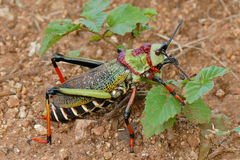 Koppie Foam GrasshopperDictyophorus spumans
 Elegant grasshopperZonocerus elegansDamages trees, gardens or crops
 Northern Grass PyrgomorphAtractomorpha similisDamages trees, gardens or crops
 Painted GrasshopperPoekilocerus pictusDamages trees, gardens or crops
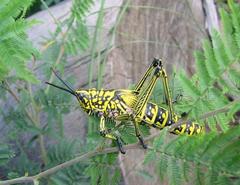 Green Milkweed LocustPhymateus viridipes
 Spotted LocustAularches miliarisDamages trees, gardens or crops
Sources
- Wikipedia: https://en.wikipedia.org/wiki/Zonocerus_variegatus
Look it up elsewhere: GBIF · iNaturalist · BugGuide · Wikipedia
Text written 2026-10-23 from the sources above and checked sentence by sentence against them. Data fetched 2026-10-23.