 Bug FAQ
Koppie Foam Grasshopper
Dictyophorus spumans · Order: Orthoptera · Family: Pyrgomorphidae
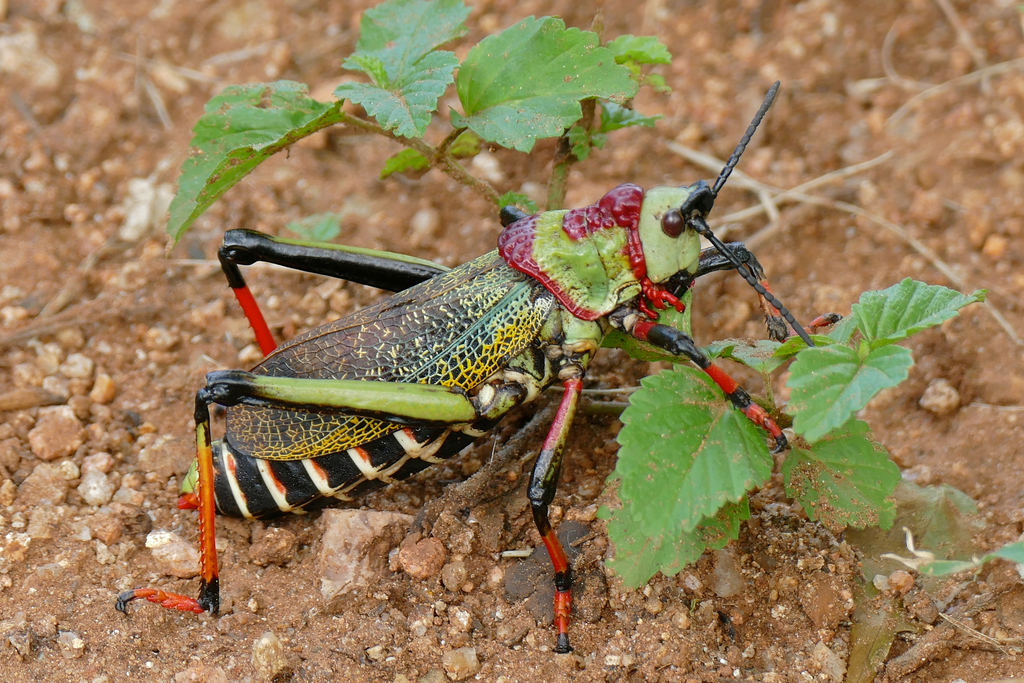
Adult males are about 4.5 to 5 cm long and females 5 to 7 cm, sometimes reaching 8 cm. The neck shield is warty and the body shows bright, contrasting colors that vary widely. It becomes toxic by eating poisonous plants such as milkweed.
Source: Wikipedia
How to recognize it
The neck shield has a warty texture and the grasshopper’s colors are highly variable, usually with bright, contrasting patches.
Source: Wikipedia
Size
Males are typically 4.5 to 5 cm long; females 5 to 7 cm, and they can grow up to 8 cm.
Source: Wikipedia
What it eats
It sequesters toxins from its diet, which includes many poisonous and distasteful plants like milkweed.
Source: Wikipedia
Lookalikes
Its genus Dictyophorus is closely related to the genus Phymateus.
Source: Wikipedia
More photos
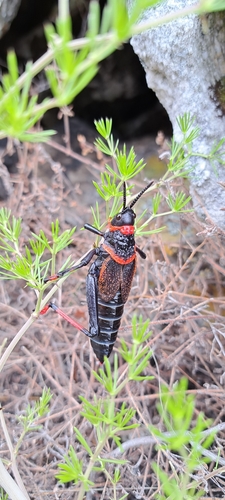
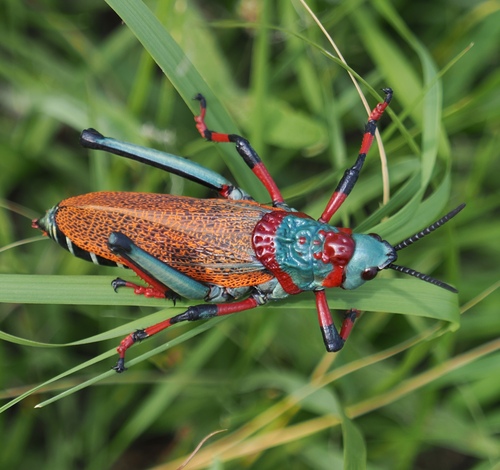
Questions people ask
How big does a Koppie Foam Grasshopper get?
Males are about 4.5 to 5 cm long and females 5 to 7 cm, with some individuals reaching up to 8 cm.
Source: Wikipedia
What does the Koppie Foam Grasshopper look like?
It has a warty neck shield and its body shows bright, contrasting colors that can vary a lot.
Source: Wikipedia
Why is the Koppie Foam Grasshopper toxic?
It eats many poisonous plants such as milkweed and stores the toxins in its body.
Source: Wikipedia
Is the Koppie Foam Grasshopper related to any other bugs?
Yes, its genus Dictyophorus is closely related to the genus Phymateus.
Source: Wikipedia
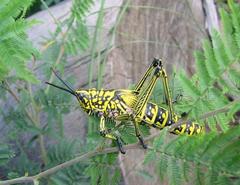
Same family (Pyrgomorphidae)

Sources
- Wikipedia: https://en.wikipedia.org/wiki/Dictyophorus_spumans
Look it up elsewhere: GBIF · iNaturalist · BugGuide · Wikipedia
Text written 2026-10-22 from the sources above and checked sentence by sentence against them. Data fetched 2026-10-22.