 Bug FAQ
Tityus bahiensis
Tityus bahiensis · Order: Scorpiones · Family: Buthidae
Source: Wikipedia
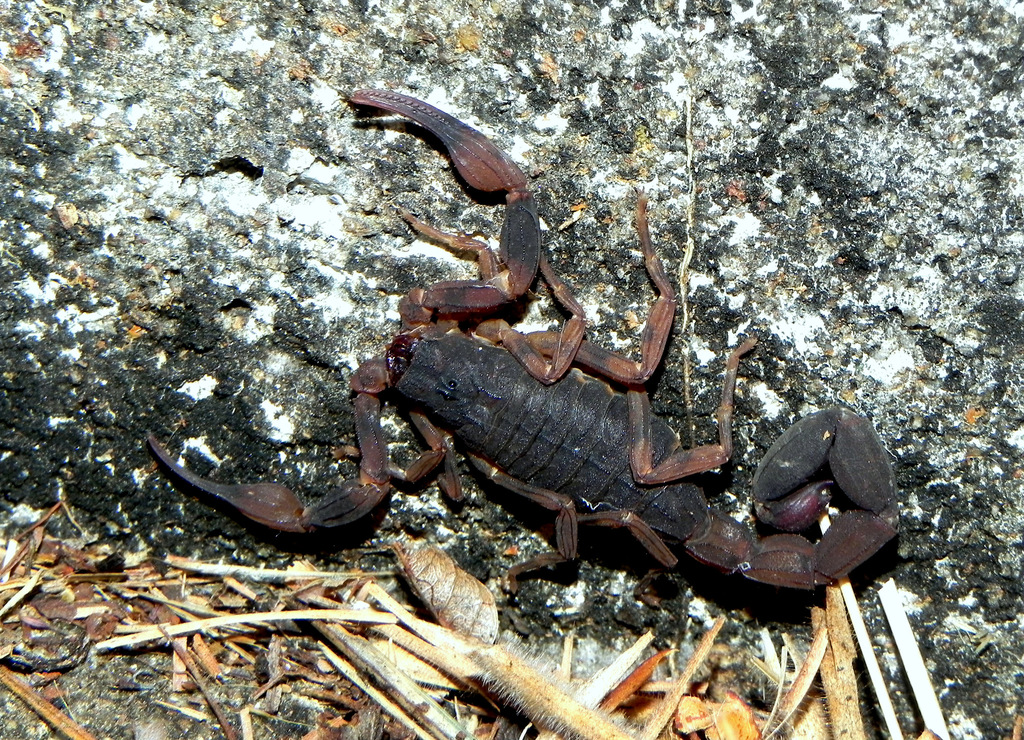
The Brazilian yellow scorpion grows to about 6 cm long and is common in farms and fields (size; habitat). Its sting is medically important, producing intense pain, swelling, sweating, heart-rate changes and sometimes lung or pancreas problems (bite_sting). It feeds on insects such as cockroaches, crickets and spiders (diet).
Source: Wikipedia
How to recognize it
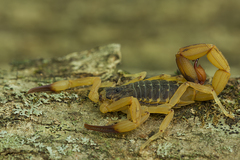
Adults have a dark head and back with reddish-brown tops, light legs with black spots, and a reddish tail; the pincers and stinger tips are brown or black, which helps identify the species (id_marks).
Source: Wikipedia
Size
Individuals usually reach about 6 cm in length (size).
Source: Wikipedia
Does it bite or sting?
Its neurotoxic venom can cause severe pain, swelling, sweating, lethargy, fast heartbeat, lung fluid buildup, breathing trouble, pancreas inflammation, stomach upset, vomiting and blood-pressure changes; the lethal dose in tests is 0.5 mg per kilogram (bite_sting).
Source: Wikipedia
Where it lives
The scorpion is very common in agricultural areas (habitat).
Source: Wikipedia
Life cycle
Mating can happen any time of year, especially from November to April, and females give birth to 2 to 25 young after a gestation of 2 to 12 months (life_cycle; season).
Source: Wikipedia
When you see it
Mating is most frequent between November and April (season).
Source: Wikipedia
Where it comes from
It is a medically important scorpion native to South America (native_range).
Source: Wikipedia
Lookalikes
It is considered the second most toxic scorpion in rural areas, after T. serrulatus (lookalikes).
Source: Wikipedia
Questions people ask
What symptoms can a sting from this scorpion cause?
A sting can produce intense pain, swelling, sweating, fatigue, rapid heartbeat, lung edema, breathing difficulty, pancreas inflammation, nausea, vomiting and blood-pressure changes (bite_sting).
Source: Wikipedia
When does this scorpion mate?
Mating can occur any time of year but is most common from November through April (season).
Source: Wikipedia
Same family (Buthidae)


Sources
- Wikipedia: https://en.wikipedia.org/wiki/Tityus_bahiensis
Look it up elsewhere: GBIF · iNaturalist · BugGuide · Wikipedia
Text written 2026-10-23 from the sources above and checked sentence by sentence against them. Data fetched 2026-10-23.