 Bug FAQ
Little Marbled Scorpion
Lychas marmoreus · Order: Scorpiones · Family: Buthidae
Also called: Little Marbled Black Scorpion
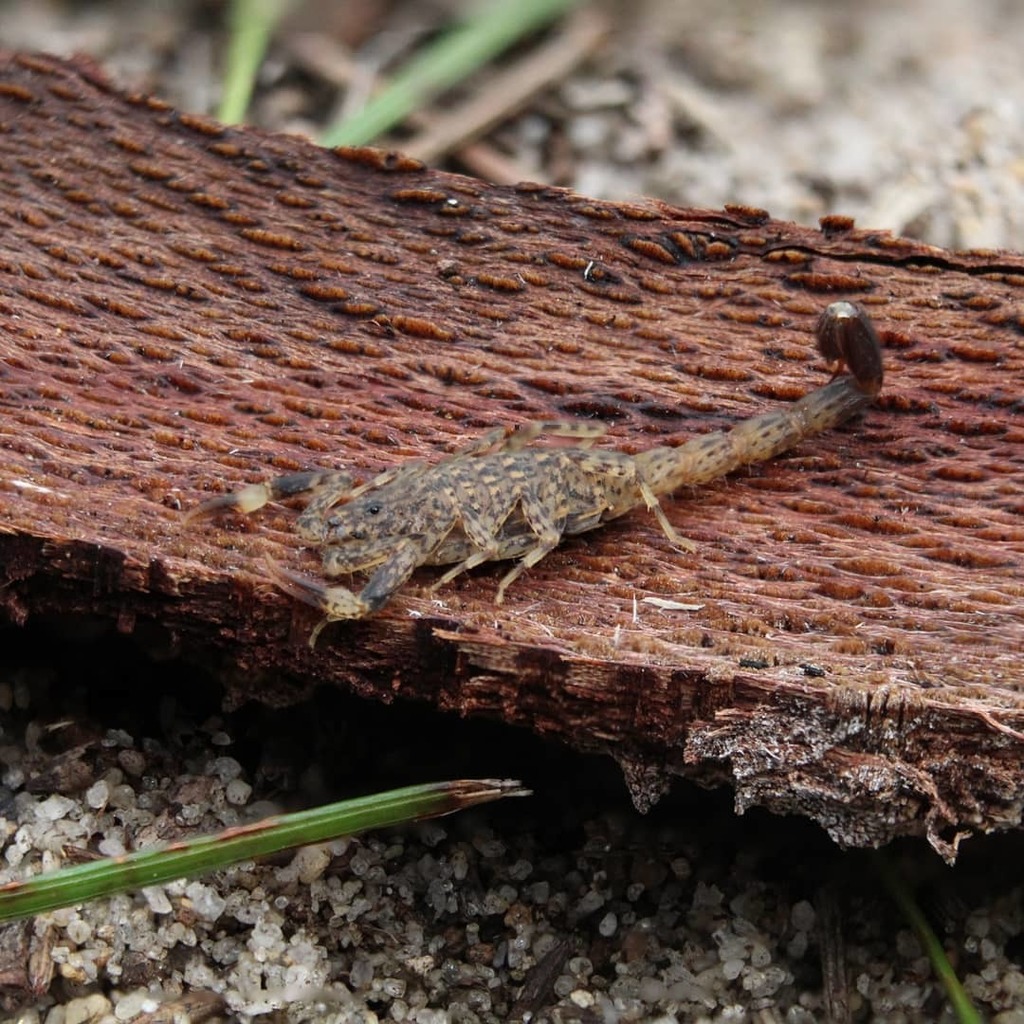
Little marbled scorpions are about 4 cm long, with a tail longer than the body and a dark-brown stinger. They live across southern mainland Australia, often hiding under stones, bark or leaf litter and may wander into houses. They hunt small invertebrates such as termites and their sting can cause a few hours of painful inflammation, sometimes with an allergic reaction.
Source: Wikipedia
How to recognize it
Their base colour is brownish-yellow with a dark brown to black marbled pattern. The tip of the tail and the stinger are dark brown.
Source: Wikipedia
Size
Adults grow to about 40 mm in length, the tail being longer than the body.
Source: Wikipedia
Where it lives
They are found throughout much of southern mainland Australia, especially in cooler, wetter areas, including urban settings. They shelter under stones, bark, and plant litter and can enter houses.
Source: Wikipedia
What it eats
They hunt and eat small invertebrates, particularly termites.
Source: Wikipedia
Where it comes from
The species is native to Australia.
Source: Wikipedia
Questions people ask
How big does the little marbled scorpion get?
Adults reach about 40 mm long, with a tail longer than the body.
Source: Wikipedia
Where might I find this scorpion in my garden or home?
It lives in southern mainland Australia, often under stones, bark, or leaf litter, and can wander into houses.
Source: Wikipedia
Same family (Buthidae)
 Striped Bark ScorpionCentruroides vittatusCan sting
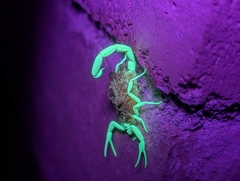 Arizona Bark ScorpionCentruroides sculpturatusVenomous
 Slender Brown ScorpionCentruroides gracilisVenomous
 Edward's Bark ScorpionCentruroides edwardsiiVenomous
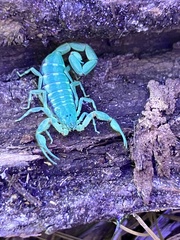 Hentz Striped ScorpionCentruroides hentziCan sting
 Common Yellow ScorpionButhus occitanusVenomous
Sources
- Wikipedia: https://en.wikipedia.org/wiki/Lychas_marmoreus
Look it up elsewhere: GBIF · iNaturalist · BugGuide · Wikipedia
Text written 2026-10-23 from the sources above and checked sentence by sentence against them. Data fetched 2026-10-23.