 Bug FAQ
Hentz Striped Scorpion
Centruroides hentzi · Order: Scorpiones · Family: Buthidae
Source: Wikipedia
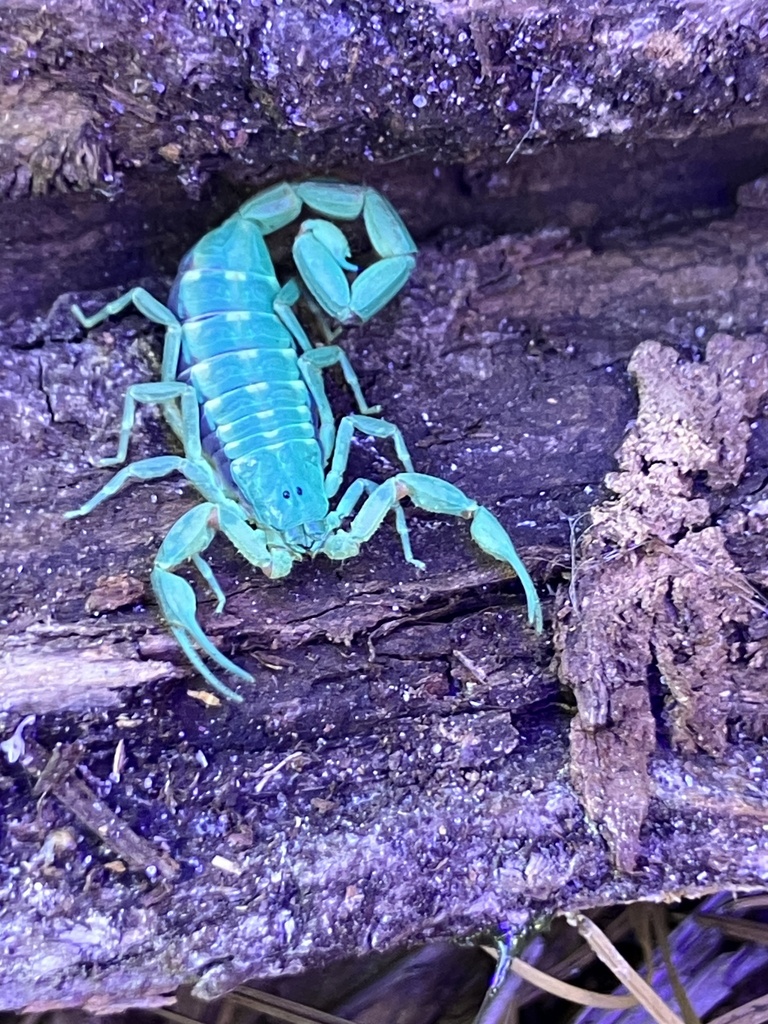
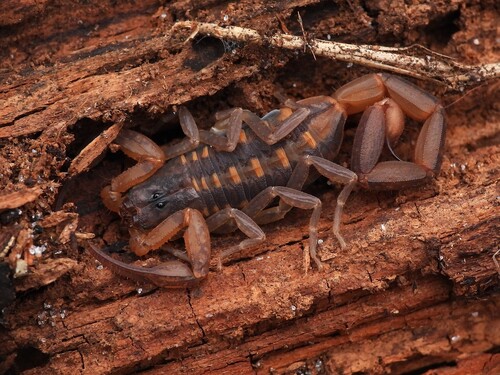
The Hentz striped scorpion is about 3.7 to 3.9 cm long, with a light mottled brown carapace and a yellow median stripe; its legs and chelicerae show brown marbling. It lives under logs, stones and leaf litter and often enters homes, where it feeds on insects like cockroaches and crickets. Stings hurt briefly but have no long-term effects, and the scorpion’s venom takes at least two weeks to regenerate.
Source: Wikipedia
How to recognize it
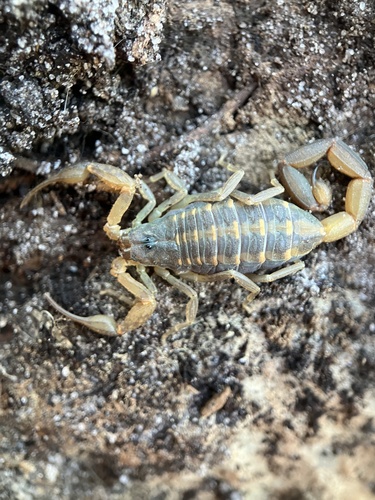
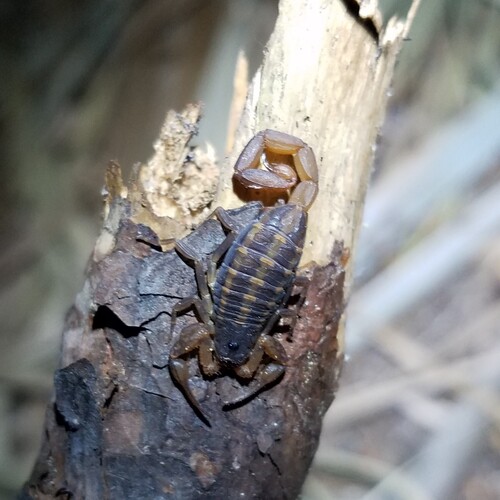
The carapace is a uniform light mottled brown with lines spreading from a yellow central stripe, while the chelicerae and legs have brown reticulation and the leg undersides are pale.
Source: Wikipedia
Size
Males are about 37 mm long with 18 pectinal teeth, and females are about 38.9 mm with 17 pectinal teeth.
Source: Wikipedia
Is it a pest in the house?
This species is a common invader of homes and other constructed spaces.
Source: Wikipedia
Does it bite or sting?
Stings to humans are painful, cause discomfort, but do not have lasting effects or severe medical outcomes.
Source: Wikipedia
Where it lives
They are commonly found under logs, stones, tree snags and ground litter. They frequently invade houses and other built environments.
Source: Wikipedia
Life cycle
After using venom, it takes at least 14 days for the scorpion to regenerate it.
Source: Wikipedia
When you see it
Stings are painful but cause only temporary discomfort without serious medical consequences.
Source: Wikipedia
Where it comes from
Native to the southeastern U.S., especially Florida, southwestern Alabama and the coastal plain of southern Georgia and its barrier islands. They also appear in North and South Carolina due to accidental human transport.
Source: Wikipedia
Where it is found in the US
Recorded in 9 of 51 states and DC. Most records: Florida, Georgia, North Carolina, South Carolina, Louisiana, Alabama, Mississippi, Ohio.
Darker = more records. Counts are museum and citizen-science records, not population size.
Source: GBIF
Status: endemic in United States; native in North America. Source: iNaturalist
Months it is reported in the US
Source: GBIF
More photos
Questions people ask
How painful is a sting from a Hentz striped scorpion?
The sting is painful and causes temporary discomfort but does not lead to lasting medical problems.
Source: Wikipedia
Do they live inside houses?
Yes, they often enter homes and other built environments.
Source: Wikipedia
What do they look like?
They have a light mottled brown carapace with a yellow central stripe, and their legs and chelicerae show brown marbling while the leg undersides are pale.
Source: Wikipedia
Same family (Buthidae)
 Striped Bark ScorpionCentruroides vittatusCan sting
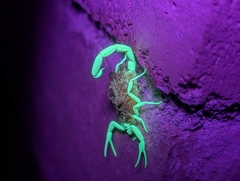 Arizona Bark ScorpionCentruroides sculpturatusVenomous
 Slender Brown ScorpionCentruroides gracilisVenomous
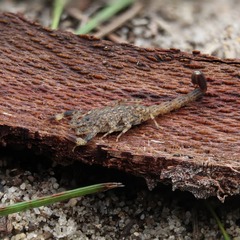 Little Marbled ScorpionLychas marmoreus
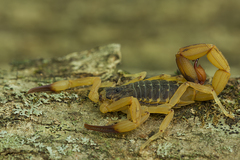 Brazilian Yellow ScorpionTityus serrulatusCan sting
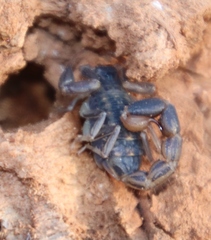 Striped Lesser-Thicktail ScorpionUroplectes lineatusCan sting
Sources
- Wikipedia: https://en.wikipedia.org/wiki/Centruroides_hentzi
Look it up elsewhere: GBIF · iNaturalist · BugGuide · Wikipedia
Text written 2026-10-23 from the sources above and checked sentence by sentence against them. Data fetched 2026-10-22.