 Bug FAQ
Three-spotted Treehopper
Vanduzea triguttata · Order: Hemiptera · Family: Membracidae
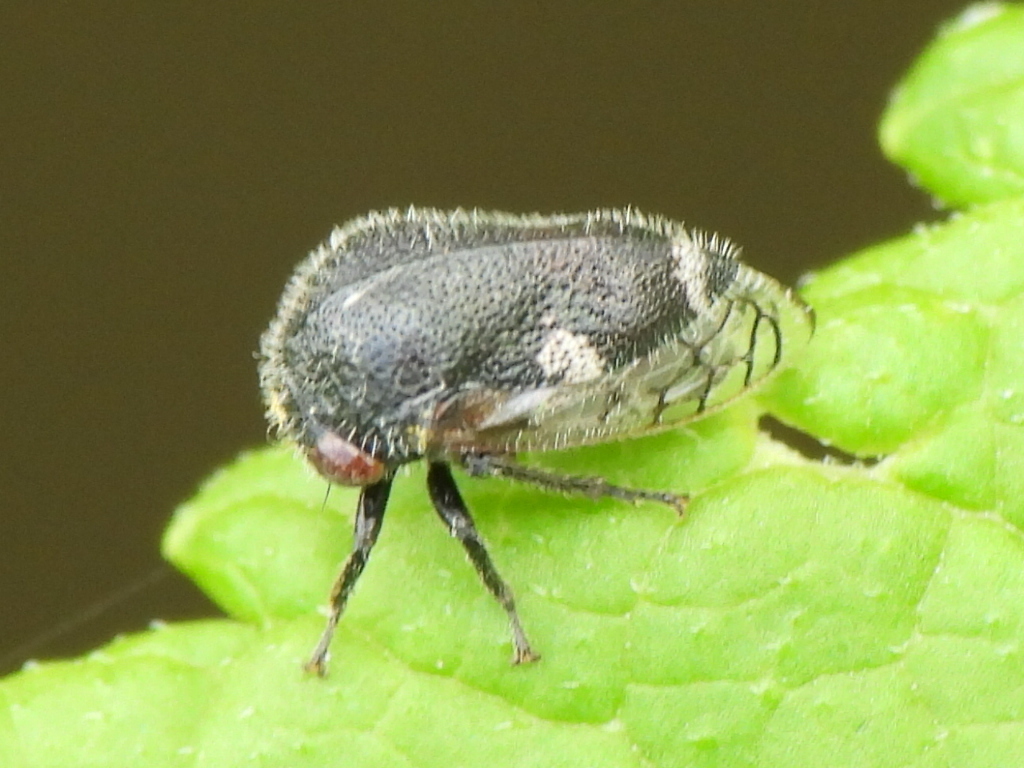
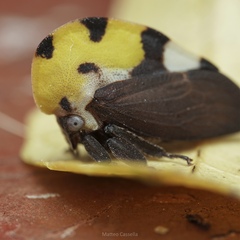
Males measure about 3 to 3.5 mm and females are roughly 4 mm long. Its back (pronotum) is brown with three distinct white spots, giving it the name three-spotted treehopper. It occurs across the southern and mid-western United States, southern Canada, Mexico, and parts of northern South America.
Source: Wikipedia
How to recognize it
The pronotum is brown overall and bears three white spots.
Source: Wikipedia
Size
Males are 3 to 3.5 mm long; females are about 4 mm long.
Source: Wikipedia
What it eats
It feeds on a variety of trees and plants such as Eupatorium, alfalfa, oaks, sunflowers, and related species.
Source: Wikipedia
Where it comes from
Its native range includes the southern and mid-western United States and southern Canada, extending into Mexico and northern South America.
Source: Wikipedia
Where it is found in the US
Recorded in 13 of 51 states and DC. Most records: Florida, Texas, Wisconsin, North Carolina, Colorado, Missouri, Wyoming, Oklahoma.
Darker = more records. Counts are museum and citizen-science records, not population size.
Source: GBIF
Status: native in North America; native in Canada. Source: iNaturalist
Months it is reported in the US
Source: GBIF
More photos
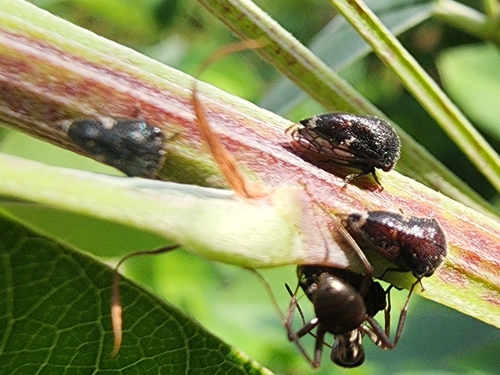
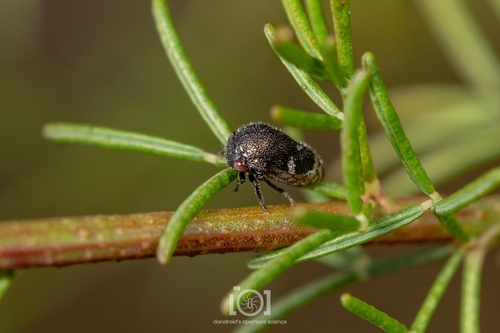
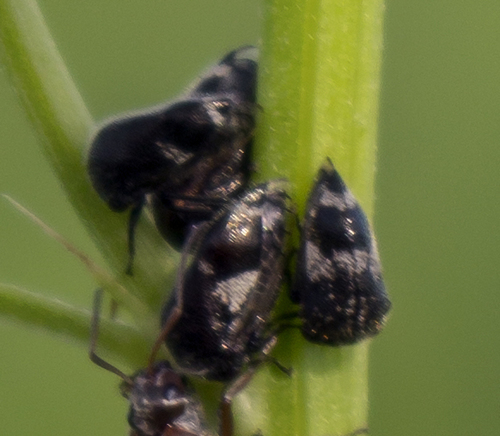
Questions people ask
How can I tell a three-spotted treehopper apart from similar bugs?
Look for a brown pronotum with three white spots; this pattern distinguishes it from the similar Vanduzea arquata.
Source: Wikipedia
What size are three-spotted treehoppers?
Males are about 3 to 3.5 mm long and females are roughly 4 mm long.
Source: Wikipedia
Where might I find three-spotted treehoppers?
They occur in the southern and mid-western United States, southern Canada, Mexico, and parts of northern South America.
Source: Wikipedia
Same family (Membracidae)
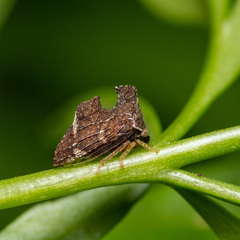
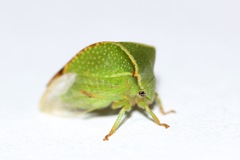
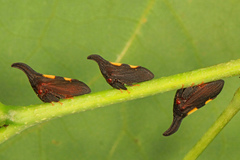

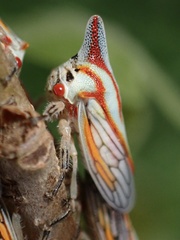
Sources
- Wikipedia: https://en.wikipedia.org/wiki/Vanduzea_triguttata
Look it up elsewhere: GBIF · iNaturalist · BugGuide · Wikipedia
Text written 2026-10-29 from the sources above and checked sentence by sentence against them. Data fetched 2026-10-29.