 Bug FAQ
Thorn Treehopper
Umbonia crassicornis · Order: Hemiptera · Family: Membracidae
Source: Wikipedia
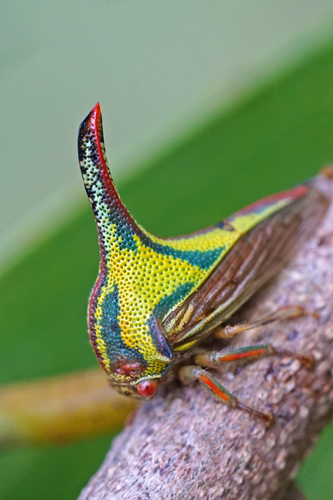
Adult thorn treehoppers are about 10 mm long and are usually green or yellow with reddish lines and brown markings. They live on ornamental and fruit trees in warm, subtropical regions from northern South America up through Mexico and into Florida. Females lay around 100 eggs in plant stems and guard the nymphs, which improves their survival.
Source: Wikipedia
How to recognize it
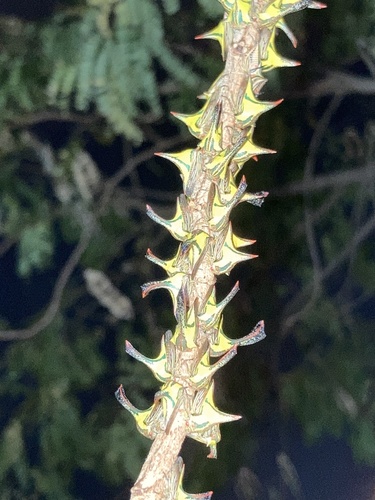
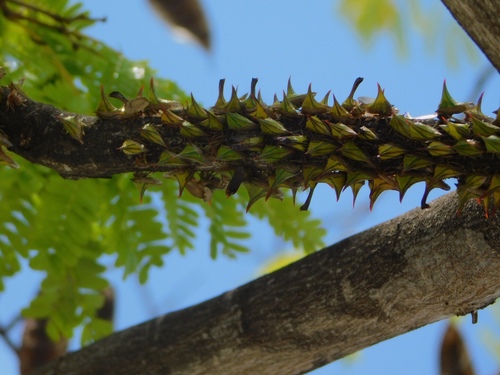
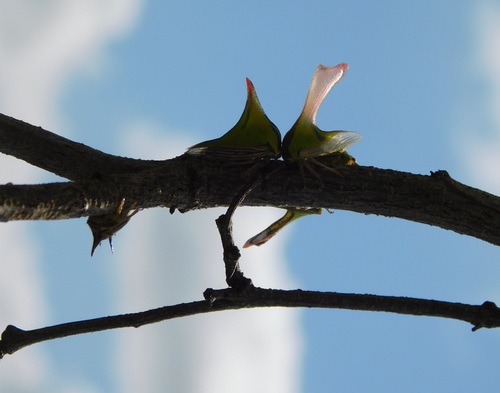
Their tall, thorn-like pronotum looks like a thorn and can deter predators.
Source: Wikipedia
Size
The adult body length is about 10 mm (0.39 in). Males have a more angled and sometimes expanded pronotal horn than females.
Source: Wikipedia
Is it a pest in the house?
In southern Florida it is an occasional pest of ornamental and fruit trees.
Source: Wikipedia
Where it lives
They prefer ornamental and fruit trees in subtropical areas, feeding on plant sap.
Source: Wikipedia
What it eats
Both adults and nymphs feed on the sap of their host trees.
Source: Wikipedia
Life cycle
A female deposits about 100 eggs into a plant stem under the bark. If the mother stays with the nymphs, survival rises from 27 % to 53 %. Females choose branches about 3.8 mm in diameter so they can wrap their legs around them for brooding.
Source: Wikipedia
When you see it
Temperatures below zero are fatal and cause large population declines.
Source: Wikipedia
Where it comes from
Their range includes tropical northern South America, Mexico, and Florida in the United States. They are limited to regions where average temperatures stay above zero degrees Celsius.
Source: Wikipedia
Where it is found in the US
Recorded in 4 of 51 states and DC. Most records: Florida, Texas, Pennsylvania, Minnesota.
Darker = more records. Counts are museum and citizen-science records, not population size.
Source: GBIF
Status: native in North America. Source: iNaturalist
Months it is reported in the US
Source: GBIF
More photos
Questions people ask
What trees does it affect?
It feeds on and can damage ornamental and fruit trees in subtropical areas.
Source: Wikipedia
Where is it found?
It occurs from northern South America through Mexico up to Florida, where temperatures stay above freezing.
Source: Wikipedia
How many eggs does a female lay?
A female typically deposits around 100 eggs into a plant stem.
Source: Wikipedia
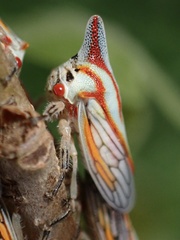
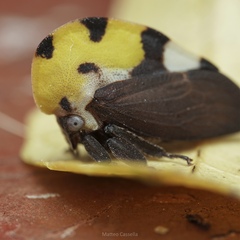
Same family (Membracidae)

Sources
- Wikipedia: https://en.wikipedia.org/wiki/Umbonia_crassicornis
Look it up elsewhere: GBIF · iNaturalist · BugGuide · Wikipedia
Text written 2026-10-25 from the sources above and checked sentence by sentence against them. Data fetched 2026-10-25.