 Bug FAQ
The Lackey
Malacosoma neustria · Order: Lepidoptera · Family: Lasiocampidae
Also called: Lackey, Lackey moth
Source: Wikipedia
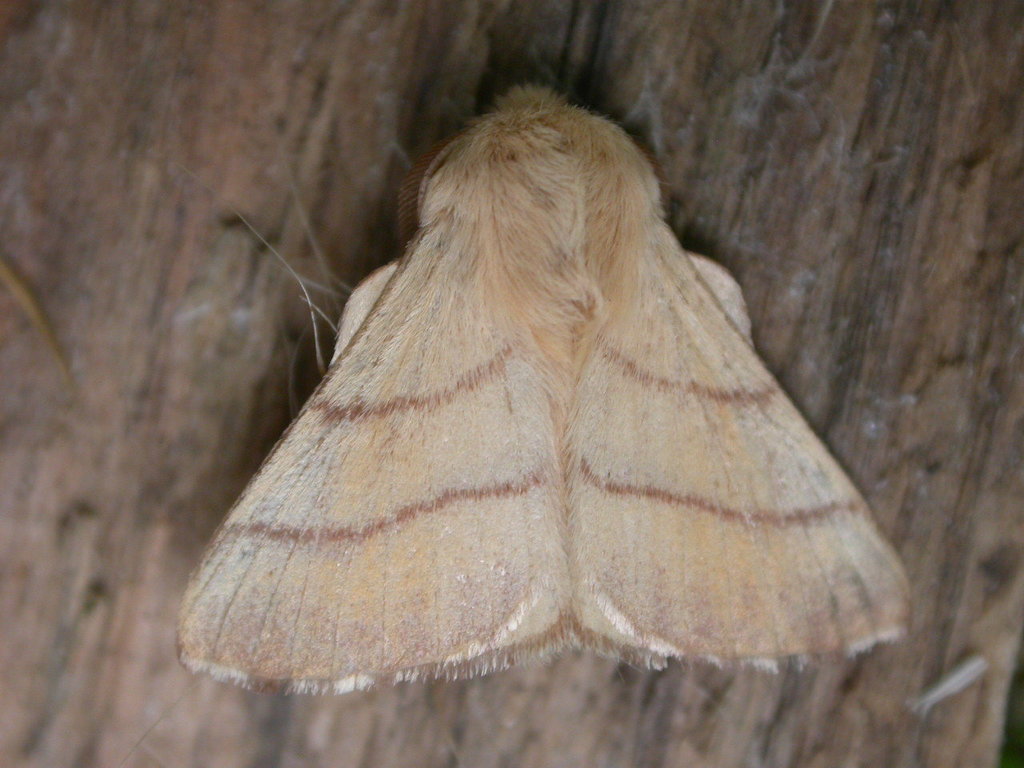
They live on woodland edges, hedgerows and road verges and feed from tents they build on host trees.
Source: Wikipedia
How to recognize it
Caterpillars show brown bodies with blue, orange and white stripes. Adult moths are mostly plain brown.
Source: Wikipedia
Where it lives
They are found on the edges of woods, bushy grassland, coppices, hedgerows and along road verges.
Source: Wikipedia
Life cycle
Females lay eggs in ring-like bands on host-tree twigs in late summer; the eggs overwinter before hatching.
Source: Wikipedia
When you see it
Adults fly from June through August in Britain and Germany.
Source: Wikipedia
Where it comes from
The species is common in southern Britain and central Europe and occurs across Europe, Asia and North Africa.
Source: Wikipedia
More photos

Questions people ask
Does the lackey moth damage garden plants?
Yes, its caterpillars eat the foliage of many garden trees and fruit shrubs, which can reduce plant vigor and fruit yield.
Source: Wikipedia
Same family (Lasiocampidae)
 Eastern Tent Caterpillar MothMalacosoma americanaDamages trees, gardens or crops
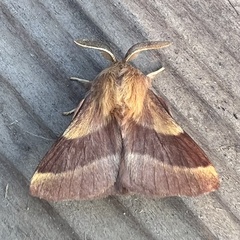 Forest Tent Caterpillar MothMalacosoma disstriaDamages trees, gardens or crops
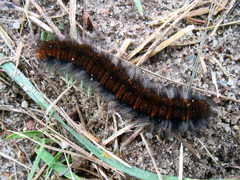 Fox MothMacrothylacia rubi
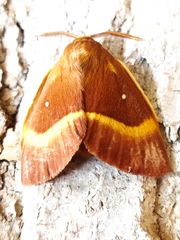 Oak EggarLasiocampa quercus
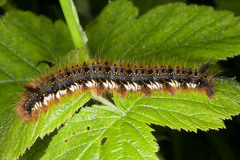 Drinker MothEuthrix potatoria
 Western Tent Caterpillar MothMalacosoma californicaDamages trees, gardens or crops
Sources
- Wikipedia: https://en.wikipedia.org/wiki/Lackey_moth
Look it up elsewhere: GBIF · iNaturalist · BugGuide · Wikipedia
Text written 2026-10-22 from the sources above and checked sentence by sentence against them. Data fetched 2026-10-22.