 Bug FAQ
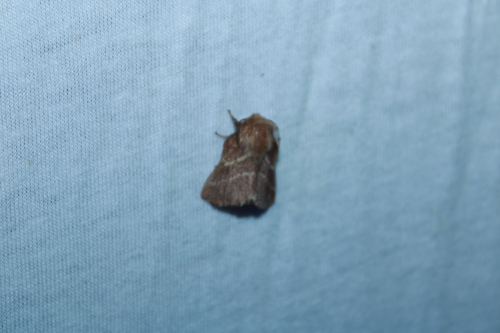
Eastern Tent Caterpillar Moth
Malacosoma americana · Order: Lepidoptera · Family: Lasiocampidae
Also called: Eastern Tent Caterpillar
Source: Wikipedia

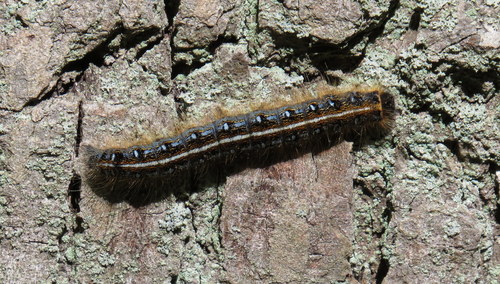
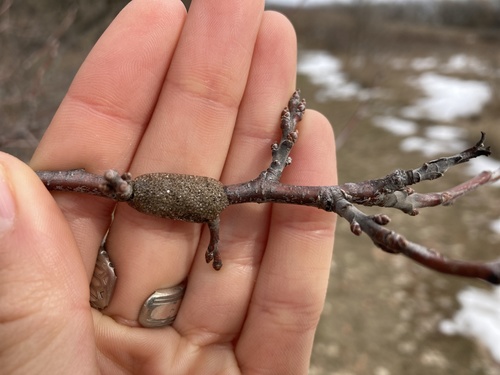
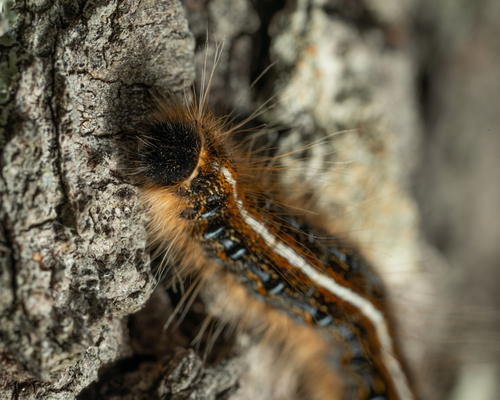
The eastern tent caterpillar is a social, tent-building moth whose larvae are hairy with blue, white, black and orange colors created by structural coloration. It lays eggs on Rosaceae trees such as cherry and apple, the caterpillars move in silk-lined trails, and they are among the first caterpillars seen in spring. The species produces one generation per year, has six larval stages, and can defoliate ornamental trees, though the damage is usually temporary.
Source: Wikipedia
How to recognize it
The caterpillars are covered in hair and display patches of blue, white, black and orange. The blue and white hues are structural colors produced by light filtering through microscopic tubules on the cuticle.
Source: Wikipedia
Is it a pest in the house?
They can defoliate ornamental trees, but the trees usually grow new leaves within a few weeks.
Source: Wikipedia
How to get rid of it
Although they can defoliate trees, the damage is typically temporary as trees refoliate quickly.
Source: Wikipedia
Where it lives
They are social tent caterpillars that build communal silk nests in tree branches. Females lay eggs almost exclusively on trees in the rose family, especially cherry and apple.
Source: Wikipedia
What it eats
Caterpillars secrete silk as they move, leaving visible silk trails on frequently used paths. When they find food, they mark the trail back to the tent, creating recruitment trails for other larvae.
Source: Wikipedia
Life cycle
The species has one generation per year. It passes through six larval instars before pupating.
Source: Wikipedia
When you see it
Eastern tent caterpillars are among the earliest caterpillars to appear each spring.
Source: Wikipedia
Where it comes from
The eastern tent caterpillar belongs to the Lasiocampidae family, known as tent caterpillars or lappet moths.
Source: Wikipedia
Lookalikes
They may be mistaken for spongy moth larvae, fall webworm larvae, or bagworms, which are unrelated.
Source: Wikipedia
Where it is found in the US
Recorded in 47 of 51 states and DC. Most records: Virginia, Massachusetts, North Carolina, Pennsylvania, Maryland, New York, New Jersey, Georgia.
Darker = more records. Counts are museum and citizen-science records, not population size.
Source: GBIF
Status: native in North America; native in Canada; native in United States. Source: iNaturalist
Months it is reported in the US
Source: GBIF
More photos
Questions people ask
How can I tell an eastern tent caterpillar from similar species?
Look for the distinctive blue, white, black and orange hair patches and the communal silk tents; spongy moths and fall webworms have different color patterns and tent structures.
Source: Wikipedia
Same family (Lasiocampidae)
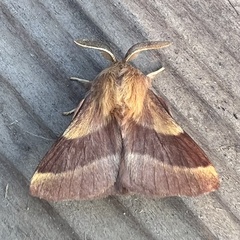 Forest Tent Caterpillar MothMalacosoma disstriaDamages trees, gardens or crops
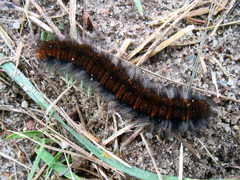 Fox MothMacrothylacia rubi
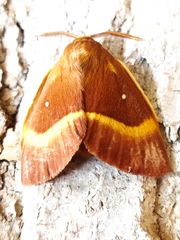 Oak EggarLasiocampa quercus
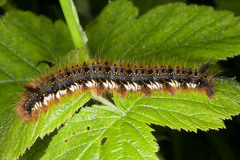 Drinker MothEuthrix potatoria
 Western Tent Caterpillar MothMalacosoma californicaDamages trees, gardens or crops
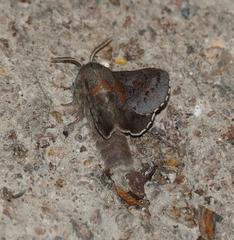 American Lappet MothPhyllodesma americanaDamages trees, gardens or crops
Sources
- Wikipedia: https://en.wikipedia.org/wiki/Eastern_tent_caterpillar
Look it up elsewhere: GBIF · iNaturalist · BugGuide · ITIS · Wikipedia
Text written 2026-10-22 from the sources above and checked sentence by sentence against them. Data fetched 2026-10-22.