 Bug FAQ
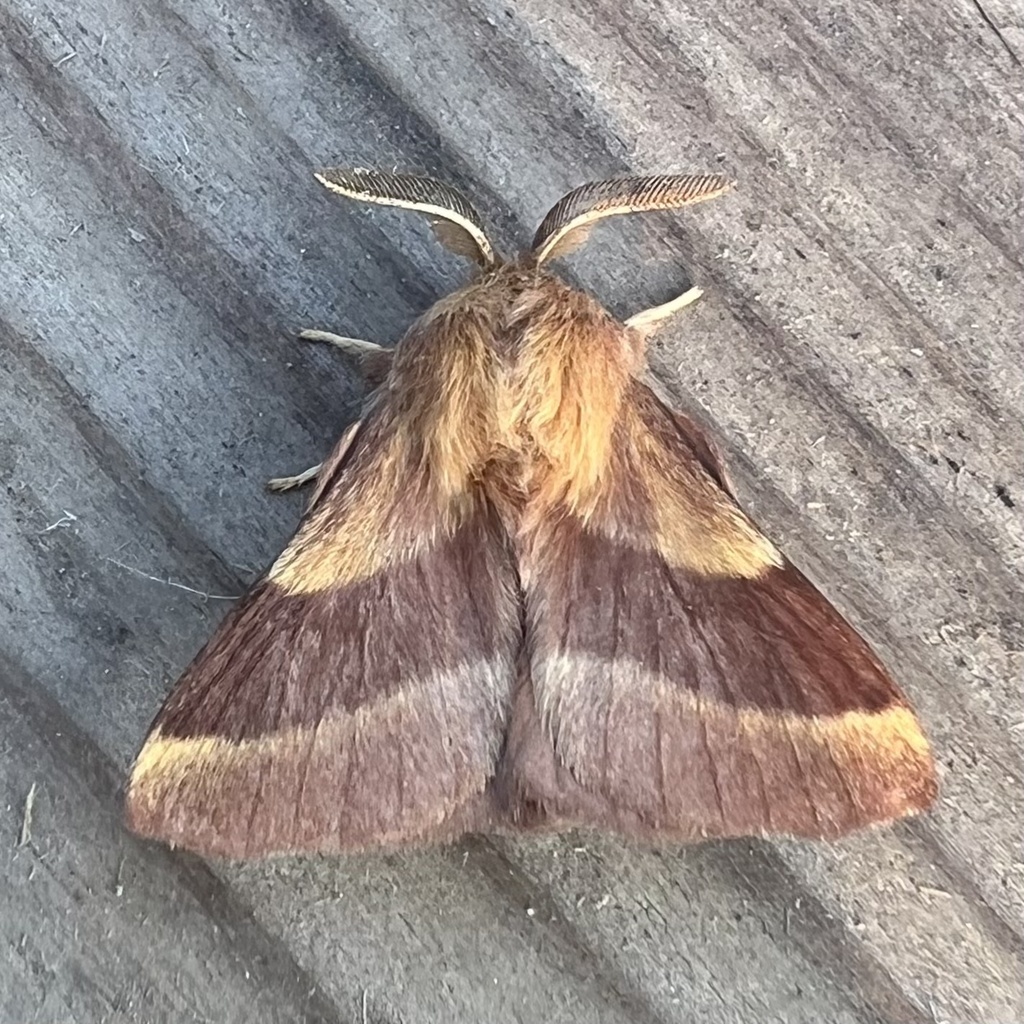
Forest Tent Caterpillar Moth
Malacosoma disstria · Order: Lepidoptera · Family: Lasiocampidae
Also called: Forest Tent Caterpillar
Source: Wikipedia
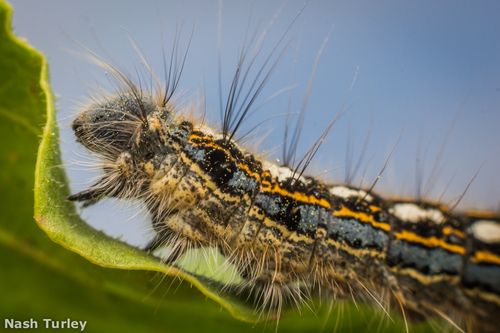
Mature larvae are about 2 to 2.5 inches long and have striking blue stripes with yellow edges, plus a white spot on each abdominal segment. When their numbers surge in spring, they feed heavily on many hardwoods, which can stress or damage the trees.
Source: Wikipedia
How to recognize it
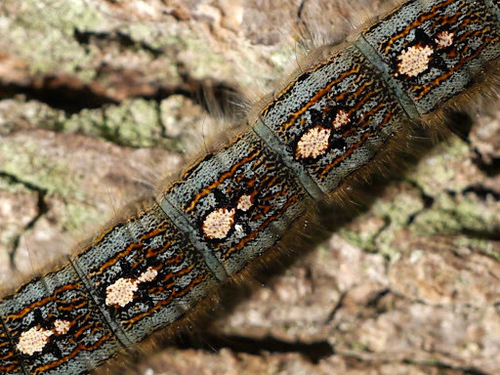
Each abdominal segment has a white spot that gets wider toward the head.
Source: Wikipedia
Size
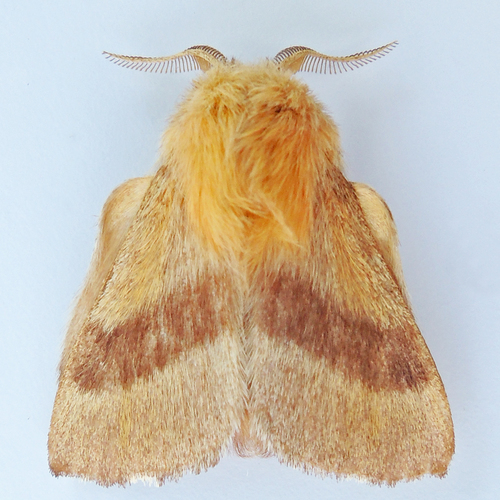
Fully grown larvae measure roughly 50 to 64 mm in length. Adult moths have a wingspan of about 30 mm.
Source: Wikipedia
Where it lives
The species occurs across North America, especially in the eastern states. Adults lay eggs in the summer on trees such as oak, sweetgum, tupelo, aspen and sugar maple.
Source: Wikipedia
What it eats
Larvae feed on many kinds of deciduous trees and shrubs.
Source: Wikipedia
Life cycle
Eggs hatch the following spring. A single egg mass can produce 50 to 200 larvae that stay together for most of their development.
Source: Wikipedia
When you see it
They become a problem when larval populations explode in spring. Adults are nocturnal, flying soon after nightfall and resting before dawn.
Source: Wikipedia
Where it comes from
It is native to North America.
Source: Wikipedia
Where it is found in the US
Recorded in 49 of 51 states and DC. Most records: Texas, Florida, New York, South Carolina, Vermont, Minnesota, Massachusetts, North Carolina.
Darker = more records. Counts are museum and citizen-science records, not population size.
Source: GBIF
Status: native in North America; native in United States; native in Canada. Source: iNaturalist
Months it is reported in the US
Source: GBIF
More photos
Questions people ask
Do forest tent caterpillars damage trees?
Yes, when their numbers are high in spring they can heavily defoliate many hardwood trees and shrubs.
Source: Wikipedia
Same family (Lasiocampidae)
 Eastern Tent Caterpillar MothMalacosoma americanaDamages trees, gardens or crops
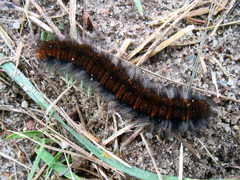 Fox MothMacrothylacia rubi
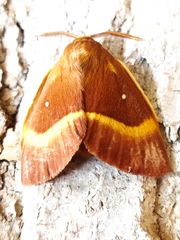 Oak EggarLasiocampa quercus
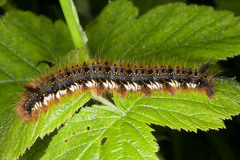 Drinker MothEuthrix potatoria
 Western Tent Caterpillar MothMalacosoma californicaDamages trees, gardens or crops
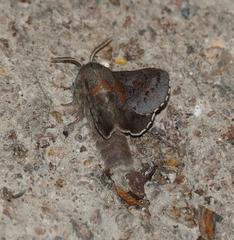 American Lappet MothPhyllodesma americanaDamages trees, gardens or crops
Sources
- Wikipedia: https://en.wikipedia.org/wiki/Forest_tent_caterpillar_moth
Look it up elsewhere: GBIF · iNaturalist · BugGuide · ITIS · Wikipedia
Text written 2026-10-22 from the sources above and checked sentence by sentence against them. Data fetched 2026-10-22.