 Bug FAQ
Oak Eggar
Lasiocampa quercus · Order: Lepidoptera · Family: Lasiocampidae
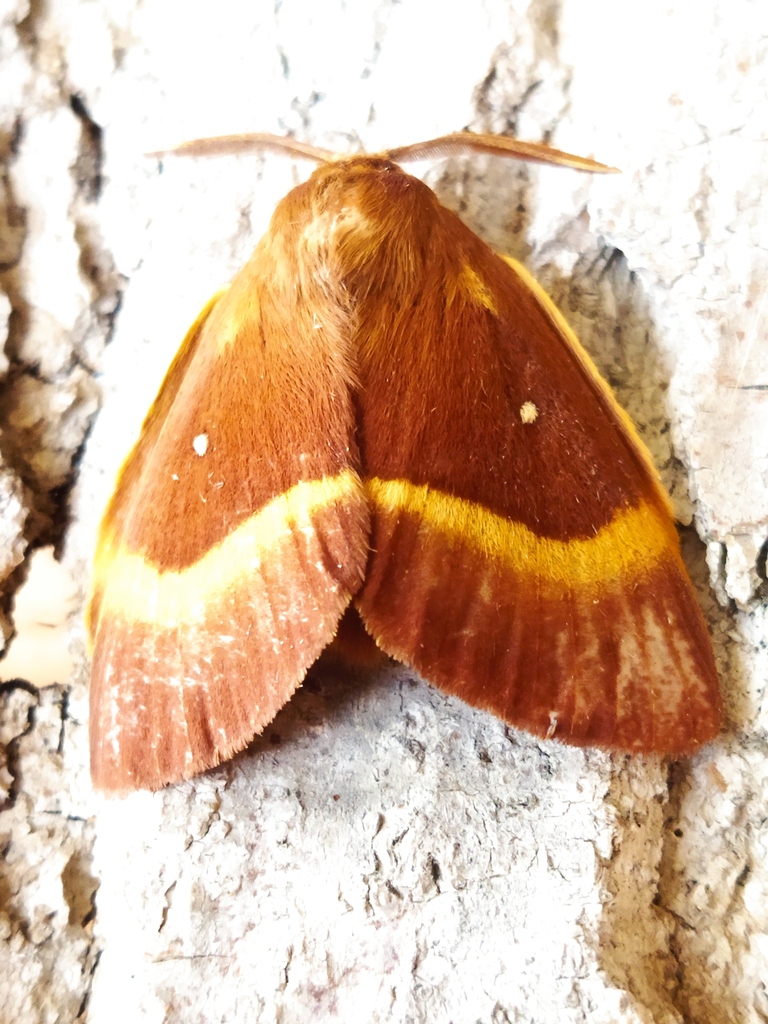
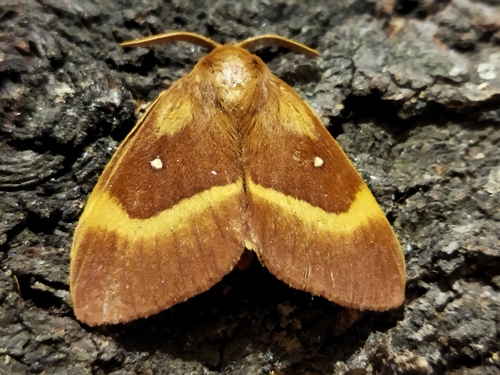
The oak eggar moth has a wingspan of about 45 mm in males and up to 75 mm in females, with females being larger and paler. Its caterpillars build hard, yellowish cocoons on the ground that look like acorns, which gave the species its name. Larvae feed on many low-growing plants such as blackthorn, hawthorn, ivy, bilberry, birch and bramble.
Source: Wikipedia
How to recognize it
The cocoon is hard, yellowish and resembles an acorn, and the name “egg ar” refers to its shape.
Source: Wikipedia
Size
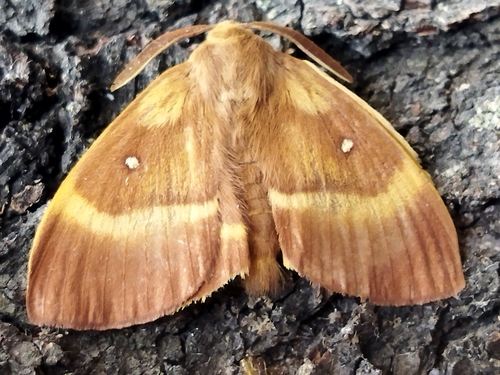
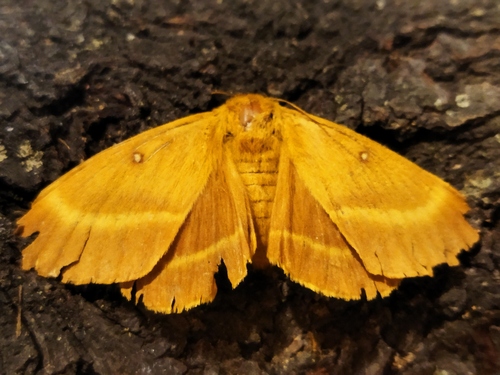
Males have a wingspan around 45 mm, while females are larger, up to 75 mm, and are paler.
Source: Wikipedia
Does it bite or sting?
There is no evidence that oak eggar caterpillar hairs cause skin irritation, unlike some other moths.
Source: Wikipedia
Life cycle
Males usually fly by day, while females are active at dusk.
Source: Wikipedia
Where it comes from
The oak eggar is common throughout Europe and the northern-western parts of Asia.
Source: Wikipedia
Lookalikes
The northern eggar, now treated as a subspecies L. q. callunae, is generally larger but not geographically separated.
Source: Wikipedia
Where it is found in the US
Recorded in 1 of 51 states and DC. Most records: Texas.
Darker = more records. Counts are museum and citizen-science records, not population size.
Source: GBIF
More photos
Questions people ask
When can I see adult oak eggar moths?
Adults fly for about two months from May to September, varying with location.
Source: Wikipedia
What does the oak eggar cocoon look like?
The cocoon is a hard, yellowish structure on the ground that resembles an acorn.
Source: Wikipedia
What plants do oak eggar caterpillars eat?
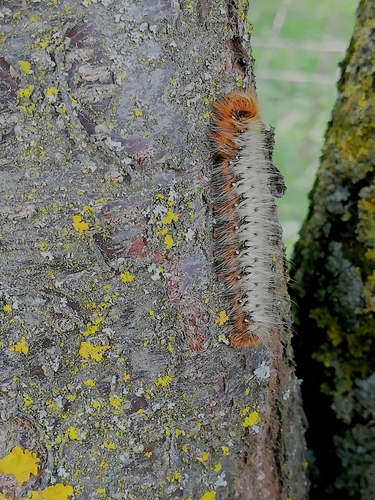
They feed low on many shrubs and trees such as blackthorn, hawthorn, ivy, birch, willow, hazel and bramble.
Source: Wikipedia
How long does the oak eggar’s development take?
In northern areas it may take two years, with the larva overwintering the first year and the pupa the second.
Source: Wikipedia
Same family (Lasiocampidae)
 Eastern Tent Caterpillar MothMalacosoma americanaDamages trees, gardens or crops
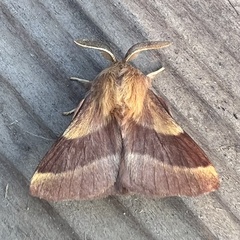 Forest Tent Caterpillar MothMalacosoma disstriaDamages trees, gardens or crops
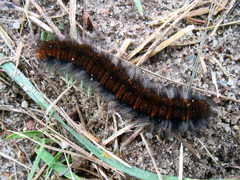 Fox MothMacrothylacia rubi
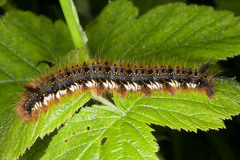 Drinker MothEuthrix potatoria
 Western Tent Caterpillar MothMalacosoma californicaDamages trees, gardens or crops
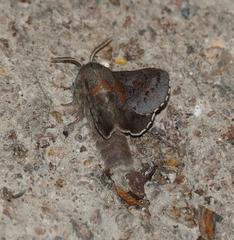 American Lappet MothPhyllodesma americanaDamages trees, gardens or crops
Sources
- Wikipedia: https://en.wikipedia.org/wiki/Oak_eggar
Look it up elsewhere: GBIF · iNaturalist · BugGuide · Wikipedia
Text written 2026-10-22 from the sources above and checked sentence by sentence against them. Data fetched 2026-10-22.