 Bug FAQ
Sumac Gall Aphid
Melaphis rhois · Order: Hemiptera · Family: Aphididae
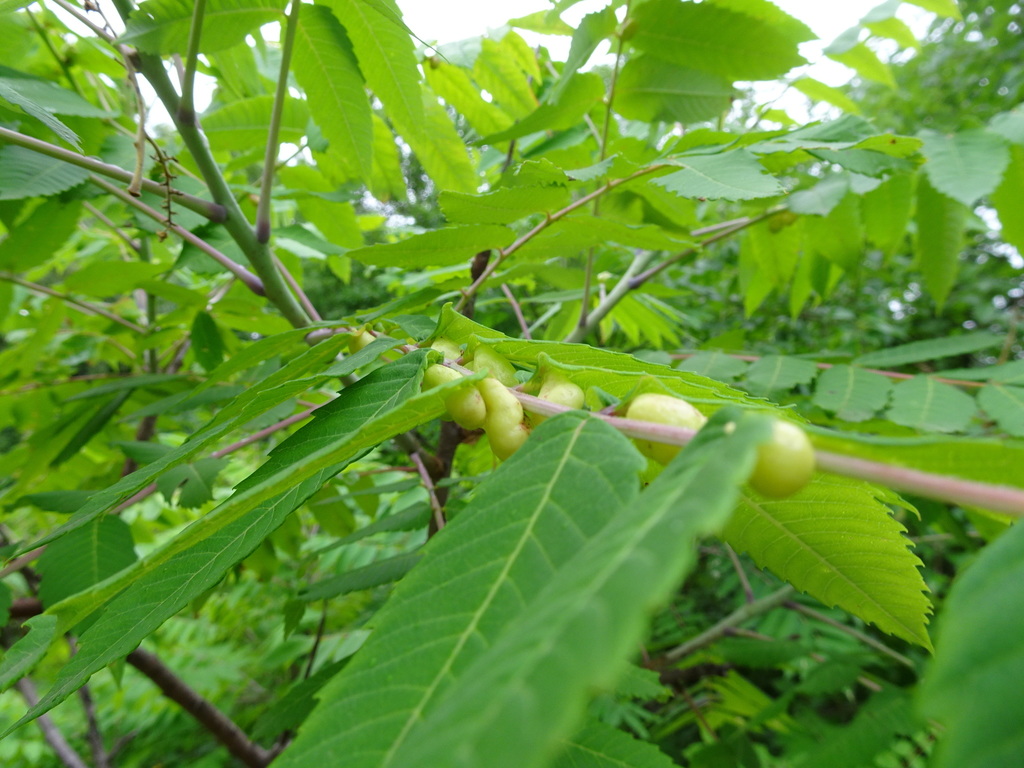
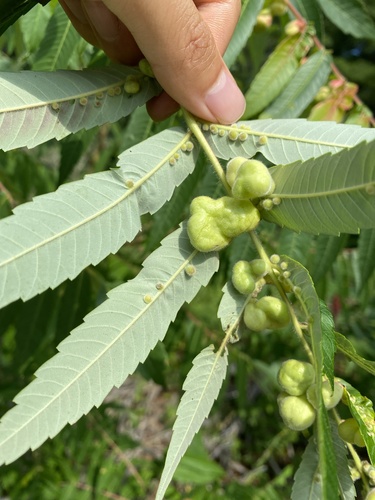
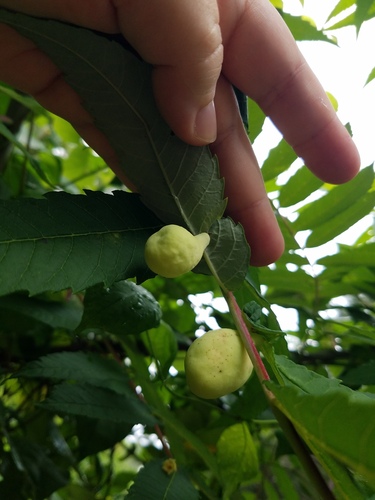
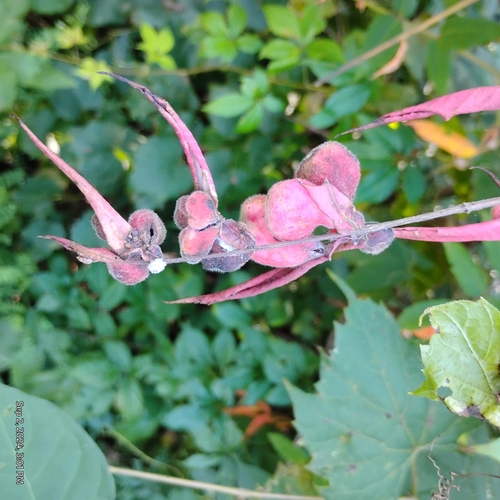
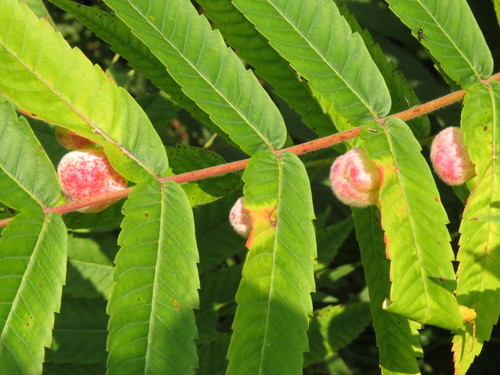
The sumac gall aphid is a woolly aphid that makes galls on staghorn and smooth sumac leaves. Eggs hatch inside the gall, and winged females leave in late summer to start new colonies on moss.
Source: Wikipedia
How to recognize it
It is a type of woolly aphid.
Source: Wikipedia
Is it a pest in the house?
Galls form when a female lays a single egg on the leaf underside, causing the leaf to wrap around the egg.
Source: Wikipedia
Where it lives
It forms galls on staghorn sumac (Rhus typhina) and smooth sumac (Rhus glabra).
Source: Wikipedia
What it eats
It feeds by inducing galls on sumac leaves.
Source: Wikipedia
Life cycle
Eggs produce several parthenogenetic generations inside the gall; later winged females leave to colonize moss, where they reproduce asexually and later produce males and sexual females that recolonize sumac each spring.
Source: Wikipedia
When you see it
Winged females exit the gall in late summer.
Source: Wikipedia
Where it comes from
Its host plants are eastern North American sumacs.
Source: Wikipedia
Where it is found in the US
Recorded in 39 of 51 states and DC. Most records: Massachusetts, Pennsylvania, New York, Vermont, Michigan, Minnesota, Wisconsin, Ohio.
Darker = more records. Counts are museum and citizen-science records, not population size.
Source: GBIF
Status: native in North America; native in Canada; native in United States. Source: iNaturalist
Months it is reported in the US
Source: GBIF
More photos
Questions people ask
When do the aphids leave the galls?
Winged females leave the galls in late summer to start new colonies.
Source: Wikipedia
Same family (Aphididae)
 Melon AphidAphis gossypiiDamages trees, gardens or crops
 Oleander AphidAphis neriiDamages trees, gardens or crops
 Witch-hazel Cone Gall AphidHormaphis hamamelidis
 Beech Blight AphidGrylloprociphilus imbricatorDamages trees, gardens or crops
 Rice Root AphidTetraneura akinire
 Manzanita Leafgall AphidTamalia coweni
Sources
- Wikipedia: https://en.wikipedia.org/wiki/Melaphis_rhois
Look it up elsewhere: GBIF · iNaturalist · BugGuide · Wikipedia
Text written 2026-10-22 from the sources above and checked sentence by sentence against them. Data fetched 2026-10-22.