 Bug FAQ
Striped alder sawfly
Hemichroa crocea · Order: Hymenoptera · Family: Tenthredinidae
Also called: Orange Bicolorous Sawfly
Source: Wikipedia
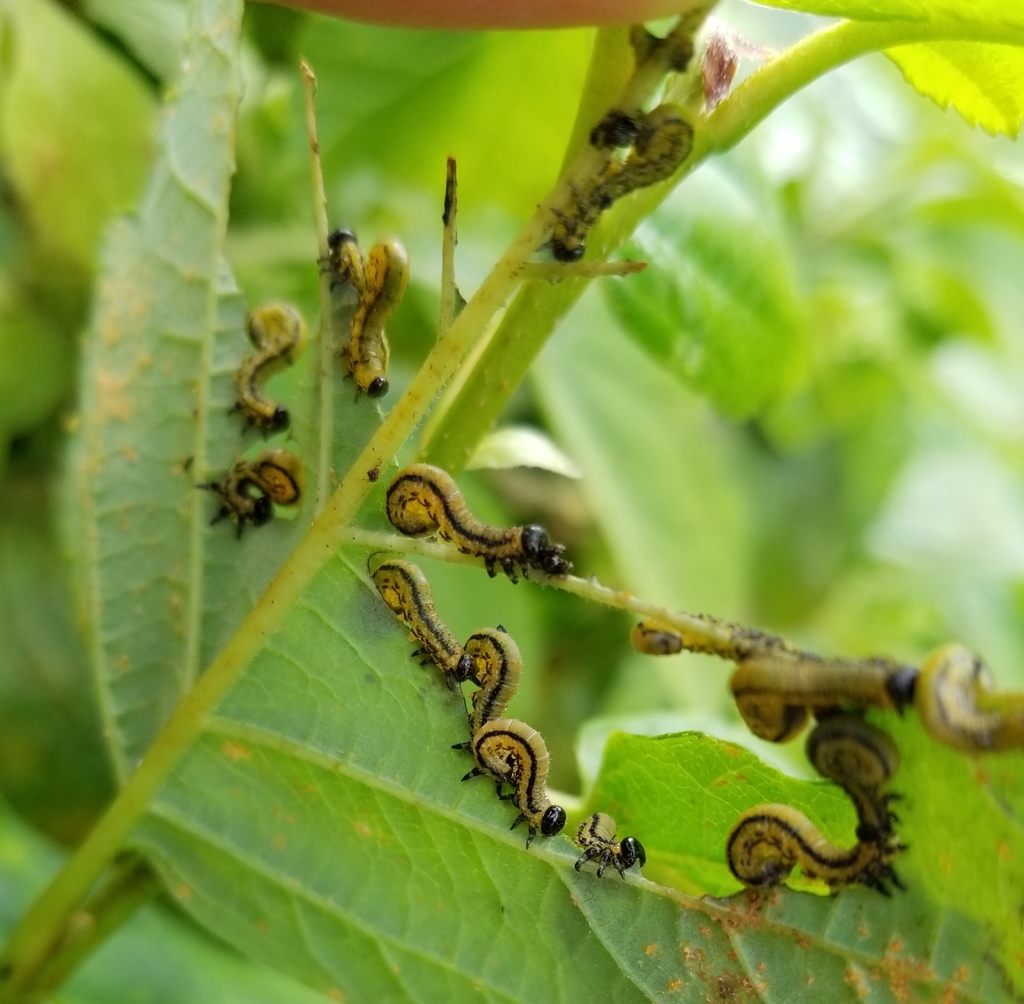
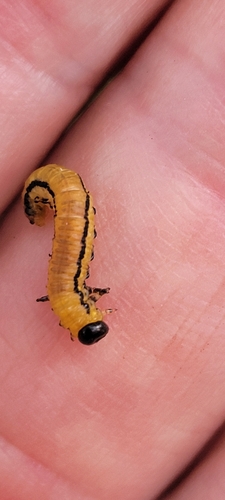
Adult striped alder sawflies have an orange-red thorax, black abdomen, black head and yellowish body with dark brown stripes and markings. The larvae grow to about 20 mm, feed on alder and related trees, and spend the winter in a thin-walled cocoon in the soil.
Source: Wikipedia
How to recognize it
Adults show an orange-red thorax, black abdomen and translucent wings.
Source: Wikipedia
Where it lives
Larvae feed on the leaves of several alder species and sometimes on birch, hazel and willow.
Source: Wikipedia
What it eats
Larvae eat foliage of alder (including Alnus glutinosa, A. incana, A. viridis), silver birch, hazel and willow.
Source: Wikipedia
Life cycle
The first generation of adults flies in late May. A second generation of adults appears in late July-August, with larvae present in August-September that also overwinter as prepupae.
Source: Wikipedia
When you see it
Adults are on the wing in late May and again in late July-August.
Source: Wikipedia
Where it is found in the US
Recorded in 20 of 51 states and DC. Most records: Washington, Alaska, New York, Minnesota, Michigan, Vermont, Maine, Wisconsin.
Darker = more records. Counts are museum and citizen-science records, not population size.
Source: GBIF
Status: native in North America; native in United States; native in Canada. Source: iNaturalist
Months it is reported in the US
Source: GBIF
More photos
Questions people ask
When can I see adult sawflies?
The first adults appear in late May and a second batch shows up in late July-August.
Source: Wikipedia
What trees do the larvae feed on?
They eat the leaves of alder, silver birch, hazel and willow.
Source: Wikipedia
What does the adult look like?
Adults have an orange-red thorax, black abdomen, black head, yellowish body with dark brown stripes and spots, and translucent wings.
Source: Wikipedia
Same family (Tenthredinidae)


Sources
- Wikipedia: https://en.wikipedia.org/wiki/Hemichroa_crocea
Look it up elsewhere: GBIF · iNaturalist · BugGuide · ITIS · Wikipedia
Text written 2026-10-27 from the sources above and checked sentence by sentence against them. Data fetched 2026-10-27.