 Bug FAQ
Yellow-spotted Macrophya
Macrophya montana · Order: Hymenoptera · Family: Tenthredinidae
Also called: Dimorphic Strider
Source: Wikipedia
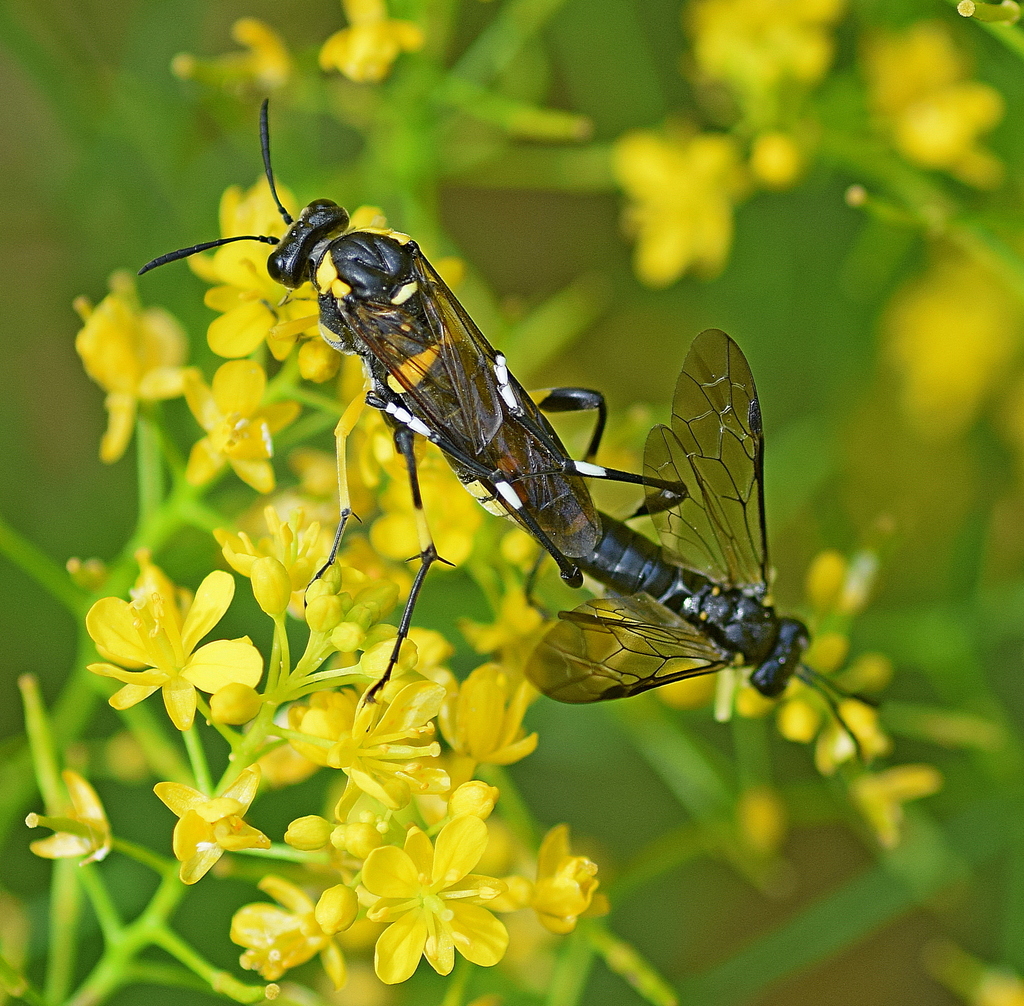
Adults are 8-12 mm long and have black heads with yellow faces, while females show black and yellow body markings. They live on forest edges and thickets across most of Europe, North Africa, Turkey and Iran, and are seen from May to July. Adults feed on pollen, nectar and honeydew, whereas larvae eat the leaves of blackberries and raspberries.
Source: Wikipedia
How to recognize it
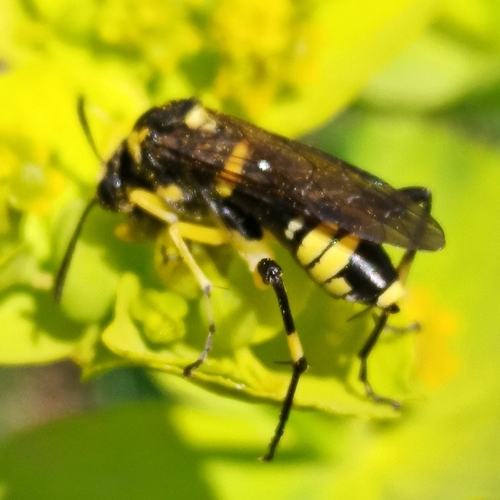
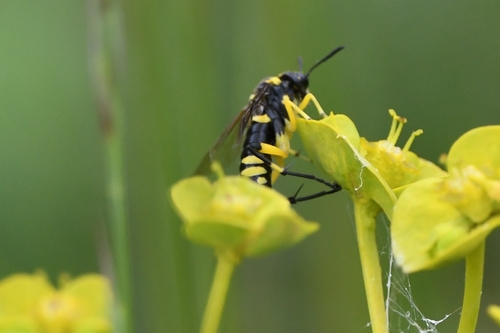
Females have distinctive black and yellow markings on their bodies. The head is black with a yellow clypeus and labrum.
Source: Wikipedia
Size
They reach a length of about 8 to 12 mm.
Source: Wikipedia
Where it lives
They prefer forest edges, thickets and slopes at various elevations.
Source: Wikipedia
What it eats
Adults mainly eat pollen and nectar, especially from Heracleum sphondylium, and also take honeydew and small insects.
Source: Wikipedia
Life cycle
Adults are most commonly seen from May through July.
Source: Wikipedia
When you see it
The adult flight period runs from May to July.
Source: Wikipedia
Where it comes from
They are common throughout most of Europe and also occur in North Africa, Turkey and Iran.
Source: Wikipedia
More photos
Questions people ask
When are adult Yellow-spotted Macrophya active?
Adults are typically active from May through July.
Source: Wikipedia
Where can I find this sawfly?
It lives on forest edges, thickets and slopes across most of Europe and nearby regions.
Source: Wikipedia
Same family (Tenthredinidae)



Sources
- Wikipedia: https://en.wikipedia.org/wiki/Macrophya_montana
Look it up elsewhere: GBIF · iNaturalist · BugGuide · Wikipedia
Text written 2026-10-22 from the sources above and checked sentence by sentence against them. Data fetched 2026-10-22.