 Bug FAQ
Turnip Sawfly
Athalia rosae · Order: Hymenoptera · Family: Tenthredinidae
Also called: Turnip Tigress
Source: Wikipedia
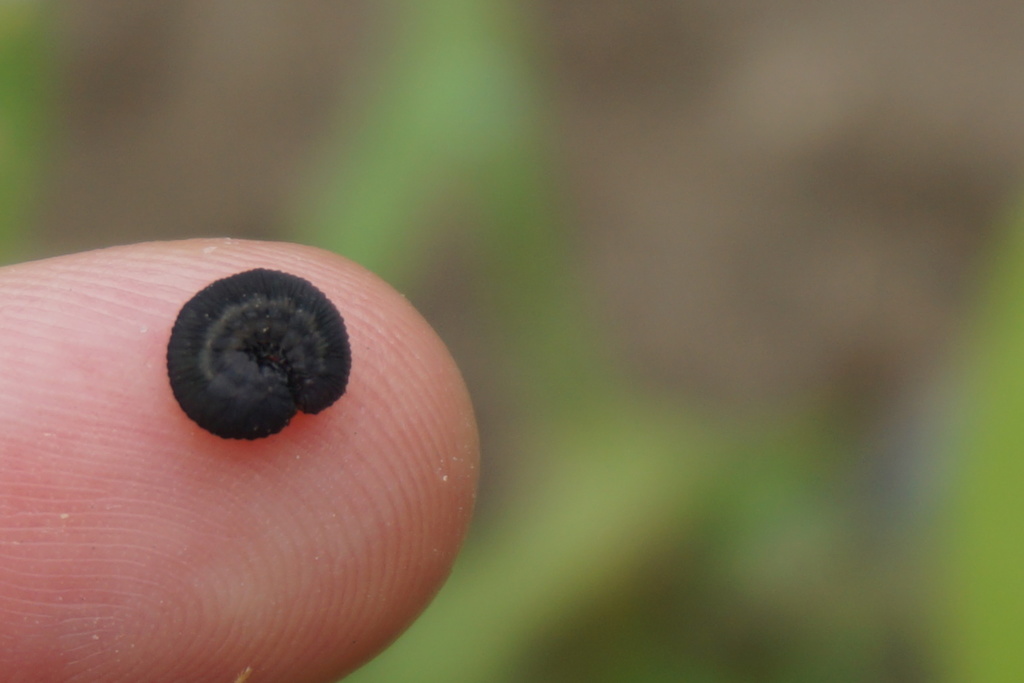
The larvae are dark green or blackish and measure about 18 to 25 mm, while the adult is only 7 to 8 mm and has an orange body. They spend the winter underground and emerge in early summer; adults feed on nectar. They are occasionally considered a pest, though no specific damage is described.
Source: Wikipedia
How to recognize it
Adults have a mainly orange body.
Source: Wikipedia
Size
Larvae are 18 to 25 mm long. Adults are 7 to 8 mm long when they emerge.
Source: Wikipedia
Is it a pest in the house?
They can sometimes be a pest.
Source: Wikipedia
Where it lives
They overwinter below the ground.
Source: Wikipedia
What it eats
Adult turnip sawflies feed on nectar.
Source: Wikipedia
Life cycle
The species spends the winter underground and emerges as adults in early summer.
Source: Wikipedia
When you see it
Adults appear in early summer.
Source: Wikipedia
Lookalikes
Similar species include the turnip sawfly, cabbage leaf sawfly, and beet sawfly.
Source: Wikipedia
Where it is found in the US
Recorded in 2 of 51 states and DC. Most records: New Hampshire, California.
Darker = more records. Counts are museum and citizen-science records, not population size.
Source: GBIF
Questions people ask
When are turnip sawflies most likely to be seen?
Adults emerge in early summer after overwintering underground.
Source: Wikipedia
Same family (Tenthredinidae)
 Willow Apple Gall SawflyEuura californica
 Willow Redgall SawflyEuura proxima
 Yellow-spotted MacrophyaMacrophya montanaDamages trees, gardens or crops
 Saddleback Grass-cutterEutomostethus ephippiumDamages trees, gardens or crops
 Cherry Slug SawflyCaliroa cerasi
 Alder SawflyEriocampa ovataDamages trees, gardens or crops
Sources
- Wikipedia: https://en.wikipedia.org/wiki/Athalia_rosae
Look it up elsewhere: GBIF · iNaturalist · BugGuide · Wikipedia
Text written 2026-10-22 from the sources above and checked sentence by sentence against them. Data fetched 2026-10-22.