 Bug FAQ
Willow Redgall Sawfly
Euura proxima · Order: Hymenoptera · Family: Tenthredinidae
Also called: Common sawfly
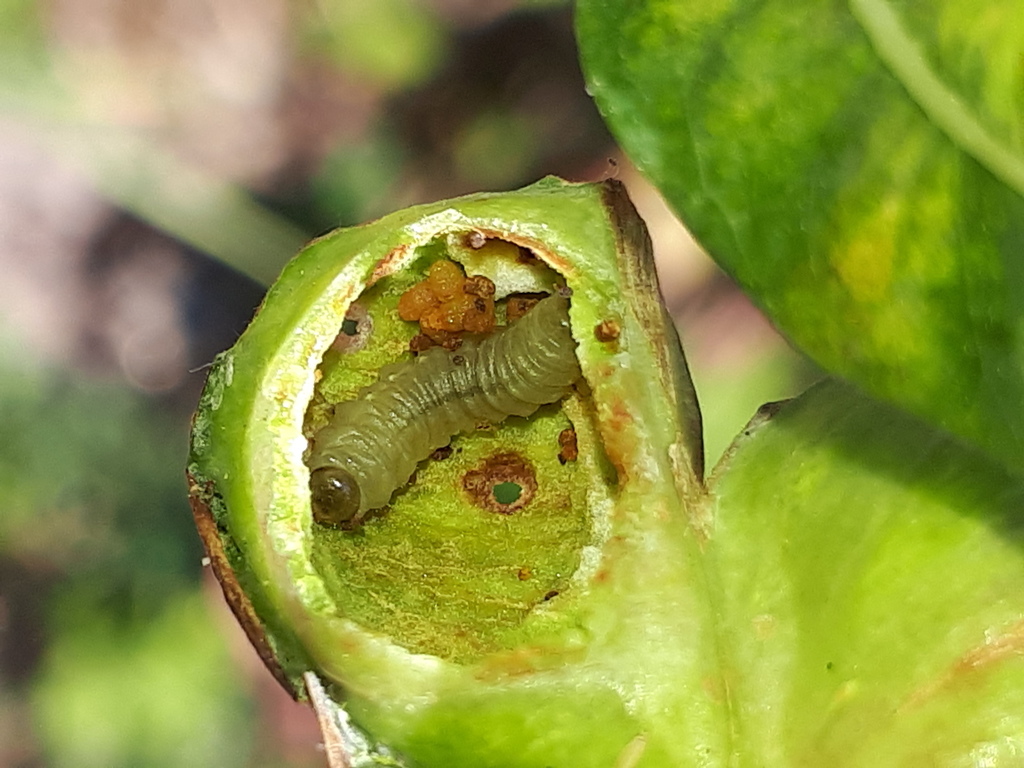
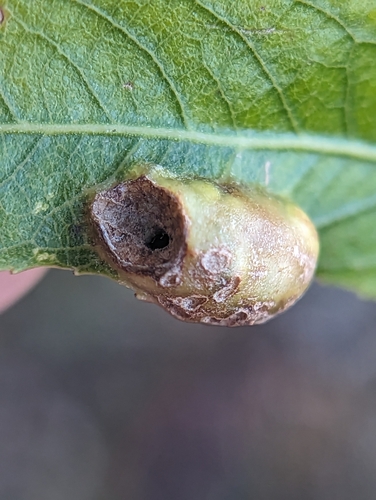
Adult sawflies are mostly black with a brown hue and have thin, thread-like antennae. The galls are ovoid, up to about 12 mm long and 6 mm wide, with a hard red wall when occupied. There are two generations each year; one emerges in mid-summer and the other in autumn, and the insects overwinter in cocoons.
Source: Wikipedia
How to recognize it
Adults are mostly black with a brown tint and lighter reddish-brown legs. They have thin, thread-like antennae with shorter segments than similar species.
Source: Wikipedia
Size
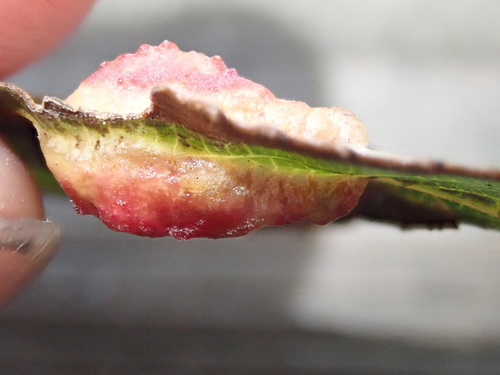
The gall is bean-shaped, up to 12 mm long and 6 mm wide, with a thick red wall when occupied.
Source: Wikipedia
Is it a pest in the house?
Larvae feed on willow leaves, forming galls that can be seen on several willow species.
Source: Wikipedia
Where it lives
It belongs to a group of three closely related Euura species. In New Zealand it occurs on both main islands across many habitats.
Source: Wikipedia
What it eats
Larvae eat the plant material inside the gall they create on willow leaves. They prefer white willow (S. alba), crack willow (S. fragilis), and their hybrid S. rubens.
Source: Wikipedia
Life cycle
Two broods develop each year; the first matures in mid-summer, the second in autumn. The species overwinters as a cocooned pupa before emerging in spring.
Source: Wikipedia
When you see it
Adults emerge in spring and look for suitable willow hosts. A summer-autumn brood hibernates, while a summer brood speeds up development to adulthood.
Source: Wikipedia
Where it comes from
Originally native to the Western Palearctic, it has been spread worldwide by accident.
Source: Wikipedia
Where it is found in the US
Recorded in 19 of 51 states and DC. Most records: Washington, New York, Minnesota, California, Idaho, Oregon, Utah, Michigan.
Darker = more records. Counts are museum and citizen-science records, not population size.
Source: GBIF
Months it is reported in the US
Source: GBIF
More photos
Questions people ask
How can I tell if I have willow redgall sawfly galls?
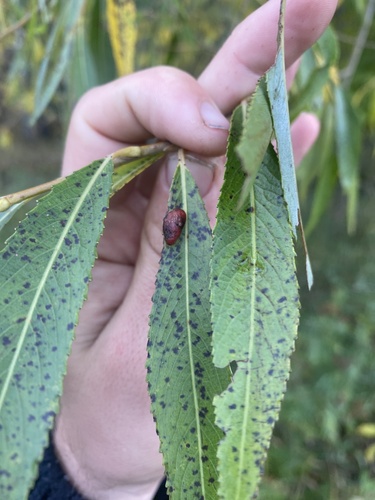
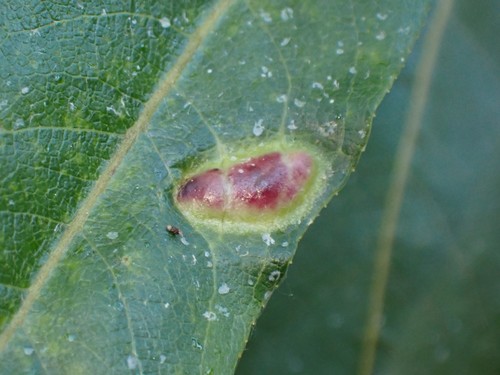
Look for bean-shaped, hard red galls up to 12 mm long on willow leaves.
Source: Wikipedia
When are adult sawflies active?
Adults appear in spring and again in mid-summer and autumn as the two yearly broods emerge.
Source: Wikipedia
Which willow species are affected?
White willow, crack willow, their hybrid S. rubens, weeping willow, and several other Salix species can host the galls.
Source: Wikipedia
Same family (Tenthredinidae)
 Willow Apple Gall SawflyEuura californica
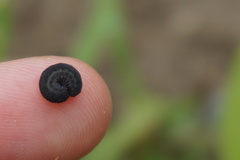 Turnip SawflyAthalia rosaeNuisance, not dangerous
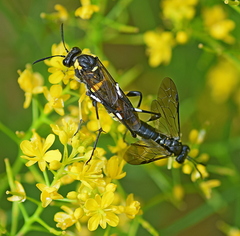 Yellow-spotted MacrophyaMacrophya montanaDamages trees, gardens or crops
 Saddleback Grass-cutterEutomostethus ephippiumDamages trees, gardens or crops
 Cherry Slug SawflyCaliroa cerasi
 Alder SawflyEriocampa ovataDamages trees, gardens or crops
Sources
- Wikipedia: https://en.wikipedia.org/wiki/Euura_proxima
Look it up elsewhere: GBIF · iNaturalist · BugGuide · Wikipedia
Text written 2026-10-22 from the sources above and checked sentence by sentence against them. Data fetched 2026-10-22.