 Bug FAQ
Sow-thistle Aphid
Uroleucon sonchi · Order: Hemiptera · Family: Aphididae
Also called: Large Sowthistle Aphid
Source: Wikipedia

The large sow-thistle aphid is native to Europe and has spread to many continents, including North and South America, Africa, Asia and Oceania. It feeds mainly on sow-thistle but also attacks cultivated lettuce and other lettuce relatives, making it a garden and crop pest.
Source: Wikipedia
How to recognize it
It is called the large sow-thistle aphid and was originally from Europe before being introduced elsewhere.
Source: Wikipedia
Is it a pest in the house?
Because it attacks lettuce, it can become a problem for home gardeners.
Source: Wikipedia
Where it lives
It lives on sow-thistle plants and can become a pest of cultivated lettuce.
Source: Wikipedia
What it eats
It feeds on many Asteraceae, especially sow-thistle species, lettuce, endive, and related herbs.
Source: Wikipedia
Where it is found in the US
Recorded in 14 of 51 states and DC. Most records: California, Illinois, Washington, Oregon, Idaho, Maryland, Michigan, Texas.
Darker = more records. Counts are museum and citizen-science records, not population size.
Source: GBIF
Status: introduced in Canada. Source: iNaturalist
Months it is reported in the US
Source: GBIF
More photos


Questions people ask
What plants does the large sow-thistle aphid damage?
It feeds on sow-thistle, lettuce, endive and other members of the Asteraceae family.
Source: Wikipedia
Is this aphid a pest of lettuce?
Yes, it is known as the brown lettuce aphid because it attacks cultivated lettuce.
Source: Wikipedia
Where is Uroleucon sonchi found?
It originated in Europe but is now present across the Americas, Africa, Asia, New Zealand and Australia.
Source: Wikipedia
Same family (Aphididae)
 Melon AphidAphis gossypiiDamages trees, gardens or crops
 Oleander AphidAphis neriiDamages trees, gardens or crops
 Witch-hazel Cone Gall AphidHormaphis hamamelidis
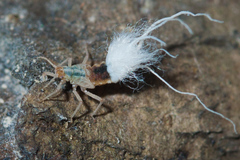 Beech Blight AphidGrylloprociphilus imbricatorDamages trees, gardens or crops
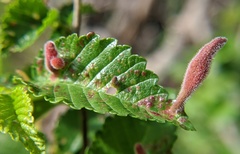 Rice Root AphidTetraneura nigriabdominalis
 Rose AphidMacrosiphum rosaeDamages trees, gardens or crops
Sources
- Wikipedia: https://en.wikipedia.org/wiki/Uroleucon_sonchi
Look it up elsewhere: GBIF · iNaturalist · BugGuide · ITIS · Wikipedia
Text written 2026-10-29 from the sources above and checked sentence by sentence against them. Data fetched 2026-10-29.