 Bug FAQ
Snowberry Sawfly
Blennogeneris spissipes · Order: Hymenoptera · Family: Tenthredinidae
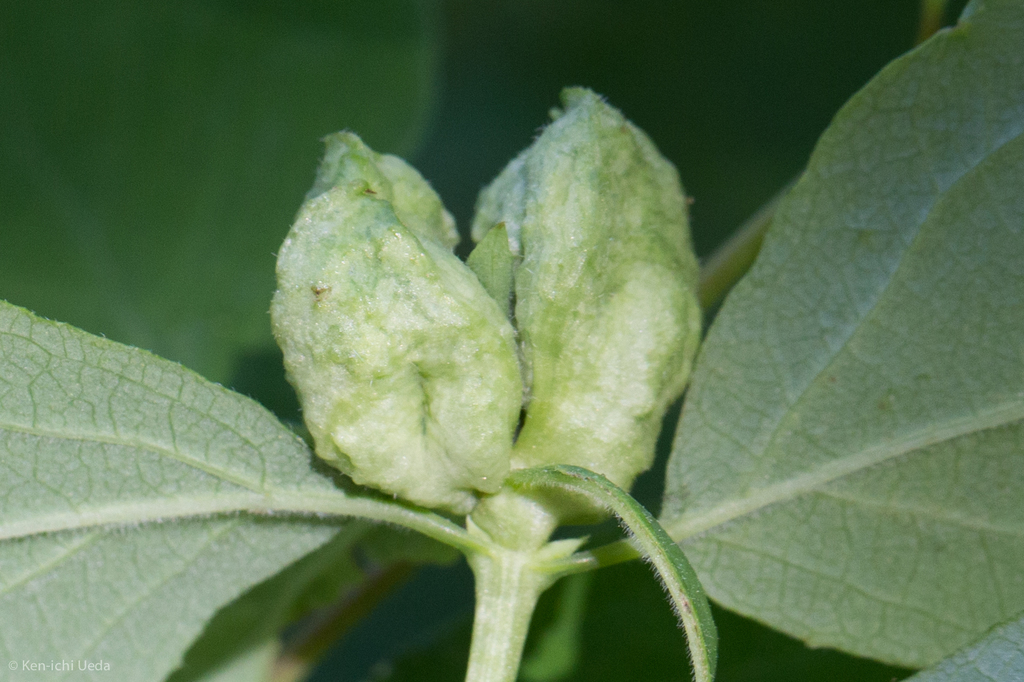
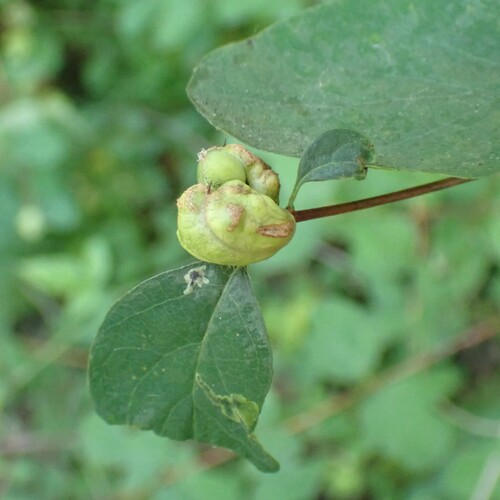
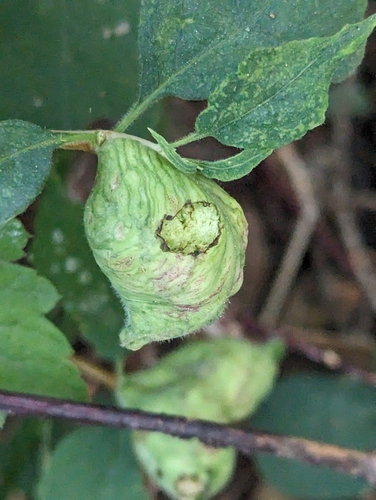
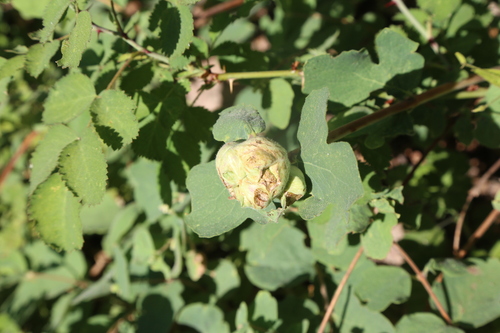
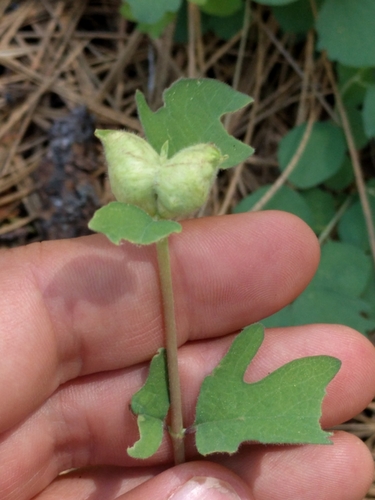
The insects cause galls on the buds or leaves of snowberry plants (Symphoricarpos albus and S. mollis) and each gall contains a single larva that later feeds on the plant’s leaves. Galls are formed in summer, and late-instar larvae are reported to be entirely light-green.
Source: Wikipedia
How to recognize it
Female adults have large spurs on the back of their tibiae, which males lack.
Source: Wikipedia
Where it lives
They induce galls on the buds or leaves of snowberry (Symphoricarpos albus and S. mollis).
Source: Wikipedia
What it eats
Each gall contains only one larva.
Source: Wikipedia
Life cycle
In summer the sawfly forms galls on snowberry buds. Late-instar larvae are reported to be entirely light-green.
Source: Wikipedia
When you see it
Gall formation occurs in the summer months.
Source: Wikipedia
Where it comes from
It is native to North America.
Source: Wikipedia
Where it is found in the US
Recorded in 9 of 51 states and DC. Most records: California, Oregon, Washington, Minnesota, Utah, Montana, New Mexico, New York.
Darker = more records. Counts are museum and citizen-science records, not population size.
Source: GBIF
Status: native in North America; native in United States; native in Canada. Source: iNaturalist
Months it is reported in the US
Source: GBIF
More photos
Questions people ask
Which plants do they affect?
They form galls on snowberry plants (Symphoricarpos albus and S. mollis).
Source: Wikipedia
What do the larvae eat?
Larvae first eat the inside of the gall and later feed on snowberry leaves.
Source: Wikipedia
Same family (Tenthredinidae)


Sources
- Wikipedia: https://en.wikipedia.org/wiki/Blennogeneris_spissipes
Look it up elsewhere: GBIF · iNaturalist · BugGuide · Wikipedia
Text written 2026-10-26 from the sources above and checked sentence by sentence against them. Data fetched 2026-10-26.