 Bug FAQ
Setanta compta
Setanta compta · Order: Hymenoptera · Family: Ichneumonidae

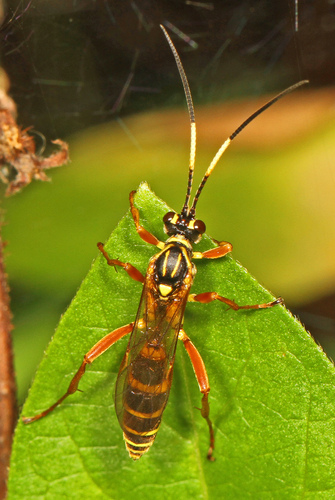
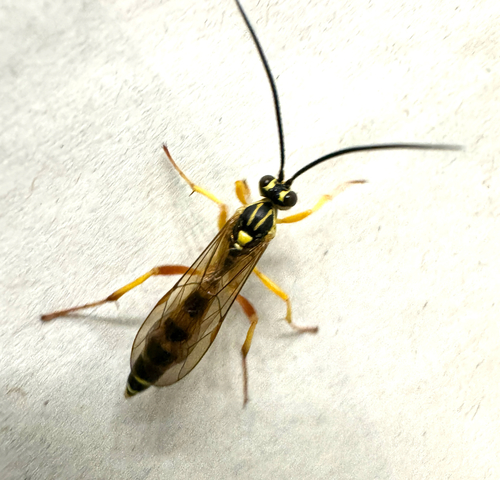
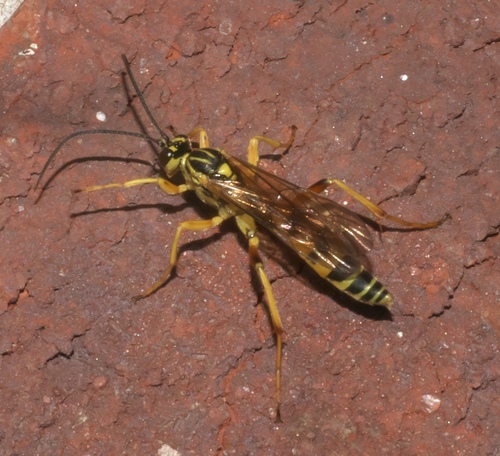
Setanta compta is a small ichneumon wasp found in North and South America and Asia. Females have white or yellow bands on their antennae, while males have all-black antennae. Adults are most active in early June and again in mid-September.
Source: Wikipedia
How to recognize it
Females show white or yellow bands on the antennae; males have completely black antennae.
Source: Wikipedia
Size
Setanta compta is a small ichneumon wasp.
Source: Wikipedia
Where it lives
It has been recorded across North and South America and Asia.
Source: Wikipedia
When you see it
Peak activity occurs in early June and mid-September.
Source: Wikipedia
Where it comes from
Its range includes North and South America as well as parts of Asia.
Source: Wikipedia
Where it is found in the US
Recorded in 31 of 51 states and DC. Most records: Massachusetts, Ohio, Virginia, Maryland, New York, Pennsylvania, Illinois, North Carolina.
Darker = more records. Counts are museum and citizen-science records, not population size.
Source: GBIF
Months it is reported in the US
Source: GBIF
More photos
Questions people ask
When are Setanta compta wasps most active?
They are most active in early June and again in mid-September.
Source: Wikipedia
How can I tell male and female Setanta compta apart?
Females have white or yellow bands on their antennae, while males have all-black antennae.
Source: Wikipedia
Same family (Ichneumonidae)



Sources
- Wikipedia: https://en.wikipedia.org/wiki/Setanta_compta
Look it up elsewhere: GBIF · iNaturalist · BugGuide · Wikipedia
Text written 2026-10-26 from the sources above and checked sentence by sentence against them. Data fetched 2026-10-26.