 Bug FAQ
Common Hover Fly Parasitoid Wasp
Diplazon laetatorius · Order: Hymenoptera · Family: Ichneumonidae
Also called: Common Hover Fly Parasite Wasp, Parasitoid wasp

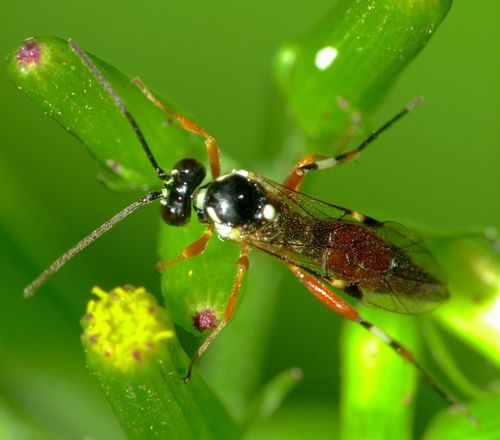
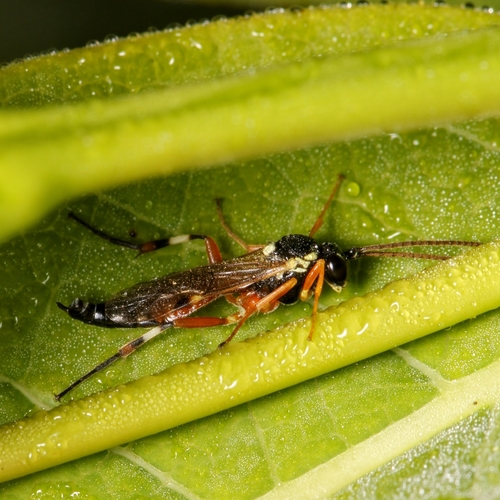
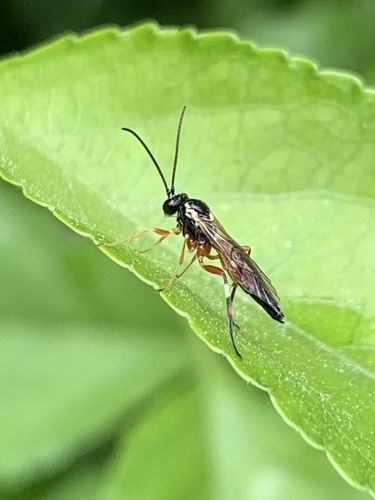
Diplazon laetatorius is a wasp that belongs to the Ichneumonidae family, subfamily Diplazontinae. Adults drink nectar from flowers, especially those in the umbellifer family, while females lay eggs near hoverfly eggs and larvae. The wasp’s larvae develop inside the hoverfly host, eating it from within before emerging as adult wasps.
Source: Wikipedia
What it eats
Adult wasps feed on floral nectar, preferring umbellifer flowers. Females lay eggs on or near hoverfly (Syrphidae) eggs and larvae.
Source: Wikipedia
Life cycle
The developing larvae consume the hoverfly host from within, then emerge as adult wasps.
Source: Wikipedia
Where it is found in the US
Recorded in 43 of 51 states and DC. Most records: California, Illinois, Wisconsin, Texas, Minnesota, New York, Ohio, Arizona.
Darker = more records. Counts are museum and citizen-science records, not population size.
Source: GBIF
Months it is reported in the US
Source: GBIF
More photos
Same family (Ichneumonidae)



Sources
- Wikipedia: https://en.wikipedia.org/wiki/Diplazon_laetatorius
Look it up elsewhere: GBIF · iNaturalist · BugGuide · Wikipedia
Text written 2026-10-22 from the sources above and checked sentence by sentence against them. Data fetched 2026-10-22.