 Bug FAQ
Ruddy Copper
Lycaena rubidus · Order: Lepidoptera · Family: Sesiidae
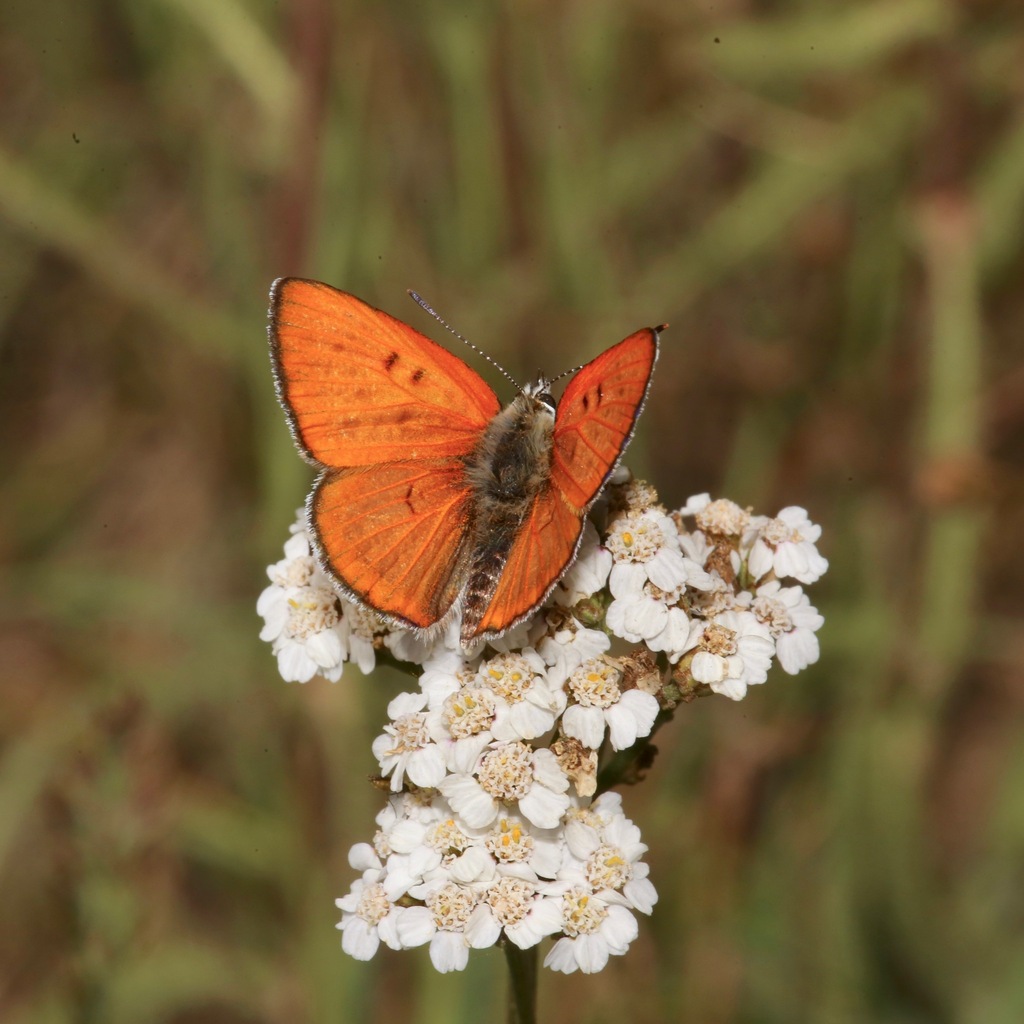
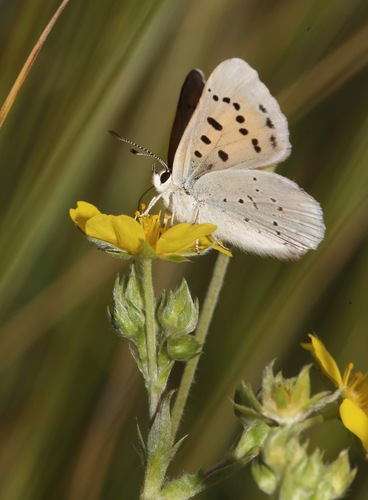
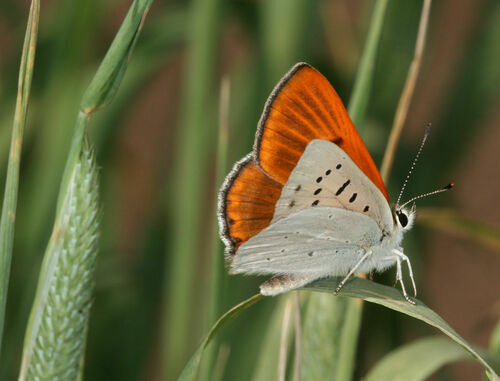
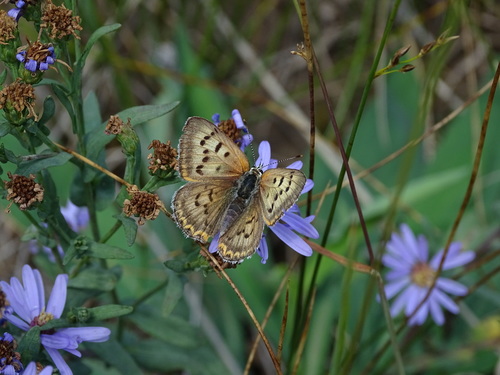
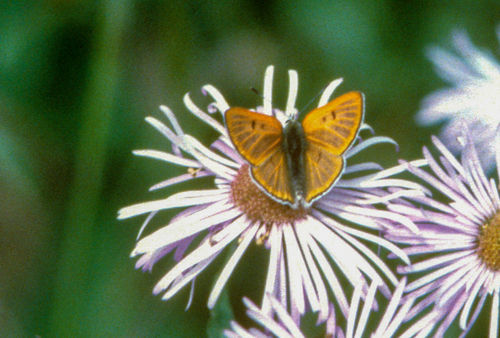
The ruddy copper is a small butterfly with a wingspan of about 29 to 41 mm; males show bright copper upperwings while females are darker orange to brown, and both sexes have pale undersides often spotted with tiny black marks.
Source: Wikipedia
How to recognize it
Males have bright copper upperwings; females range from dark orange to dull brown, and both sexes have pale underwings sometimes marked with small black spots.
Source: Wikipedia
Size
The wingspan measures between 29 and 41 mm.
Source: Wikipedia
Life cycle
Caterpillars eat Rumex host plants and are tended by red ants, often being raised inside ant nests until they become adults.
Source: Wikipedia
Where it comes from
Its range is limited to North America, from British Columbia and California east to South Dakota.
Source: Wikipedia
Where it is found in the US
Recorded in 15 of 51 states and DC. Most records: Colorado, Utah, Idaho, California, Nebraska, Nevada, Wyoming, Arizona.
Darker = more records. Counts are museum and citizen-science records, not population size.
Source: GBIF
Status: native in North America; native in Canada; native in United States. Source: iNaturalist
Months it is reported in the US
Source: GBIF
More photos
Same family (Sesiidae)
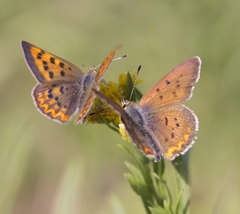 Purplish CopperLycaena helloides
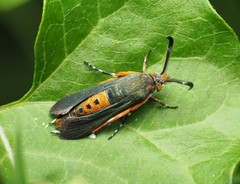 Squash Vine BorerEichlinia cucurbitaeDamages trees, gardens or crops
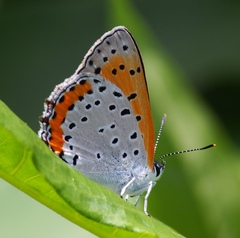 Bronze CopperLycaena hyllus
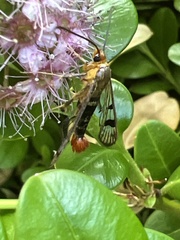 Maple Callus Borer MothSynanthedon acerniDamages trees, gardens or crops
 Southern Red RimBiblis hyperia
 Peachtree Borer MothSynanthedon exitiosaDamages trees, gardens or crops
Sources
- Wikipedia: https://en.wikipedia.org/wiki/Lycaena_rubidus
Look it up elsewhere: GBIF · iNaturalist · BugGuide · ITIS · Wikipedia
Text written 2026-10-24 from the sources above and checked sentence by sentence against them. Data fetched 2026-10-24.