 Bug FAQ
Bronze Copper
Tharsalea hyllus · Order: Lepidoptera · Family: Lycaenidae
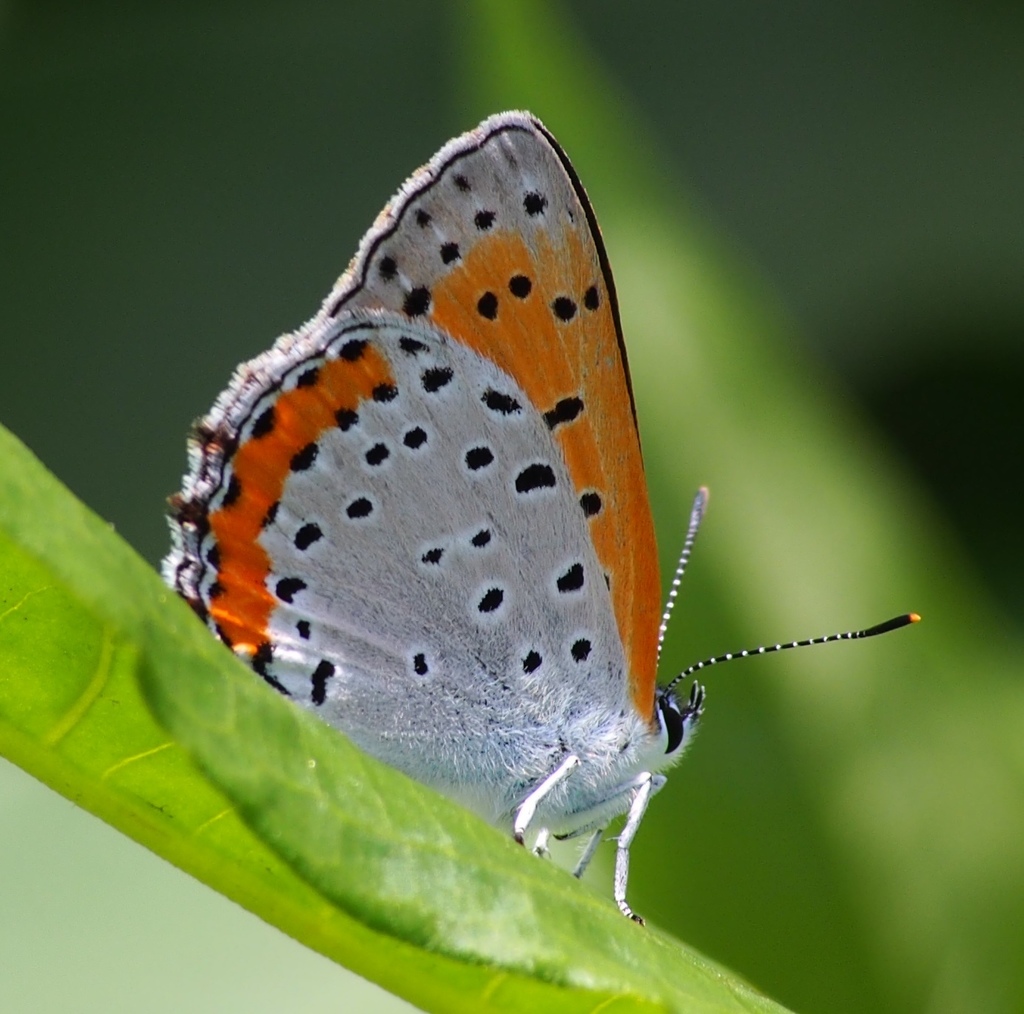
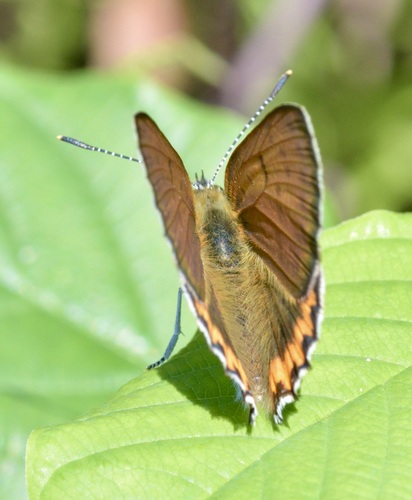
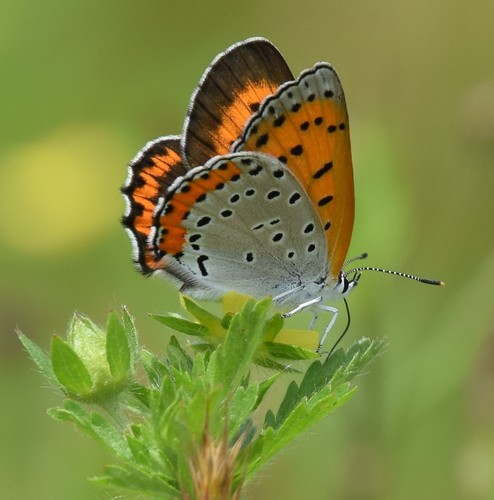
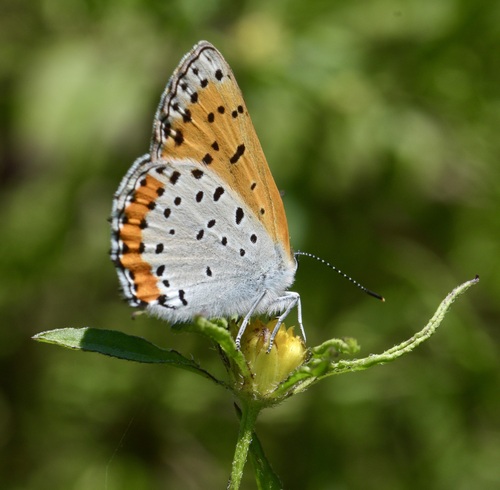
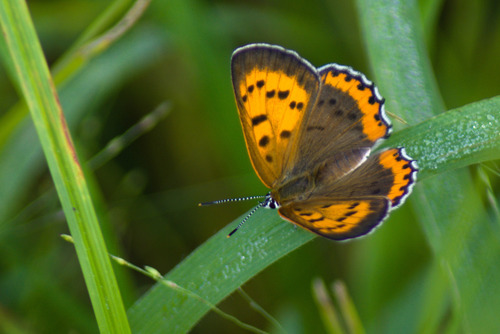
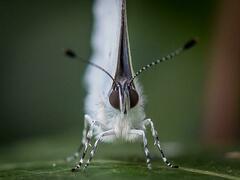
The bronze copper has a wingspan of about 23 to 38 mm and the upper side is brown with golden zig-zag borders; females show lighter forewings with dark spots, while the underside is mainly white with dark spots and orange areas.
Source: Wikipedia
How to recognize it
Upperside brown with golden zig-zag borders; females have lighter forewings with dark spots; underside mainly white with dark spots and orange patches.
Source: Wikipedia
Size
Wingspan ranges from 23 to 38 mm.
Source: Wikipedia
What it eats
Caterpillars use plants in the Polygonaceae family such as water dock, curled dock and Persicaria amphibia as hosts. Adults have been seen feeding on blackberry and red clover.
Source: Wikipedia
Where it comes from
A North American lycaenid butterfly.
Source: Wikipedia
Lookalikes
Its range overlaps with that of Lycaena heteronea, especially in Alberta.
Source: Wikipedia
Where it is found in the US
Recorded in 33 of 51 states and DC. Most records: Ohio, Illinois, Vermont, Wisconsin, Michigan, New York, Minnesota, Missouri.
Darker = more records. Counts are museum and citizen-science records, not population size.
Source: GBIF
Status: native in North America; native in United States; native in Canada. Source: iNaturalist
Months it is reported in the US
Source: GBIF
More photos
Questions people ask
What plants do the caterpillars eat?
They feed on water dock, curled dock and Persicaria amphibia.
Source: Wikipedia
What flowers do adult bronze coppers visit?
Adults have been observed feeding on blackberry and red clover.
Source: Wikipedia
Same family (Lycaenidae)

Sources
- Wikipedia: https://en.wikipedia.org/wiki/Lycaena_hyllus
Look it up elsewhere: GBIF · iNaturalist · BugGuide · ITIS · Wikipedia
Text written 2026-10-23 from the sources above and checked sentence by sentence against them. Data fetched 2026-10-23.