 Bug FAQ
Purplish Copper
Lycaena helloides · Order: Lepidoptera · Family: Sesiidae
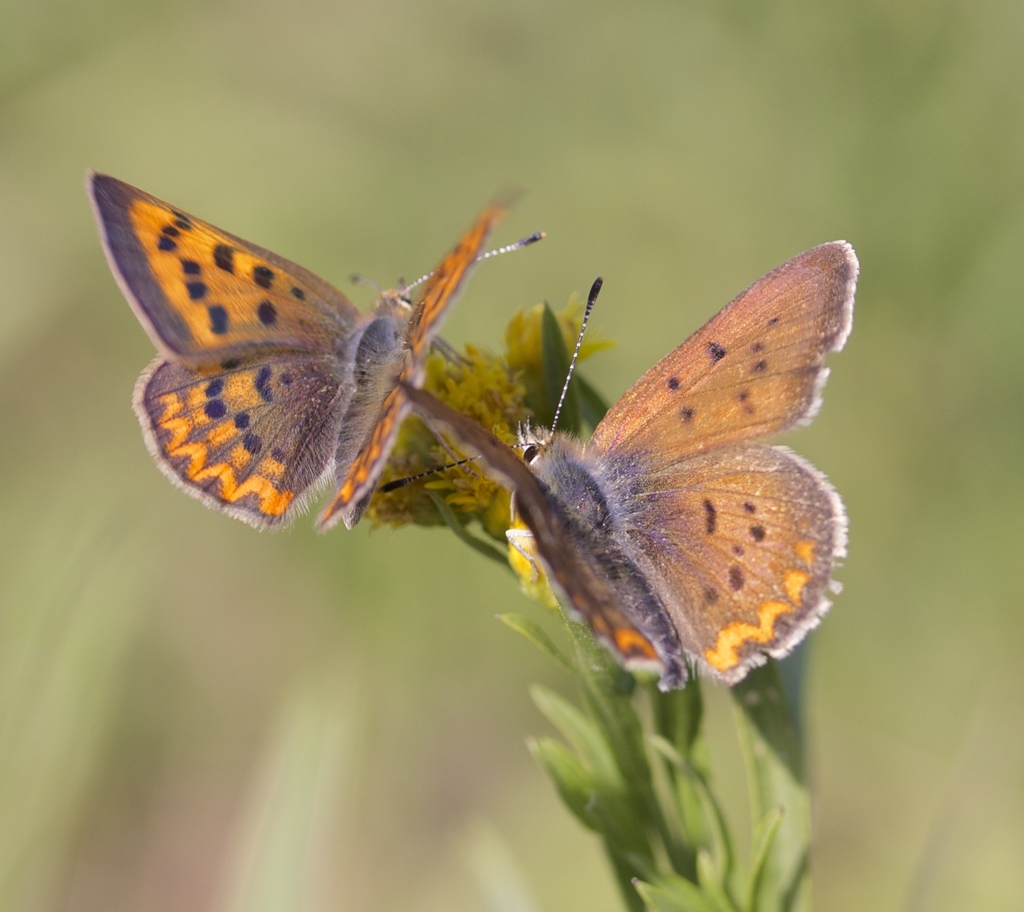
The purplish copper is a butterfly in the Lycaenidae family. Its wingspan measures about 30 to 38 mm. It lives across North America from the Great Lakes to British Columbia and down to Baja California.
Source: Wikipedia
How to recognize it
Lycaena helloides, called the purplish copper, belongs to the butterfly family Lycaenidae.
Source: Wikipedia
Size
The adult’s wingspan ranges from 30 to 38 mm.
Source: Wikipedia
What it eats
Adult butterflies sip nectar from flowers. Caterpillars feed on the leaves of plants such as Polygonum, Rumex, and sometimes Potentilla.
Source: Wikipedia
Life cycle
The species overwinters as an egg.
Source: Wikipedia
When you see it
Adults fly from May through July and again from August to October, with a single summer generation in the northern part of the range.
Source: Wikipedia
Where it is found in the US
Recorded in 27 of 51 states and DC. Most records: Idaho, California, Colorado, Utah, Michigan, Washington, Illinois, Wyoming.
Darker = more records. Counts are museum and citizen-science records, not population size.
Source: GBIF
Months it is reported in the US
Source: GBIF
Same family (Sesiidae)
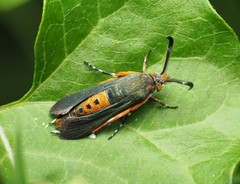
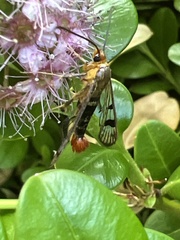


Sources
- Wikipedia: https://en.wikipedia.org/wiki/Lycaena_helloides
Look it up elsewhere: GBIF · iNaturalist · BugGuide · ITIS · Wikipedia
Text written 2026-10-23 from the sources above and checked sentence by sentence against them. Data fetched 2026-10-23.