 Bug FAQ
Squash Vine Borer
Eichlinia cucurbitae · Order: Lepidoptera · Family: Sesiidae
Also called: The squash vine borer, Squash Vine Borer Moth
Source: Wikipedia
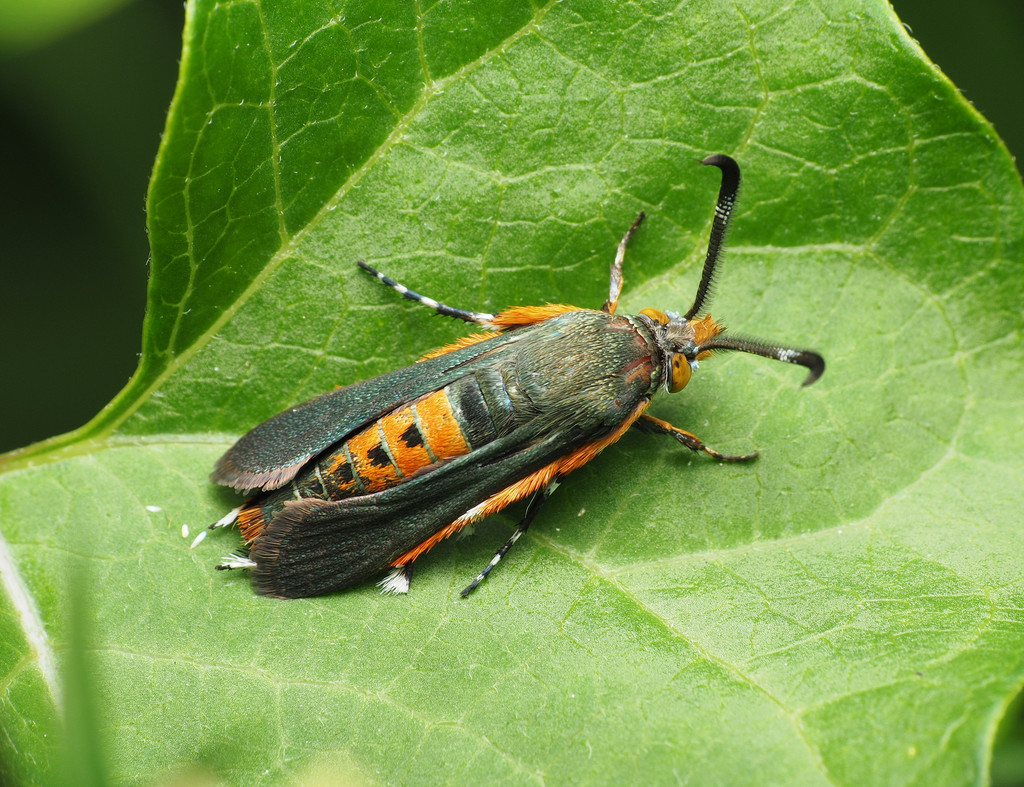
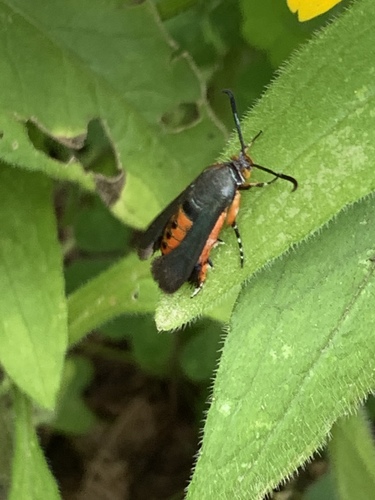
The squash vine borer is a day-flying moth that often looks like a bee or wasp because of its flight and bright orange hind-leg scales. Females lay eggs at the base of leaf stalks; the larvae feed inside the stalk and can kill the leaf, making the insect a serious pest of squash-type vegetables. In most temperate U.S. states (except the Pacific coast) there are usually two generations per year, and control is difficult because pesticides cannot reach larvae inside the plant.
Source: Wikipedia
Size
It is a day-active sesiid moth.
Source: Wikipedia
Is it a pest in the house?
It is considered a pest of cultivated squash, zucchini, pumpkin and acorn squash.
Source: Wikipedia
How to get rid of it
Pesticides do not work once the larvae are inside the plant, making control difficult.
Source: Wikipedia
Life cycle
In southern states the insect produces two broods each year.
Source: Wikipedia
When you see it
The squash vine borer is active during the day.
Source: Wikipedia
Where it comes from
The species is native to North America and has also been reported as far south as Brazil and Argentina.
Source: Wikipedia
Lookalikes
Because of its flight pattern and orange hind-leg scales, it is often confused with bees or wasps.
Source: Wikipedia
Where it is found in the US
Recorded in 39 of 51 states and DC. Most records: Ohio, Massachusetts, New York, Pennsylvania, Illinois, Michigan, Minnesota, Virginia.
Darker = more records. Counts are museum and citizen-science records, not population size.
Source: GBIF
Status: native in North America; native in Canada. Source: iNaturalist
Months it is reported in the US
Source: GBIF
More photos
Questions people ask
Why does the moth look like a bee?
Its flight behavior and bright orange hind-leg scales cause it to be mistaken for a bee or wasp.
Source: Wikipedia
How many generations does it have per year?
In southern states it typically has two broods each year.
Source: Wikipedia
Are pesticides effective against squash vine borer?
Pesticides are ineffective after the larvae have entered the plant.
Source: Wikipedia
Same family (Sesiidae)

Sources
- Wikipedia: https://en.wikipedia.org/wiki/Squash_vine_borer
Look it up elsewhere: GBIF · iNaturalist · BugGuide · Wikipedia
Text written 2026-10-23 from the sources above and checked sentence by sentence against them. Data fetched 2026-10-23.