 Bug FAQ
Pugnacious Leafcutter Bee
Megachile pugnata · Order: Hymenoptera · Family: Megachilidae
Also called: Pugnacious Leafcutter
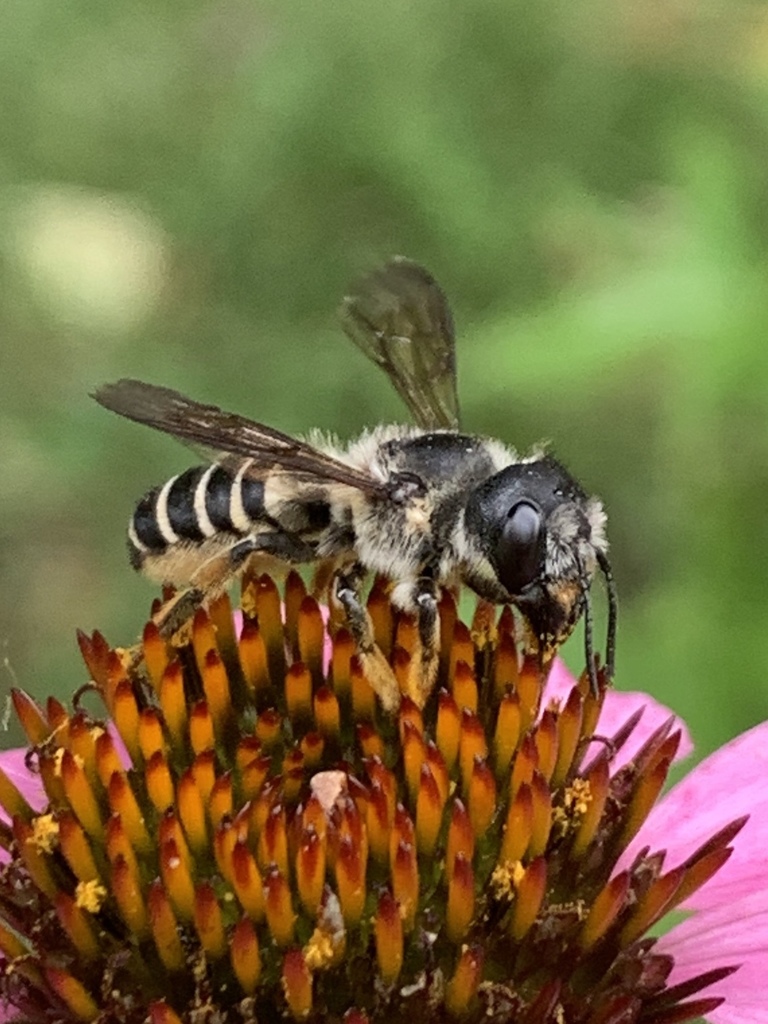
The pugnacious leafcutter bee is a relatively large Megachile, with females 12 to 18 mm long and males 11 to 13 mm. Adults feed on flowers of the aster family, while the larvae eat the pollen-nectar balls the mother provides. They emerge in early spring, males first, mate quickly and then die.
Source: Wikipedia
How to recognize it
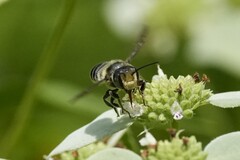
Both sexes have a completely black outer carapace. Females have black eyes, while males have lighter grey-green eyes.
Source: Wikipedia
Size
Females measure 12 to 18 mm in body length and males 11 to 13 mm.
Source: Wikipedia
What it eats
Adult bees feed exclusively on flowers of the Asteraceae family. Larvae consume the portion of the pollen ball that contains extra nectar, which the mother supplies.
Source: Wikipedia
Life cycle
Eggs are 1 to 1.5 mm by 3 to 4 mm, straight and oblong. Eggs hatch in about six days into first-instar larvae.
Source: Wikipedia
When you see it
Adults emerge in early spring, with males appearing before females. Males mate soon after emergence and then die quickly.
Source: Wikipedia
Where it is found in the US
Recorded in 42 of 51 states and DC. Most records: Michigan, Utah, New York, Oregon, California, Washington, Colorado, Vermont.
Darker = more records. Counts are museum and citizen-science records, not population size.
Source: GBIF
Status: native in North America; native in United States; native in Canada. Source: iNaturalist
Months it is reported in the US
Source: GBIF
More photos

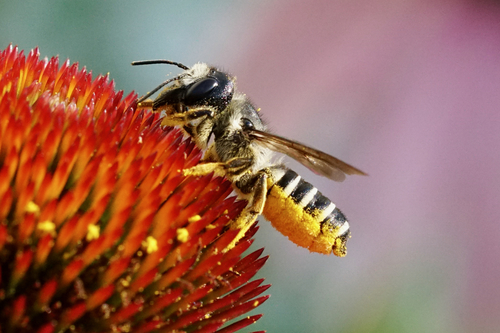
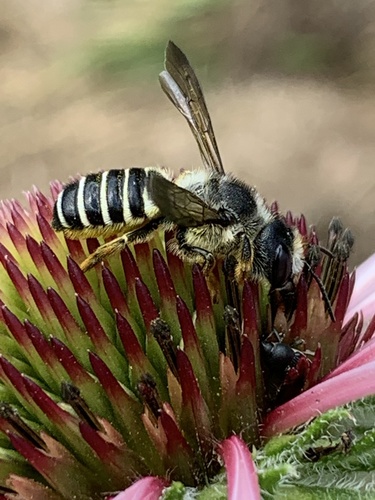
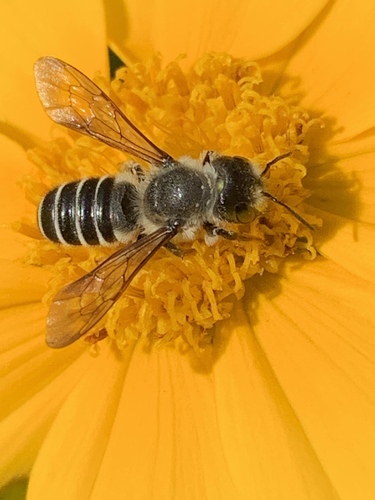
Questions people ask
When do pugnacious leafcutter bees appear?
Adults emerge in early spring, males first, and die soon after mating.
Source: Wikipedia
What do they look like?
Both sexes have a completely black outer carapace; females have black eyes and males have grey-green eyes.
Source: Wikipedia
Where are they found?
They are native to North America, occurring in Canada and the United States, from the east coast to British Columbia and up to the Northwest Territories and Yukon.
Source: Wikipedia
What do they eat?
Adults feed on Asteraceae flowers, while larvae eat the pollen-nectar balls the mother provides.
Source: Wikipedia
Same family (Megachilidae)

Sources
- Wikipedia: https://en.wikipedia.org/wiki/Megachile_pugnata
Look it up elsewhere: GBIF · iNaturalist · BugGuide · ITIS · Wikipedia
Text written 2026-10-23 from the sources above and checked sentence by sentence against them. Data fetched 2026-10-23.