 Bug FAQ
Poplar Petiole Gall Aphid
Pemphigus populitransversus · Order: Hemiptera · Family: Aphididae
Also called: Poplar petiolegall aphid
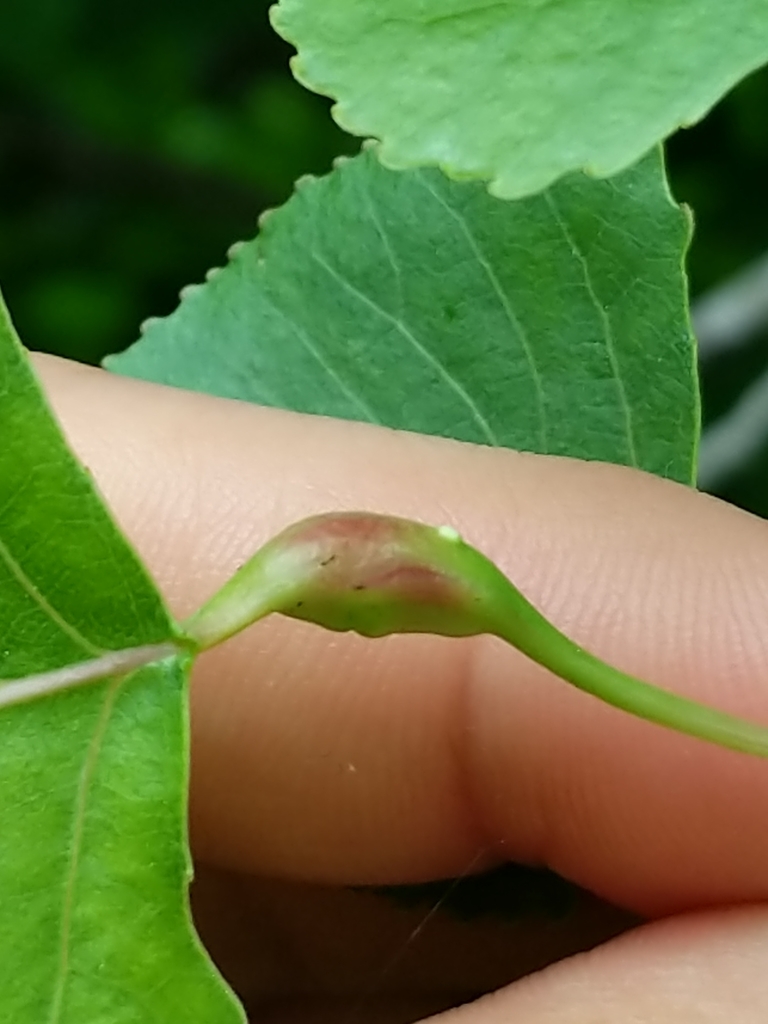
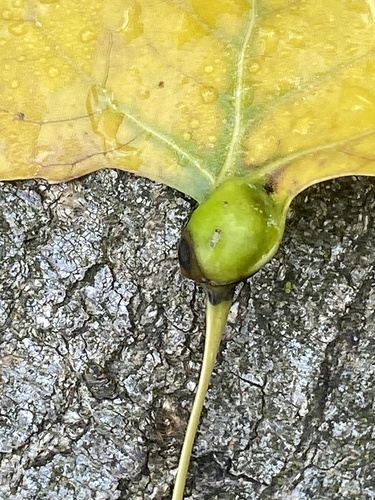
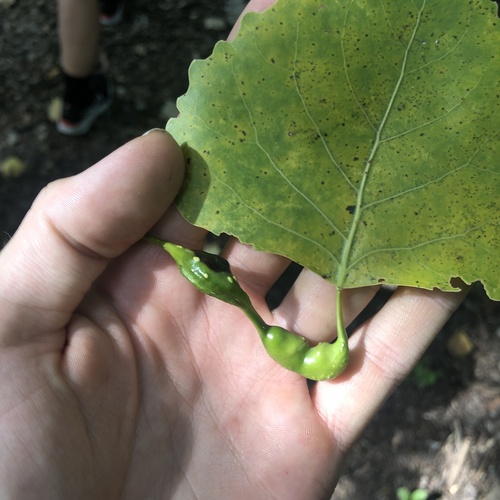
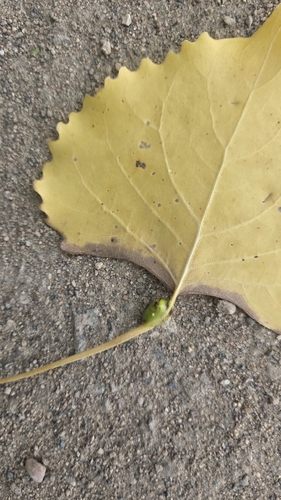
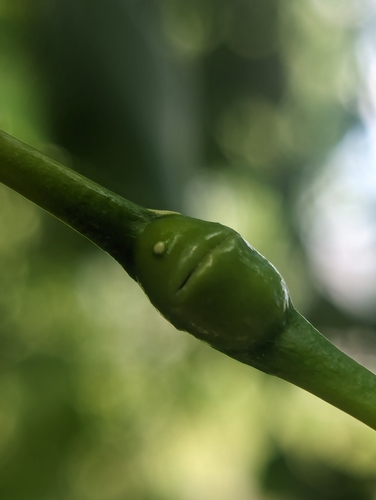
Adults measure about 1.6 to 2.6 mm long. Females make galls at the base of leaves on cottonwoods and aspens. The female lays her eggs inside the gall she creates.
Source: Wikipedia
Size
Adults are roughly 1.6 to 2.6 mm in length.
Source: Wikipedia
Life cycle
The female aphid deposits her eggs inside the gall she induces.
Source: Wikipedia
Where it is found in the US
Recorded in 33 of 51 states and DC. Most records: New York, Ohio, Texas, Kansas, Minnesota, Illinois, New Jersey, Wisconsin.
Darker = more records. Counts are museum and citizen-science records, not population size.
Source: GBIF
Status: native in North America; native in Canada. Source: iNaturalist
Months it is reported in the US
Source: GBIF
More photos
Questions people ask
How does this aphid reproduce?
The female creates a gall on a leaf base and lays her eggs inside it.
Source: Wikipedia
Same family (Aphididae)
 Melon AphidAphis gossypiiDamages trees, gardens or crops
 Oleander AphidAphis neriiDamages trees, gardens or crops
 Witch-hazel Cone Gall AphidHormaphis hamamelidis
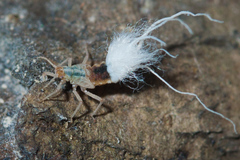 Beech Blight AphidGrylloprociphilus imbricatorDamages trees, gardens or crops
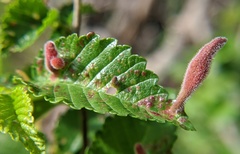 Rice Root AphidTetraneura nigriabdominalis
 Rose AphidMacrosiphum rosaeDamages trees, gardens or crops
Sources
- Wikipedia: https://en.wikipedia.org/wiki/Pemphigus_populitransversus
Look it up elsewhere: GBIF · iNaturalist · BugGuide · Wikipedia
Text written 2026-10-26 from the sources above and checked sentence by sentence against them. Data fetched 2026-10-26.